
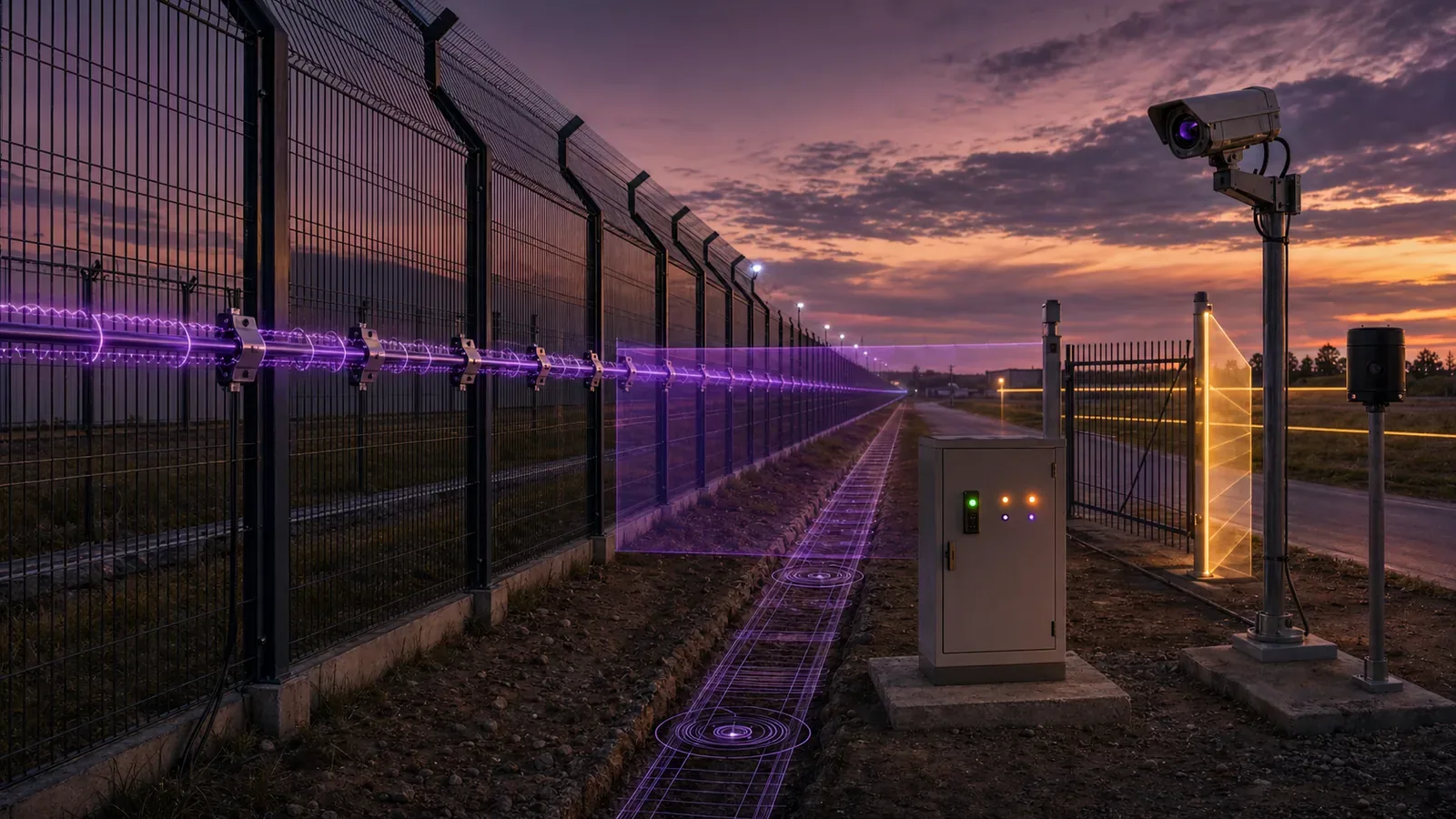
Sensores de Cerca para Seguridad Perimetral

Compare los principales tipos de sensores de cerca, cómo detecta intrusión cada uno y dónde encajan mejor los enfoques mecánicos, vibratorios y basados en fibra.

AI Overview

The main fence sensor types are fiber optic sensing cable, vibration sensors, taut-wire systems, buried cable, microwave or radar barriers, and video analytics. The best fence-line monitoring solution depends on fence structure, perimeter length, nuisance-alarm tolerance, required zone accuracy, and whether alarms will be verified by CCTV.

Sensores de Cerca para Seguridad Perimetral

Próximos pasos recomendados

Use este artículo para estructurar requisitos y luego reviseFortSense 4para ver cómo la detección por zonas respalda entornos de Agronegocios y la cobertura operativa en América Latina.

Si necesita una referencia de despliegue más cercana, reviseAgronegociosyAmérica Latinaantes de fijar las premisas del diseño.

También debería comparar esta guía conFibra Óptica vs Sensores de Cerca, ¿Qué es PIDS? Guía y ChecklistyFalsas Alarmas en Seguridad Perimetralpara que el alcance cubra diseño, operación y compras.

Aplique esto en un proyecto real con FortSense

Use este artículo como insumo de planificación, luego revise FortSense 4 y alinee el alcance con seguridad, operaciones e integración antes de comprar.

Ver FortSense 4

FAQ

Preguntas Frecuentes

The main types are fiber optic sensing cable, vibration sensors, taut-wire systems, buried cable, microwave or radar barriers, and video analytics. Many real projects combine a fence sensor for detection with cameras for verification.

The differentiators are detection length, cut and climb detection, zone accuracy, nuisance-alarm filtering, field power needs, weather behavior, maintenance access, integration outputs, and how easily alarms trigger CCTV verification.

The strongest real-time workflow uses sensor analytics to detect the physical fence disturbance and video analytics or operator review to verify what happened in the alarm zone. Camera-only analytics can help classify events but should not be the only detection layer on high-risk perimeters.

Yes, properly installed fence sensors can detect cutting, climbing, lifting, impacts, and tampering. The exact event types depend on the sensor technology, fence condition, calibration, and alarm thresholds.

They reduce false alarms through calibration, zone tuning, event classification, weather filtering, fence maintenance, and CCTV verification. The goal is to separate human intrusion patterns from wind, loose fabric, animals, vegetation, and nearby traffic.