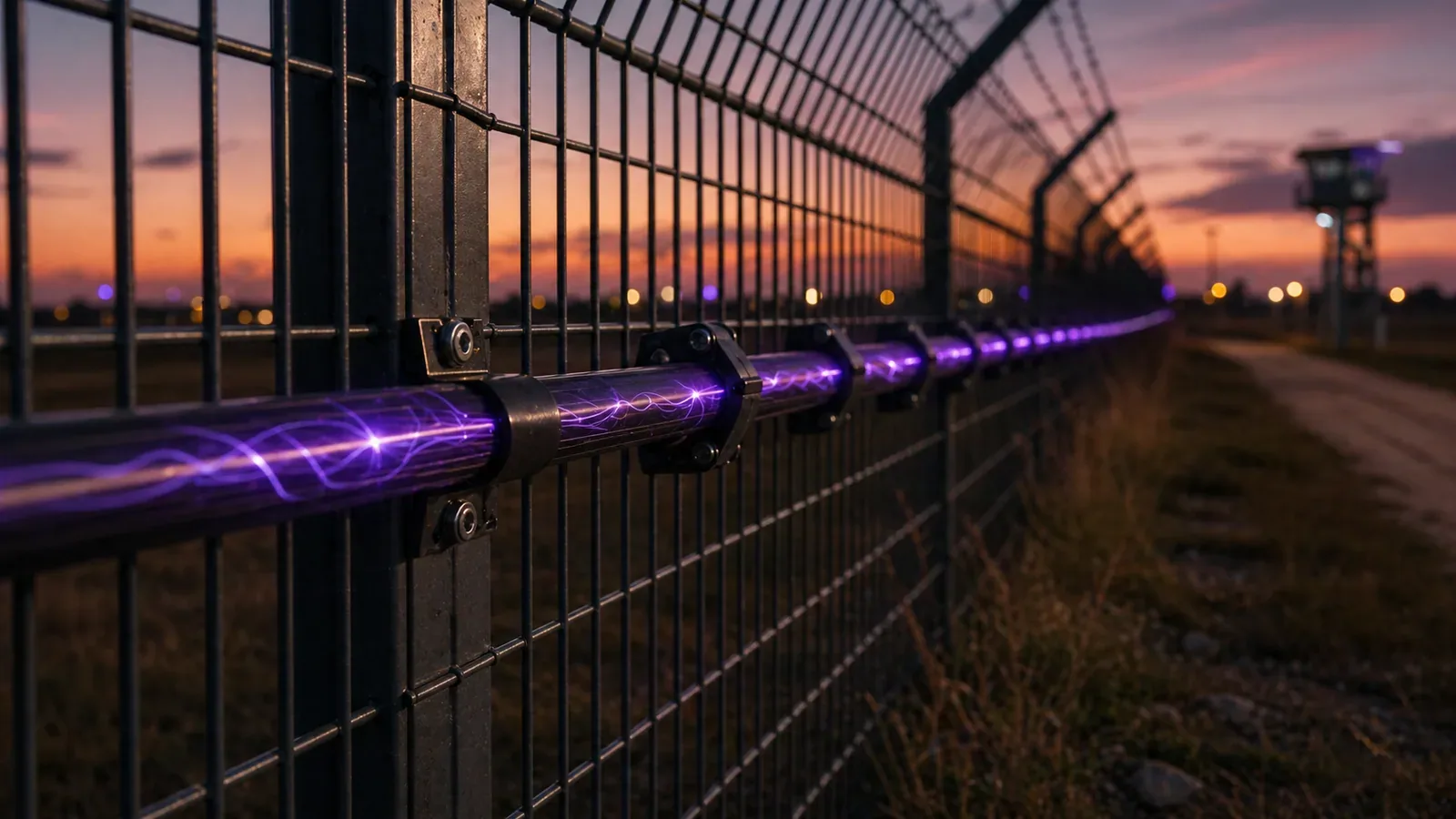
Perimeter intrusion detection systems (PIDS) for critical infrastructure must balance sensitivity with false alarm rejection.
Detection Principles
Fiber optic sensors detect vibrations and disturbances along the fence line using interferometric technology. When an intruder attempts to climb or cut the fence, the physical disturbance creates minute changes in the light signal traveling through the fiber optic cable.
Fence-mounted sensors, on the other hand, use piezoelectric or accelerometer technology to detect mechanical vibrations directly on the fence structure.
Environmental Performance
One of the key advantages of fiber optic systems is their immunity to electromagnetic interference (EMI) and radio frequency interference (RFI). This makes them ideal for installations near power lines, substations, or industrial facilities with heavy electrical equipment.
Fence sensors can be affected by environmental factors like wind, rain, and temperature fluctuations, which may increase false alarm rates.
Installation and Maintenance
Fence-mounted sensors typically offer faster installation times, but require a stable fence structure. The fence must be properly tensioned and maintained to ensure consistent sensor performance.
Fiber optic systems require more careful installation, including proper cable routing and protection, but once installed they require minimal maintenance over their 20+ year lifespan.
Total Cost of Ownership
While fiber optic systems have higher upfront costs ($50-80/meter vs $30-50/meter for fence sensors), they demonstrate lower TCO over 10+ years due to reduced maintenance, longer lifespan, and lower false alarm rates that reduce security personnel costs.
Recommended next steps
Use this article to shape requirements, then reviewFortSense 4to see how zone-based detection supports Agriculture environments and operational coverage in Latin America.
If you need a closer deployment reference, reviewAgricultureandLatin Americabefore locking your design assumptions.
You should also compare this guidance withFence Sensors for Perimeter Security, Fiber Optic IDS: How It Works, andWhat Is PIDS? Guide and Checklistso your scope covers design, operations, and procurement.