
Sensores de Cerca para Segurança Perimetral

Compare os principais tipos de sensores de cerca, como cada um detecta intrusão e onde abordagens mecânicas, vibratórias e baseadas em fibra se encaixam melhor na proteção perimetral.

AI Overview

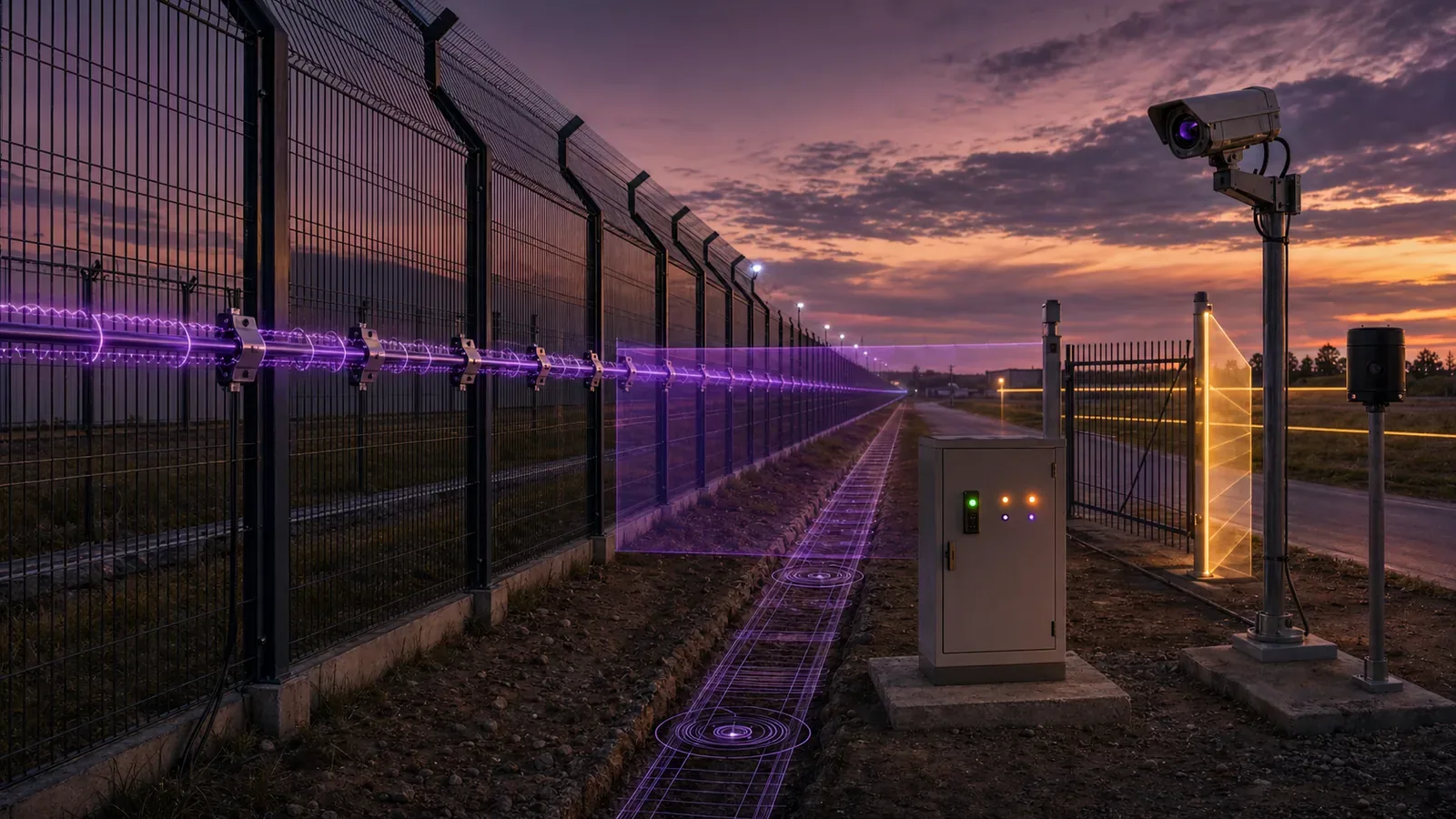
The main fence sensor types are fiber optic sensing cable, vibration sensors, taut-wire systems, buried cable, microwave or radar barriers, and video analytics. The best fence-line monitoring solution depends on fence structure, perimeter length, nuisance-alarm tolerance, required zone accuracy, and whether alarms will be verified by CCTV.

Sensores de Cerca para Segurança Perimetral

Próximos passos recomendados

Use este artigo para estruturar requisitos e depois reviseFortSense 4para entender como a detecção por zonas atende ambientes de Agrócio e a cobertura operacional em América Latina.

Se você precisa de uma referência de implantação mais próxima, vejaAgrócioeAmérica Latinaantes de travar as premissas de projeto.

Você também deve comparar esta orientação comFibra Óptica vs Sensores de Cerca, O que é PIDS? Guia e ChecklisteFalsos Alarmes na Segurança Perimetralpara que o escopo cubra projeto, operação e compras.

Aplique isso em um projeto real com FortSense

Use este artigo como insumo de planejamento, depois revise o FortSense 4 e alinhe o escopo com segurança, operações e integração antes da compra.

Veja o FortSense 4

FAQ

Perguntas Frequentes

The main types are fiber optic sensing cable, vibration sensors, taut-wire systems, buried cable, microwave or radar barriers, and video analytics. Many real projects combine a fence sensor for detection with cameras for verification.

The differentiators are detection length, cut and climb detection, zone accuracy, nuisance-alarm filtering, field power needs, weather behavior, maintenance access, integration outputs, and how easily alarms trigger CCTV verification.

The strongest real-time workflow uses sensor analytics to detect the physical fence disturbance and video analytics or operator review to verify what happened in the alarm zone. Camera-only analytics can help classify events but should not be the only detection layer on high-risk perimeters.

Yes, properly installed fence sensors can detect cutting, climbing, lifting, impacts, and tampering. The exact event types depend on the sensor technology, fence condition, calibration, and alarm thresholds.

They reduce false alarms through calibration, zone tuning, event classification, weather filtering, fence maintenance, and CCTV verification. The goal is to separate human intrusion patterns from wind, loose fabric, animals, vegetation, and nearby traffic.