
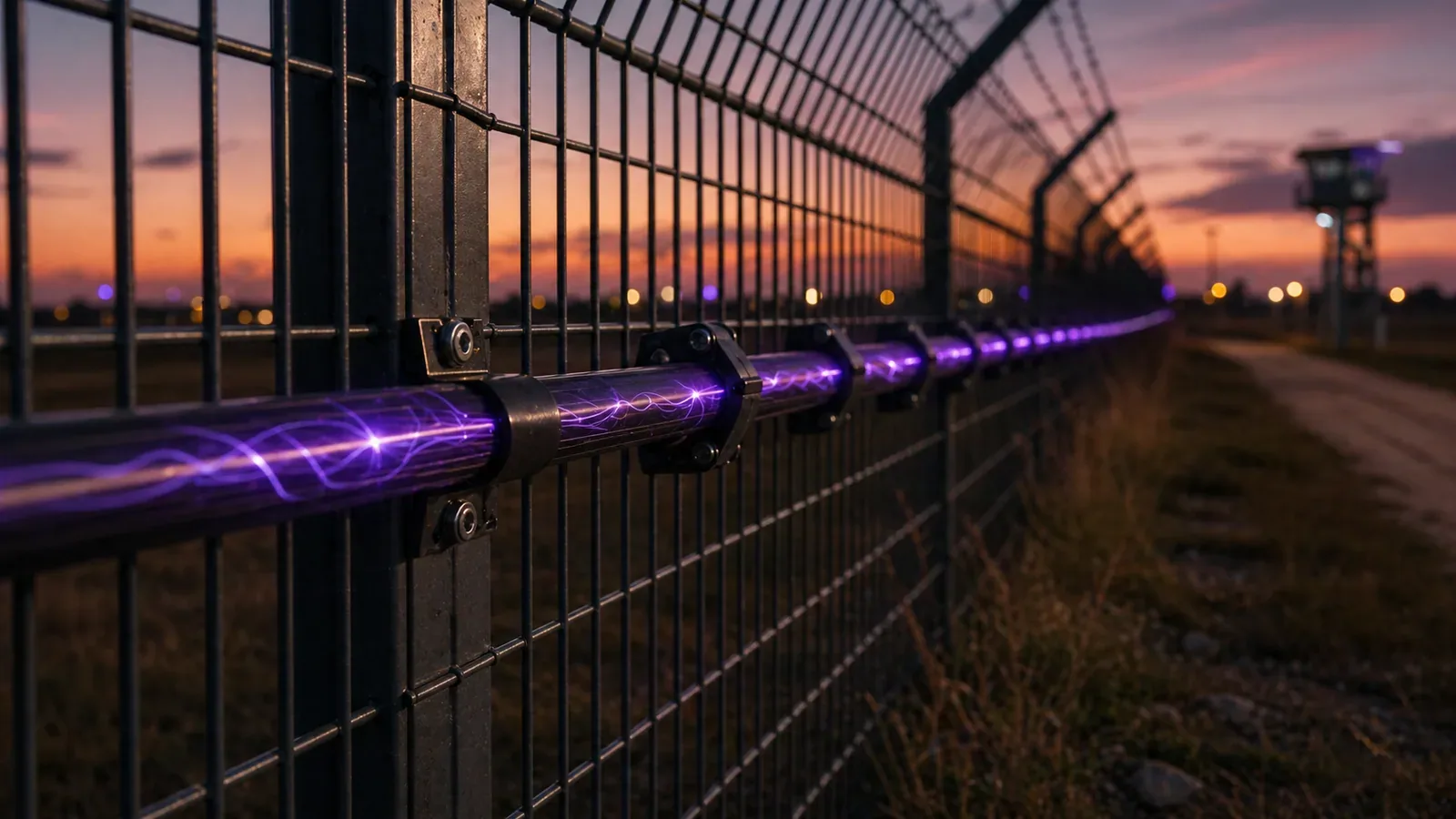
Fibra Óptica vs Sensores de Cerca

Use esta comparação lado a lado para avaliar cobertura, comportamento de falsos alarmes, carga de manutenção e trade-offs de integração entre detecção por fibra óptica e sensores de cerca clássicos.

AI Overview

For continuous fence-line monitoring, fiber optic sensing is usually the strongest option on long or high-risk perimeters because one passive cable can detect climbing, cutting, lifting, and tampering across long fence runs with fewer powered field devices. Traditional vibration, taut-wire, microwave, buried, and camera-analytic sensors can still fit smaller sites or specific threat models, but buyers should compare detection coverage, nuisance-alarm behavior, maintenance load, CCTV integration, and zone accuracy before choosing.

Fibra Óptica vs Sensores de Cerca

Perimeter intrusion detection systems (PIDS) for critical infrastructure must balance sensitivity with false alarm rejection.

Detection Principles

Fiber optic sensors detect vibrations and disturbances along the fence line using interferometric technology. When an intruder attempts to climb or cut the fence, the physical disturbance creates minute changes in the light signal traveling through the fiber optic cable.

Fence-mounted sensors, on the other hand, use piezoelectric or accelerometer technology to detect mechanical vibrations directly on the fence structure.

Environmental Performance

One of the key advantages of fiber optic systems is their immunity to electromagnetic interference (EMI) and radio frequency interference (RFI). This makes them ideal for installations near power lines, substations, or industrial facilities with heavy electrical equipment.

Fence sensors can be affected by environmental factors like wind, rain, and temperature fluctuations, which may increase false alarm rates.

Installation and Maintenance

Fence-mounted sensors typically offer faster installation times, but require a stable fence structure. The fence must be properly tensioned and maintained to ensure consistent sensor performance.

Fiber optic systems require more careful installation, including proper cable routing and protection, but once installed they require minimal maintenance over their 20+ year lifespan.

Total Cost of Ownership

While fiber optic systems have higher upfront costs ($50-80/meter vs $30-50/meter for fence sensors), they demonstrate lower TCO over 10+ years due to reduced maintenance, longer lifespan, and lower false alarm rates that reduce security personnel costs.

Próximos passos recomendados

Use este artigo para estruturar requisitos e depois reviseFortSense 4para entender como a detecção por zonas atende ambientes de Agrócio e a cobertura operacional em América Latina.

Se você precisa de uma referência de implantação mais próxima, vejaAgrócioeAmérica Latinaantes de travar as premissas de projeto.

Você também deve comparar esta orientação comSensores de Cerca para Segurança Perimetral, IDS por Fibra Óptica: Como FuncionaeO que é PIDS? Guia e Checklistpara que o escopo cubra projeto, operação e compras.

Aplique isso em um projeto real com FortSense

Use este artigo como insumo de planejamento, depois revise o FortSense 4 e alinhe o escopo com segurança, operações e integração antes da compra.

Veja o FortSense 4

FAQ

Perguntas Frequentes

For long or high-value perimeters, fiber optic fence sensing is often the best starting point because it provides continuous coverage along the fence without powered electronics at every detection point. Shorter sites may still use vibration, taut-wire, microwave, or camera analytics when coverage length, budget, and false-alarm tolerance fit those technologies.

Accuracy depends on fence condition, zoning, calibration, and verification workflow. Fiber optic and well-tuned taut-wire systems usually provide stronger fence disturbance detection than camera-only analytics, while cameras are best used to verify the alarm and classify the event.

Compare detection length, event types, nuisance alarms, field power requirements, maintenance access, zone resolution, weather behavior, and integration with VMS, PSIM, lighting, and monitoring centers.

Traditional point or vibration sensors may fit short fence sections, temporary projects, simple intrusion requirements, or sites where the fence structure is not suitable for continuous fiber installation.

Yes. Fence sensors should trigger the alarm, while cameras verify the zone, classify the event, and support dispatch decisions. This sensor-plus-video workflow reduces operator guesswork.