Perimeter Security for Critical Infrastructure
Keep critical infrastructure online with passive fiber that resists interference and sabotage.
Threat Model
Vandalism, copper theft, sabotage, terrorism. Keeps remote critical sites protected with EMI-immune sensing and direct alarm handoff to SCADA, SOC, or control-room workflows.
Fiber Optic Sensing for Perimeter Security for Critical Infrastructure
Critical assets like electrical substations, telecom towers (cell sites), and grain warehouses are often remote and unmanned. FortSense® provides 24/7 autonomous monitoring immune to the high electromagnetic interference (EMI) of substations, meeting physical security requirements for NERC CIP compliance. It protects against vandalism, copper theft, and sabotage in locations where guards cannot always be present. FortSense 4 adds zone-level alarms, low false alarm filtering, and relay or IP outputs for CCTV, VMS, PSIM, and SOC workflows.
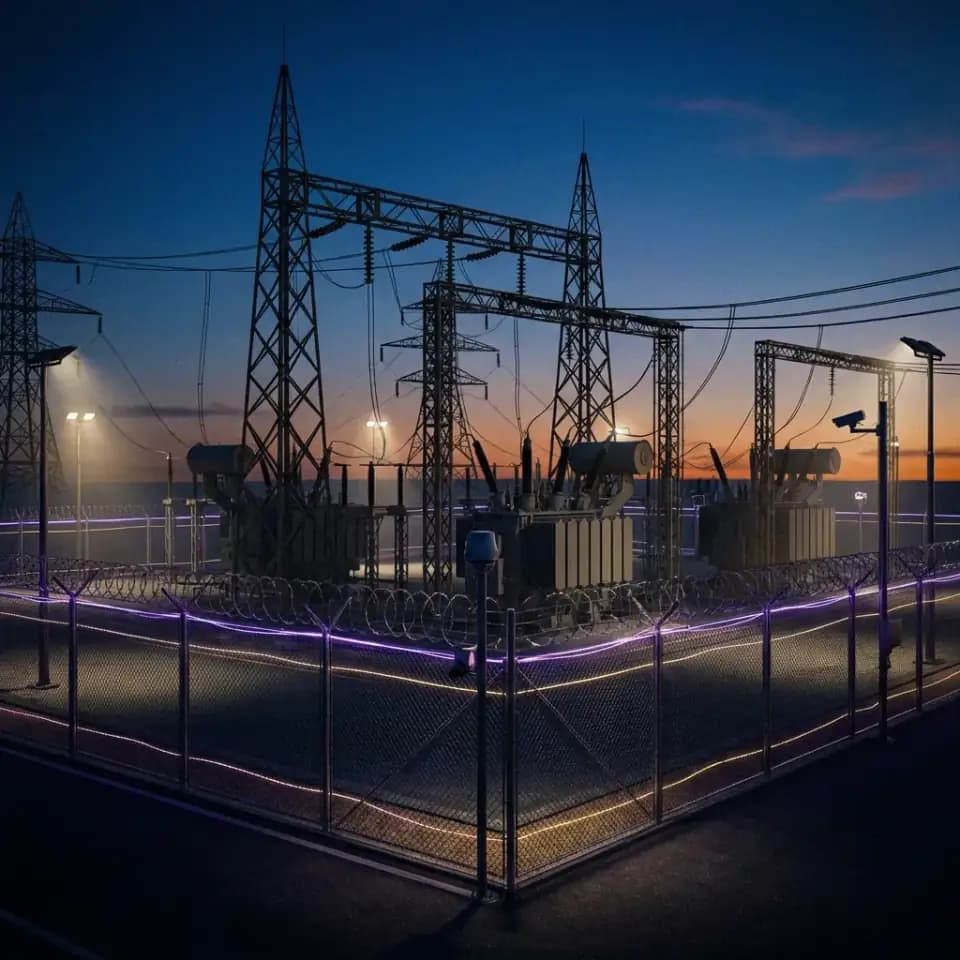
Main Threats to Perimeter Security for Critical Infrastructure
High EMI/RFI environments (substations, high-voltage)
Remote unmanned site monitoring
Copper theft and equipment vandalism
NERC CIP compliance requirements
Integration with utility SCADA/alarm systems
Typical Deployment
Mounted on fences or integrated into existing structures. Controllers can segment fence lines, gates, walls, and mixed perimeter runs into response-ready zones.
Electrical Substations
EMI/RFI immune sensing for high-voltage environments.
Telecom Towers
Remote site monitoring for unmanned facilities.
Water Treatment / Utilities
Zone-based protection for critical infrastructure.
Data Centers
Perimeter protection for sensitive data facilities.
How FortSense Detects Intrusions
Fiber optic cable transforms into a continuous perimeter sensor, detecting threats in real-time
Fiber Installed
Passive fiber optic cable is mounted along your fence, wall, or buried underground
Vibration Detected
Any physical contact with the perimeter creates vibration patterns in the fiber
AI/DSP Verification
Advanced algorithms analyze the signal to distinguish real threats from wind, animals, or environmental noise
Alarm if Intrusion
Only confirmed intrusion attempts trigger zone-based alarms for security response
Real-World Example
At a perimeter security for critical infrastructure facility, when someone attempts to cut the perimeter fence, the fiber optic cable detects the vibration pattern instantly. The system identifies the exact zone under attack and triggers an alarm within seconds, allowing security to respond before the breach occurs.
What We
What We Detect
FortSense 4 interprets vibration patterns on the protected barrier and triggers alarms by zone to support fast response.
FortSense 4 interprets vibration patterns on the protected barrier and triggers alarms by zone to support fast response.
Fiber Optic Detection vs. Camera-Only Systems
Understanding the critical differences in perimeter security technology.
Blind Spots
100% perimeter coverage - follows every inch of fence
Cameras miss corners, obstructions, and areas between fields of view
Weather Immunity
Rain, fog, dust, darkness - no impact on detection
Reduced visibility in bad weather, night requires IR/lighting
Pre-Intrusion Detection
Detects cutting, climbing BEFORE breach occurs
Only sees intruder AFTER they're on property
False Alarm Reduction
Advanced DSP filters wind, animals - learns fence signature
Triggers on shadows, leaves, animals, lighting changes
Blind Spots
100% perimeter coverage - follows every inch of fence
Cameras miss corners, obstructions, and areas between fields of view
Weather Immunity
Rain, fog, dust, darkness - no impact on detection
Reduced visibility in bad weather, night requires IR/lighting
Pre-Intrusion Detection
Detects cutting, climbing BEFORE breach occurs
Only sees intruder AFTER they're on property
False Alarm Reduction
Advanced DSP filters wind, animals - learns fence signature
Triggers on shadows, leaves, animals, lighting changes
Best Practice: Use Both Together
Fiber optic for detection - Alerts you the moment someone touches your fence, even in complete darkness or bad weather.
Cameras for verification - Automatically point to the alarmed zone to visually confirm and record the threat.
💡 Pro tip: FortSense integrates with major VMS platforms like Digifort and ISS to trigger camera presets automatically when an alarm occurs.
Key Advantages
Integrations & Rapid Response
FortSense 4 integrates seamlessly with your existing security infrastructure via dry contacts, TCP/IP, and major VMS platforms to ensure a coordinated and rapid response to any intrusion event.
- SCADA system integration (platform-dependent)
- Utility alarm panel connectivity (platform-dependent)
- Remote monitoring center alerts (platform-dependent)
- Camera call-up / presets (where supported by VMS)
Support
Frequently Asked Questions
Yes, as a passive optical system, FortSense is completely immune to electromagnetic interference, making it ideal for substations and power plants.
Related Industries
Key Service Areas
Protect Your Facility
Talk to our fiber optic perimeter security specialists to design a solution tailored to your site.