

Local service overview
Agribusiness and Port Perimeter Security in Sinaloa
FortSense® protects commercial ports, irrigation districts, shrimp farms and agricultural warehouses in Sinaloa with fiber optics.
Sinaloa is Mexico's agricultural powerhouse, frequently called the "breadbasket of Mexico" for its extraordinary productivity that feeds millions of Mexicans and generates billions in exports. The extensive irrigation districts in the Fuerte Valley (Los Mochis) and Culiacán Valley, fed by the Miguel Hidalgo (El Mahone), Josefa Ortiz de Domínguez (El Varejonal), Sanalona, Adolfo López Mateos (El Humaya) and Aurelio Benassini (El Comedero) dams, produce massive quantities of tomatoes, corn, beans, chickpeas, sugar cane, sorghum, potatoes, chili peppers and mangos for domestic consumption and export.
Sinaloa leads Mexico in tomato production (over 1. 2 million tons annually, representing 25% of national production), white corn, chickpeas and several other crops, and is particularly known for its export tomatoes that supply over 60% of the US market during winter months. Vegetable packing houses such as Agrícola Tarriba, Del Campo, Magna Exportaciones and SunPacific operate state-of-the-art sorting, packing and refrigeration facilities.
The fishing and aquaculture sector is equally important. Sinaloa is one of Mexico's leading seafood producing states, with shrimp farming operations spanning over 40,000 hectares of ponds along coastal lagoons from Escuinapa to Ahome, and deep-sea fishing fleets operating from Mazatlán and Topolobampo catching tuna, wild shrimp, octopus and finfish species.
The Port of Topolobampo near Los Mochis is a deep-water and cabotage port with maritime connections to the Baja California ferry (La Paz), the Chihuahua al Pacífico Railway rail lines (673 km of track crossing the spectacular Copper Canyon) and federal highways, serving as the nearest export point for Chihuahua's mining production. The Port of Mazatlán is multipurpose: international cruise tourism (terminal capable of handling vessels over 300 meters), commercial cargo and base for the Pacific fishing fleet, also serving as the most important maritime connection on Mexico's western coast.
Sinaloa's industry has diversified beyond agriculture. The state has one of Mexico's largest highway networks (16,965 km, 7th nationally) and rail networks (1,194. 5 km, 8th). Three international airports — Culiacán Bachigualato (Mexico's 9th busiest with over 3 million annual passengers), Mazatlán General Rafael Buelna and Los Mochis Valle del Fuerte — provide broad air connectivity.
Coppel (department stores and financial services with over 1,700 branches in Mexico and Argentina) and Casa Ley (supermarket chain with over 250 stores in northwestern Mexico), both headquartered in Culiacán, are national-scale companies. The brewery industry (Grupo Modelo operates a plant in Mazatlán), food processing (Herdez, SuKarne with Latin America's largest meat processing plant in Culiacán) and light manufacturing complement the economy.
Security challenges are extreme and define the Sinaloan landscape. The US State Department maintains a Level 4 (DO NOT TRAVEL) travel advisory for Sinaloa as the historical heartland of the Sinaloa Cartel, one of the world's most powerful and long-running criminal organizations.
Gunfights that paralyze entire cities, armed robberies, kidnappings, forced disappearances, systematic extortion of agricultural and fishing businesses (cobro de piso affecting everything from tomato packing houses to shrimp farms), cargo theft on Federal Highways 15 (the Pacific axis) and 40D (Mazatlán-Durango), fuel theft from PEMEX facilities, smuggling of fentanyl chemical precursors through the ports of Mazatlán and Topolobampo, and money laundering through agricultural businesses form a severe threat landscape.
The October 2019 Culiacanazo, when capture operations against cartel leaders triggered street battles in Culiacán with blockades and vehicle fires, demonstrated organized crime's power over civilian life.
The tropical climate brings high Pacific hurricane risk (Hurricane Nora in 2021 and Hurricane Norma in 2023 caused severe flooding), storms provoking river overflow and devastating agricultural valley floods with crop losses valued at billions of pesos, extreme heat exceeding 42°C from May to September, and drought cycles affecting irrigation water availability.
FortSense provides essential security for Sinaloa's productive infrastructure in an extremely challenging operating environment. Irrigation districts spanning hundreds of thousands of hectares need detection against theft of precision agricultural equipment (GPS tractors, drip irrigation systems, harvesters) worth millions of dollars. The ports of Topolobampo and Mazatlán require integrated maritime and land security in corrosive coastal environments where salinity destroys conventional electronics within months. Shrimp farms need production protection at harvest worth tens of millions of pesos.
Vegetable packing houses store export product worth hundreds of thousands of dollars overnight. Fiber optics operate silently without detectable electronic emissions from counter-surveillance equipment, providing discreet and reliable security in an environment where security system visibility can attract unwanted attention.
Professional perimeter protection for distribution centers, manufacturing, and critical infrastructure in Sinaloa.
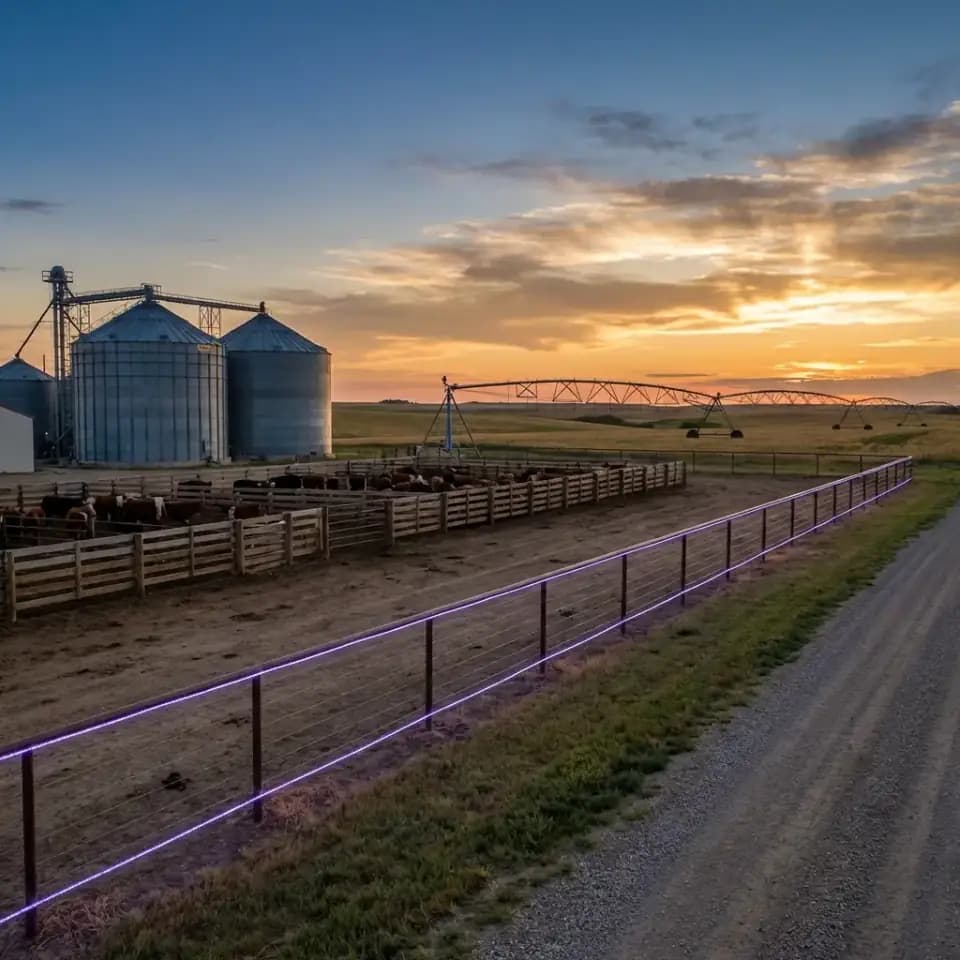
- Livestock & Feed Lot Perimeter
- Irrigation & Cable Theft Detection
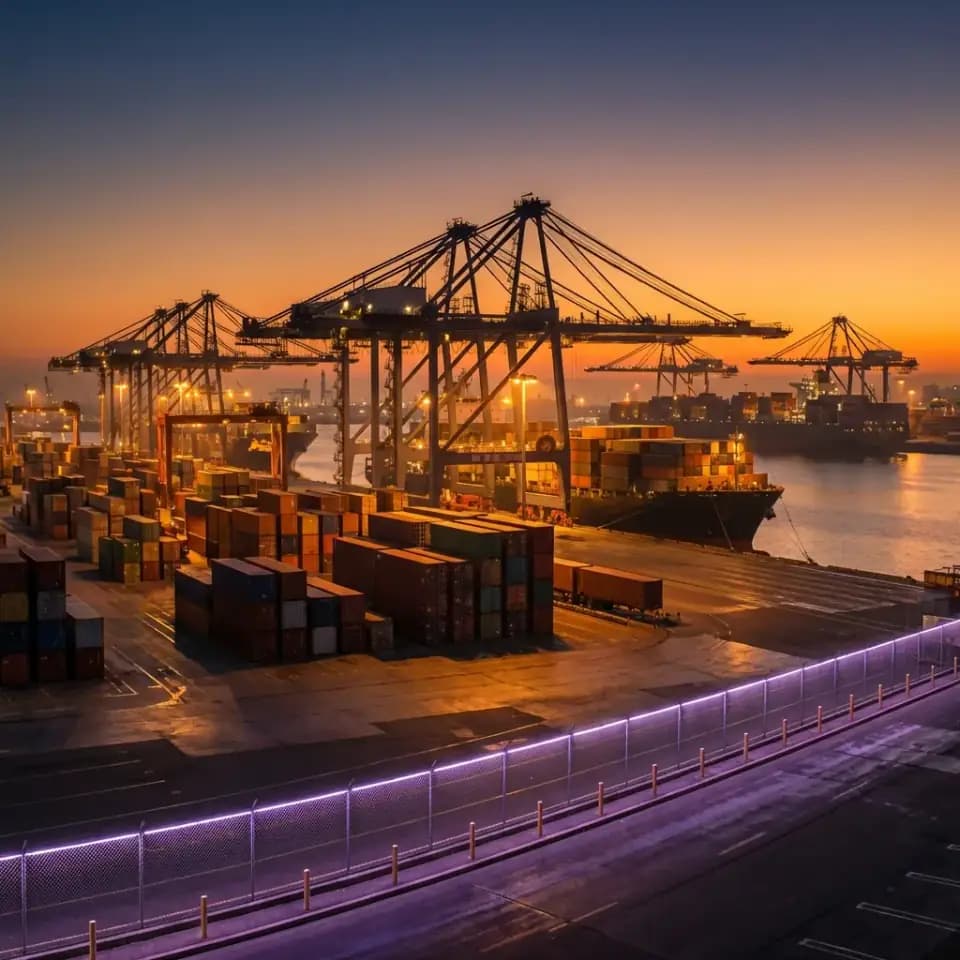
- ISPS-Compliant Port Perimeter
- Port of Topolobampo — Pacific Deep-Water and Cabotage Port
Plan a FortSense assessment for this market
Share the perimeter length, fence type, and monitoring workflow. FortSense can help scope zones, integration points, and commissioning requirements for this location.
Services
Livestock & Feed Lot Perimeter
Fiber optic perimeter detection for livestock pens, feedlots, and breeding facilities with animal-immune algorithms calibrated for large herds.
Irrigation & Cable Theft Detection
Protecting irrigation infrastructure, pivot systems, and agricultural power lines from cable theft and equipment vandalism across remote farmland.
ISPS-Compliant Port Perimeter
International Ship and Port Facility Security (ISPS) compliant fiber optic perimeter detection for port boundaries, restricted zones, and maritime access points.
Deployment patterns for local sites
How FortSense Works in Sinaloa
Fiber optic perimeter security adapted to local conditions and requirements.
- Fiber installed. Passive fiber optic cable mounts on the existing fence or wall with minimal civil work.
- Vibration detected. Any contact creates vibration patterns in the fiber so climbing, cutting, or lifting attempts become visible immediately.
- AI/DSP verification. Algorithms filter out wind, animals, and environmental noise before an operator ever sees an alarm.
- Alarm if intrusion. Only real threats trigger zone-based alarms that can route into the monitoring workflow already used by the site team.
Adapted for Sinaloa. Our local partners understand Sinaloa's climate, terrain, and security challenges. The fiber optic system is configured to filter local environmental conditions while maintaining maximum sensitivity to real intrusion attempts.
Integration and security software fit
FortSense can feed alarms into the monitoring stack a site already uses, including VMS, PSIM, alarm panels, relay inputs, TCP/IP workflows, and camera verification.
- Zone-based alarms for operators and guard teams
- Camera and VMS workflows for visual verification
- Relay or network outputs for existing security systems
- Software-assisted filtering before dispatch decisions
Industries in this market
Relevant FortSense industry and use-case paths connected to this location.
- Port of Topolobampo — Pacific Deep-Water and Cabotage Port
- Port of Mazatlán — Commercial, Tourism and Fishing Terminal
- Fuerte Valley and Culiacán Valley Irrigation Districts
- Distribution Center Perimeter Security
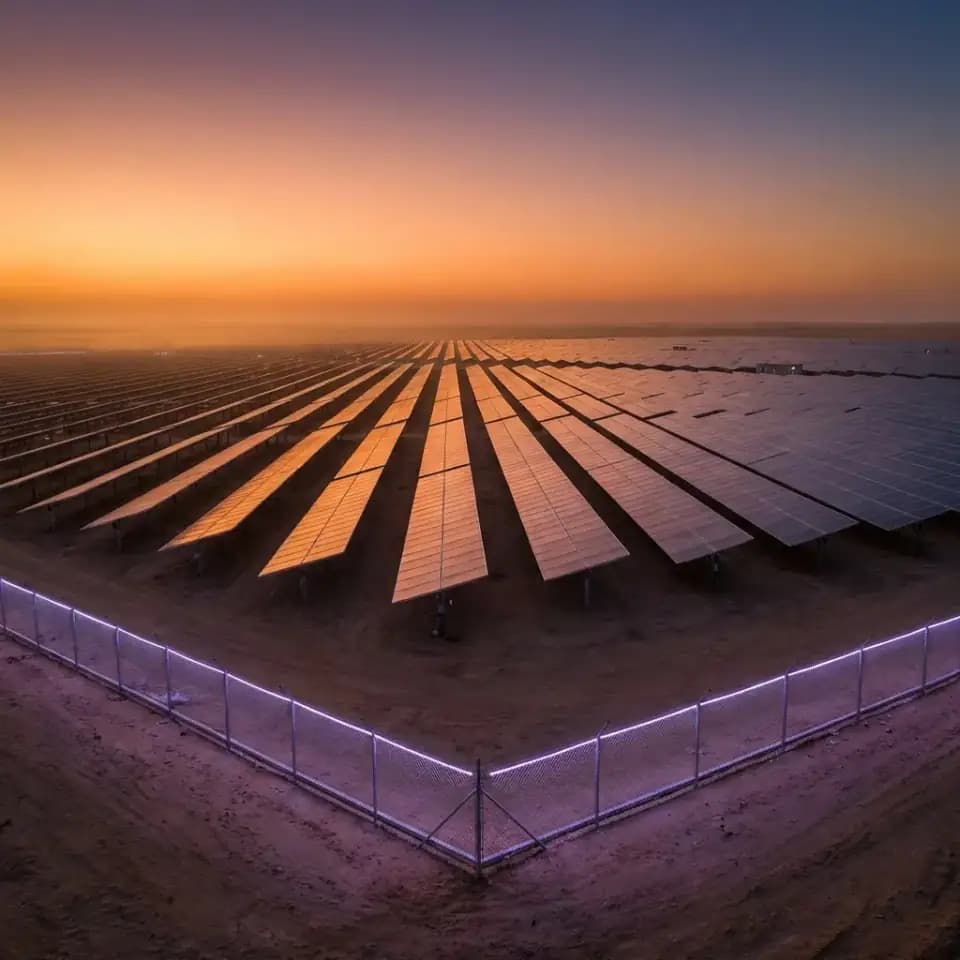
- Solar Farm Perimeter Security
- Perimeter Security for Critical Infrastructure
Why FortSense fits in Perimeter Security in Sinaloa
FortSense is designed for perimeter security work where false-alarm reduction, passive fiber sensing, and practical integration matter more than adding another camera-only layer.
- Passive fiber on existing fences, walls, or perimeter structures
- AI/DSP filtering for wind, vibration, and environmental noise
- Zone-level alerts that can match the site's response model
- Support for design, integration, commissioning, and handover
Market notes
Practical details that help this page stay specific to the market instead of drifting into generic copy.
- Port of Topolobampo — Pacific Deep-Water and Cabotage Port
- Port of Mazatlán — Commercial, Tourism and Fishing Terminal
- Fuerte Valley and Culiacán Valley Irrigation Districts
- Livestock & Feed Lot Perimeter
Related FortSense paths
Related technical content and commercial guidance linked from this location page.


