



Local service overview
Oil Industry Perimeter Security in Tabasco
FortSense® protects the new Dos Bocas Refinery, PEMEX gas complexes and petrochemical plants in Tabasco with fiber optic detection.
Tabasco is the heart of Mexico's onshore oil industry, housing PEMEX's most important onshore production assets and the new Olmeca Refinery (Dos Bocas) in Paraíso municipality. The Olmeca Refinery, officially inaugurated in 2023 with a federal investment exceeding US$16 billion — the most costly infrastructure project of the 2018–2024 administration — has capacity to process 340,000 barrels per day of Maya heavy crude and has boosted PEMEX refining to its 11-year high, operating at nearly 87% of installed capacity according to 2025 Energy Secretariat reports.
The refinery produces premium and regular gasoline, ultra-low-sulfur diesel, jet fuel and petroleum coke, reducing dependence on refined fuel imports that previously cost the country over US$25 billion annually. Foreign direct investment in Tabasco reached US$384 million in 2024, primarily from the United States (US$280 million), reflecting the strategic importance of the state's energy infrastructure for national energy security and oil sovereignty.
The Nuevo Pemex Gas Processing Complexes (in Reforma municipality) and Ciudad Pemex (in Macuspana) process natural gas, wet gas and condensates from the onshore production fields of the Macuspana Basin and Southern Region, with combined capacity exceeding 2 billion cubic feet per day of natural gas. The La Venta Petrochemical Complex (in Huimanguillo, producing aromatic derivatives) and the Cactus Complex (in Reforma, shared with Chiapas, one of the world's largest cryogenic plants) produce chemical derivatives including ethylene, polyethylene, ammonia, elemental sulfur and nitrogen fertilizers.
The Dos Bocas Maritime Terminal in Paraíso is a petroleum export terminal handling Maya and Olmeca crude for international markets with capacity for tanker vessels up to 150,000 deadweight tons. The Samaria-Luna and Bellota-Jujo Production Assets represent active onshore fields that have produced over 500 million accumulated barrels since their discovery. The Frontera Port in Centla handles commercial cargo and regional agricultural products.
Beyond oil, Tabasco maintains significant and culturally rooted tropical agriculture. The state is the leading national cacao producer (representing over 70% of Mexican production), with the municipality of Comalcalco as the epicenter of the cacao zone where companies such as Hacienda La Luz, Finca Cholula, Wolter and the Ruta del Cacao generate artisanal and industrial agribusiness, plus gastronomic tourism attracting international visitors.
Plantain and macho banana (Tabasco is the second national producer with over 500,000 tons annually), coconut, sugar cane processed at the Ingenio Presidente Benito Juárez de Cárdenas, Tabasco pepper (used in the famous sauce of the same name), vanilla, tropical fruits such as mamey, soursop and caimito, and extensive beef cattle ranching with over 1. 8 million head in tropical pastures complement the primary economy.
Security challenges are dominated by sophisticated threats to the country's most concentrated oil infrastructure. Huachicoleo from PEMEX pipelines and storage is endemic and highly organized, with criminal networks employing technicians with specialized knowledge to drill crude, gasoline and diesel pipelines, install clandestine valves and hoses, and operate clandestine tanker trucks to transport stolen fuel to illegal filling stations and distributors — hundreds of clandestine taps have been detected annually in the over 3,000 km pipeline network crossing the Tabascan plain.
Organized crime, including CJNG and Gulf Cartel cells, directs operations against oil workers and equipment — stealing specialized tools, safety valves, electronic meters and drilling equipment worth hundreds of thousands of dollars.
Extortion of oil service companies operating as PEMEX contractors (drilling, well maintenance, personnel and equipment transport), pipeline infrastructure sabotage as retaliation or distraction to facilitate theft, cargo theft on Federal Highways 180 (the Gulf axis) and 187 (Villahermosa-Escárcega), and vehicle theft in the Villahermosa metropolitan area (the largest city in southeastern Mexico with over 800,000 inhabitants) form persistent threats.
Tabasco is one of Mexico's most flood-prone states, with average annual precipitation exceeding 2,500 mm — one of the country's highest, comparable to equatorial tropical regions. Tropical storms and Gulf of Mexico hurricanes directly impact the Tabascan coast, extreme humidity (above 85% year-round) and abundant rainfall for 8–9 months per year saturate clay soils, and catastrophic floods from the Grijalva and Usumacinta river systems (Mexico's two most water-rich rivers, converging in the Tabascan plain to form one of Mesoamerica's largest hydrological basins) are recurring events — the 2007 floods submerged 80% of Villahermosa under over 2 meters of water, and the 2020 floods affected over 200,000 people with enormous losses.
Cold fronts (nortes) with winds above 100 km/h disrupt port and maritime operations from November to March.
FortSense is the only perimeter detection technology that survives and operates reliably under Tabasco's extreme conditions. Fiber optics are completely immune to the extreme tropical humidity that corrodes electronic circuits and connectors within weeks, do not corrode in the acidic Tabascan soil saturated with decomposing organic matter, continue functioning during and after floods that completely submerge equipment under meters of muddy water — a situation that would instantly destroy all conventional electronic systems — and detect clandestine pipeline perforations with metric precision before environmental spills or explosions occur.
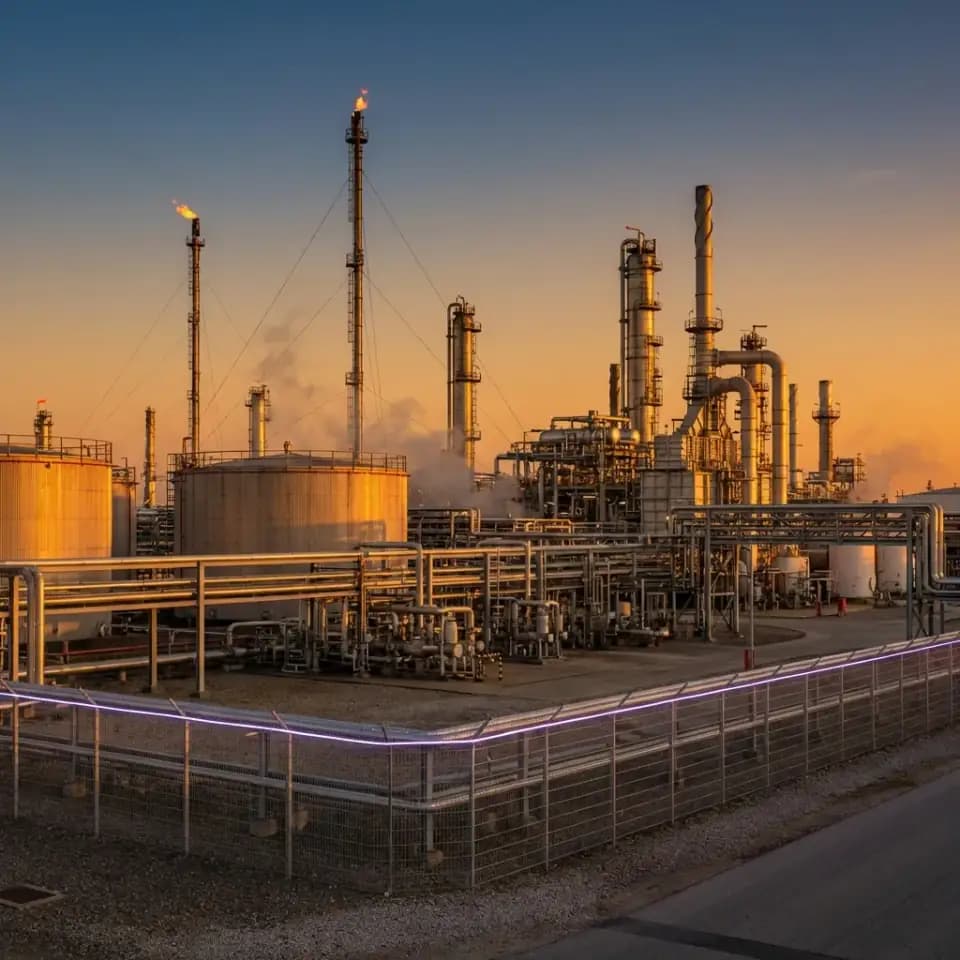
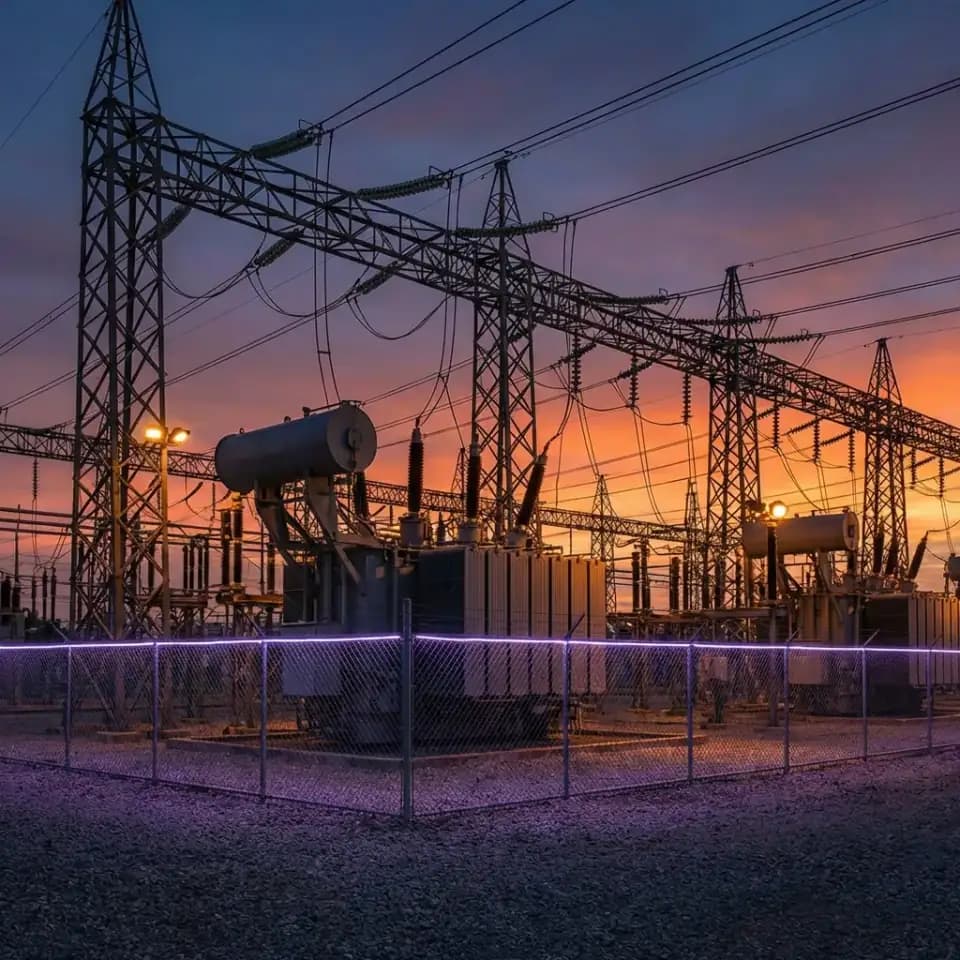
Deployments cover the Olmeca Refinery with its kilometers-long perimeter in coastal terrain exposed to storm surge, natural gas processing complexes with explosive atmosphere risk, petrochemical plants, hydrocarbon storage terminals, and linear pipeline protection along hundreds of kilometers of floodable tropical plain.
Professional perimeter protection for distribution centers, manufacturing, and critical infrastructure in Tabasco.
- Fuel Depot & Terminal Protection
- Wellhead & Pump Station Security
- Container Yard & Terminal Protection
- Olmeca Refinery (Dos Bocas) in Paraíso — New Oil Refinery
Plan a FortSense assessment for this market
Share the perimeter length, fence type, and monitoring workflow. FortSense can help scope zones, integration points, and commissioning requirements for this location.
Services
Fuel Depot & Terminal Protection
Securing fuel storage depots, LNG terminals, and transfer stations against unauthorized access, sabotage, and theft with zone-specific alarm mapping.
Wellhead & Pump Station Security
Remote wellhead perimeter monitoring across dispersed field operations with solar-powered relay nodes and SCADA integration.
Container Yard & Terminal Protection
High-density container yard monitoring with zone-based intrusion detection, anti-climb sensing, and integration with port access control systems.
Deployment patterns for local sites
How FortSense Works in Tabasco
Fiber optic perimeter security adapted to local conditions and requirements.
- Fiber installed. Passive fiber optic cable mounts on the existing fence or wall with minimal civil work.
- Vibration detected. Any contact creates vibration patterns in the fiber so climbing, cutting, or lifting attempts become visible immediately.
- AI/DSP verification. Algorithms filter out wind, animals, and environmental noise before an operator ever sees an alarm.
- Alarm if intrusion. Only real threats trigger zone-based alarms that can route into the monitoring workflow already used by the site team.
Adapted for Tabasco. Our local partners understand Tabasco's climate, terrain, and security challenges. The fiber optic system is configured to filter local environmental conditions while maintaining maximum sensitivity to real intrusion attempts.
Integration and security software fit
FortSense can feed alarms into the monitoring stack a site already uses, including VMS, PSIM, alarm panels, relay inputs, TCP/IP workflows, and camera verification.
- Zone-based alarms for operators and guard teams
- Camera and VMS workflows for visual verification
- Relay or network outputs for existing security systems
- Software-assisted filtering before dispatch decisions
Industries in this market
Relevant FortSense industry and use-case paths connected to this location.
- Olmeca Refinery (Dos Bocas) in Paraíso — New Oil Refinery
- Natural Gas Processing Complexes in Reforma and Macuspana
- La Venta and Cactus Petrochemical Complexes
- Distribution Center Perimeter Security
- Solar Farm Perimeter Security
- Perimeter Security for Critical Infrastructure
Why FortSense fits in Perimeter Security in Tabasco
FortSense is designed for perimeter security work where false-alarm reduction, passive fiber sensing, and practical integration matter more than adding another camera-only layer.
- Passive fiber on existing fences, walls, or perimeter structures
- AI/DSP filtering for wind, vibration, and environmental noise
- Zone-level alerts that can match the site's response model
- Support for design, integration, commissioning, and handover
Market notes
Practical details that help this page stay specific to the market instead of drifting into generic copy.
- Olmeca Refinery (Dos Bocas) in Paraíso — New Oil Refinery
- Natural Gas Processing Complexes in Reforma and Macuspana
- La Venta and Cactus Petrochemical Complexes
- Fuel Depot & Terminal Protection
Related FortSense paths
Related technical content and commercial guidance linked from this location page.


