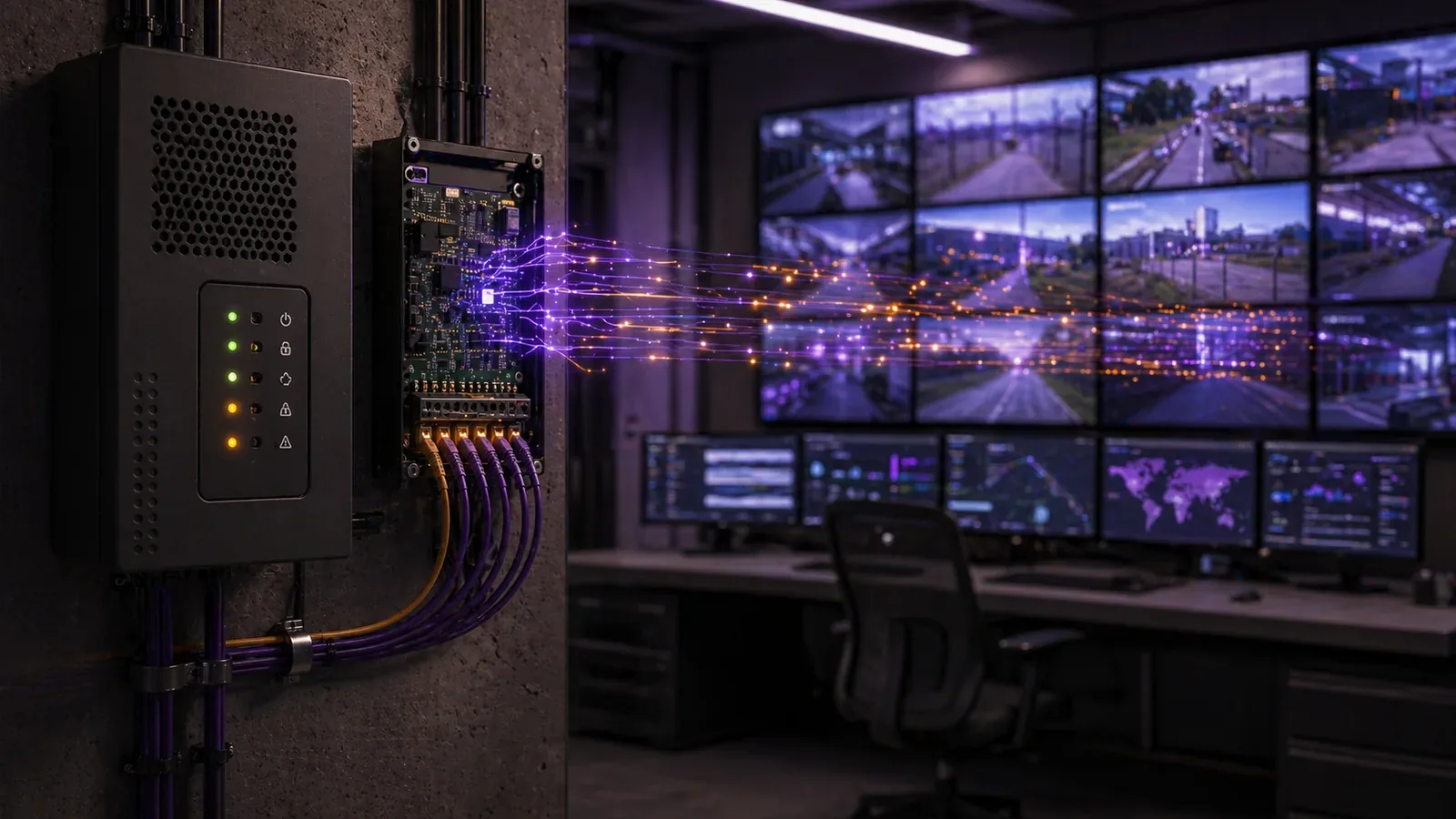
When retrofitting alarm systems in a sprawling utility campus or multi-building facility, the choice of transmission protocol can make or break operational reliability. Many sites still rely on legacy phone-line communicators using protocols like Contact-ID over POTS, which falter amid declining landline availability and VoIP transition pains. SIA DC-09 steps in as a battle-tested IP standard, delivering events from panels to central stations with two-way handshakes, encryption support, and seamless integration into existing networks.
Picture a North America-based energy provider tasked with upgrading 20 substations. Each site has intrusion panels wired to dial-up modules that routinely drop signals during peak hours or storms. Switching to SIA DC-09 communicators mounted alongside the panels allows dispatch of alarms over broadband, slashing latency from minutes to seconds while confirming receipt. This shift not only cuts ongoing phone line costs but also aligns with modern cybersecurity expectations, as the protocol supports TLS for encrypted sessions.
Integrators often face the tension between sticking with familiar legacy setups and embracing IP protocols like SIA DC-09. The decision hinges on site constraints—bandwidth stability, firewall rules, and panel compatibility. Done right, it future-proofs the system; botched, it invites false alarms or missed events. This guide unpacks the real-world mechanics, from wiring diagrams to verification steps, drawing on field experiences in high-stakes environments.
What the design decision looks like in practice
Deploying SIA DC-09 typically starts at the panel level in a retrofit scenario. For a multi-door warehouse protected by addressable intrusion panels, the integrator adds an IP communicator module—often a standalone box or embedded in newer panels—that encapsulates alarm events in DC-09 packets. These UDP or TCP payloads carry SIA-DCS or CID-formatted data, routed through the site's router to the receiver at the monitoring center. Unlike one-way dialers, DC-09 enables the receiver to acknowledge events and poll for supervision, ensuring no silent failures.
In practice, this manifests during a campus-wide upgrade. Technicians rewire the panel's relay outputs or serial ports to the communicator's inputs, configure static IP addressing to avoid DHCP churn, and test end-to-end with simulated faults. The protocol's heartbeat mechanism—periodic keep-alives—verifies path integrity every few minutes, a stark improvement over phone-line systems that only activate on events. Field teams report fewer truck rolls because remote diagnostics flag issues before they escalate.
Transitioning feels straightforward on paper but reveals nuances in mixed environments. Legacy zones might trigger non-standard codes, requiring event mapping tables in the communicator firmware. Success stories from utility sites highlight how SIA DC-09 unifies disparate panel brands under one protocol, simplifying receiver configuration.
System architecture and integration considerations
At its core, SIA DC-09 architecture spans the premises communicator, IP transport layer, and central receiver. The communicator serializes panel events into DC-09 envelopes, which include account ID, event code, zone, timestamp, and checksums. Over IP, these traverse NAT if configured properly, landing at the receiver's listener port—typically UDP 2001 for events and 2000 for responses. Firewalls demand precise rules: inbound ACKs on ephemeral ports and outbound polls must punch through without bidirectional NAT headaches.
Integration shines in hybrid setups, like tying SIA DC-09 into a broader PSIM or FortSense 4 platform. Receivers decode events into SIEM feeds or trigger video verification workflows. For critical infrastructure, segmenting alarm traffic on VLANs prevents DoS risks, while QoS markings prioritize packets over routine data. IT managers appreciate the protocol's lightweight footprint—no heavy polling like SNMP—yet it demands stable WAN links, as packet loss triggers retries that can backlog queues.
Scalability enters the picture for enterprise deployments. A single receiver handles thousands of accounts via load balancers, but latency spikes if MTU mismatches fragment packets. Testing with tools mimicking network impairments uncovers these before go-live.
Operational workflows and field constraints
Daily operations under SIA DC-09 revolve around event lifecycle: trigger, transmission, acknowledgment, and logging. Operators at the central station see real-time events populating the event list, with timestamps synced via NTP for forensics. Two-way flow allows arm/disarm commands back to panels, streamlining guard tours or remote resets—vital for unmanned utility sites where physical access lags.
Field constraints shape workflows profoundly. In remote substations, solar-powered routers pair with low-power communicators to maintain uptime, but intermittent connectivity prompts configurable retry counts and failover to cellular. Technicians use communicator web interfaces for on-site tweaks, avoiding panel deep-dives. Training emphasizes interpreting DC-09 logs for troubleshooting, like distinguishing network timeouts from panel faults.
Workflow efficiency peaks when automation kicks in: events route to mobile apps for first responders, escalating unacknowledged alarms. Constraints like legacy wiring limit options, pushing creative relay multiplexing.
Common failure points and design mistakes
Network misconfigurations top the failure list. Firewalls blocking return traffic leave events unacknowledged, triggering endless retries and panel tampers. Designers overlook this by assuming symmetric paths; in reality, carrier-grade NAT mangles UDP sessions. Another pitfall: mismatched formats—panels spitting CID codes into a DCS-only receiver—causing decode errors and silenced alarms.
Hardware oversights compound issues. Undersized communicators overload during zone expansions, dropping packets. Firmware lags expose vulnerabilities patched in recent revisions, like the 2026 SIA update bolstering encryption. Field mistakes include static IPs conflicting post-DHCP migration or unbonded Ethernet exposing single points of failure.
- Verify bidirectional port access pre-cutover.
- Map all event codes exhaustively.
- Test under simulated 20% packet loss.
What to verify before procurement
Procurement checklists must probe protocol fidelity first. Confirm the communicator supports SIA DC-09 natively, including DCS and CID variants, with TLS 1.3 for encryption—non-negotiable in critical sectors. Review receiver compatibility charts; not all parse extensions like user IDs or checksum variants uniformly.
Scalability and support matter: does the vendor certify MTBF under load? Check for API hooks into ecosystems like FortSense 4. Field-test units for power draw and heat in enclosures. Certifications—UL, ANSI—signal compliance, but dig into interoperability logs from user forums.
- Request end-to-end demo with your panels.
- Audit firmware update cadence.
- Confirm NAT traversal in docs.
Where to go next
Explore FortSense 4 for seamless SIA DC-09 integration in unified platforms. For tailored advice on critical infrastructure security, especially in North America deployments, request a design review. See the SIA DC-09 glossary for core terms.