

Local service overview
Fiber Optic Perimeter Security for South Dakota Agriculture & Defense
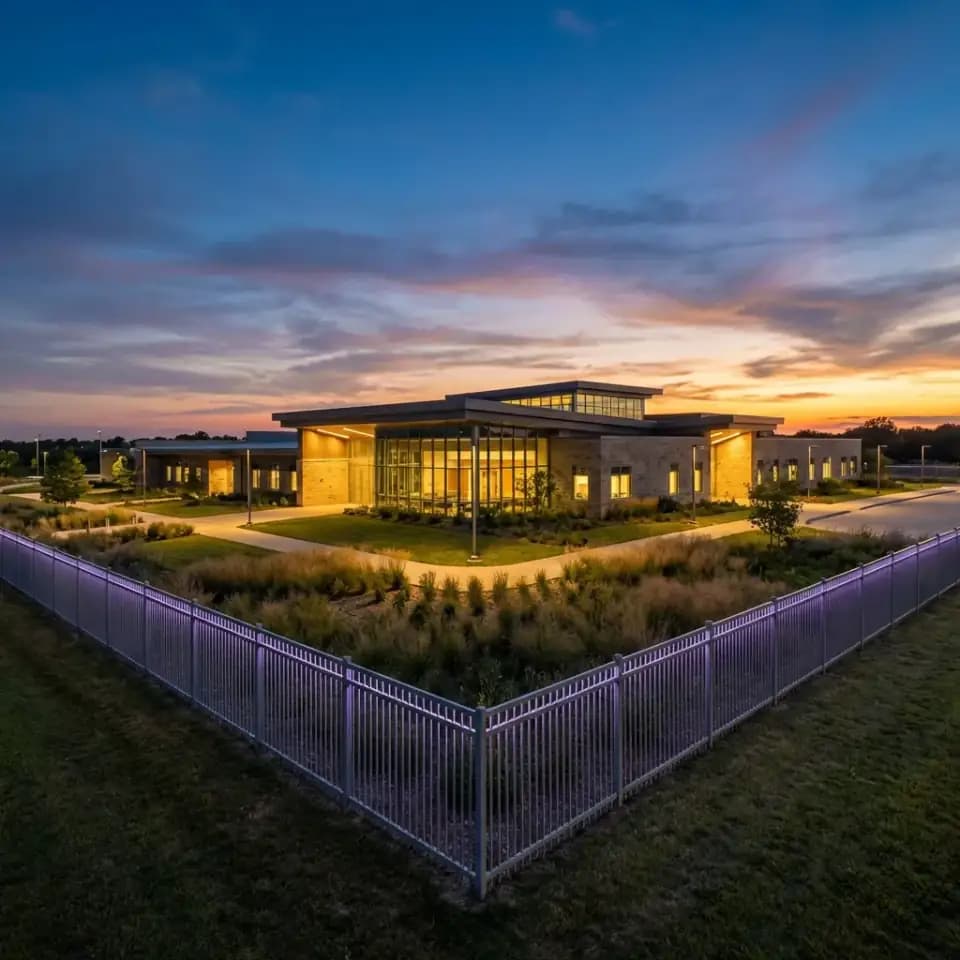
FortSense protects South Dakota's Ellsworth AFB bomber wing, Smithfield Foods processing plant in Sioux Falls, and Sanford Underground Research Facility with fiber optic intrusion detection.
## Economic & Industrial Landscape
South Dakota generates approximately $60 billion in gross domestic product, with an economy built on agriculture, financial services, tourism, and a growing manufacturing sector. Cattle ranching is the single largest agricultural activity, and the state ranks among national leaders in corn, soybean, sunflower, and wheat production. The Smithfield Foods pork processing plant in Sioux Falls is one of the largest in the nation, processing approximately 19,500 hogs per day and employing thousands of workers in what represents the state's most significant single-site industrial operation.
POET biorefining operates multiple ethanol plants across South Dakota, converting corn into biofuel at facilities that each process millions of bushels annually.
South Dakota's financial services sector is disproportionately large relative to its population of approximately 900,000 residents. Citibank relocated its credit card operations to Sioux Falls in 1981 after the state eliminated usury rate caps, triggering an influx of financial institutions that transformed the city into a major banking center. Wells Fargo and Capital One both maintain significant operations in Sioux Falls. The state has no income tax, which has attracted corporate operations and high-net-worth individuals.
Tourism generates over $4 billion annually, driven by Mount Rushmore National Memorial, Badlands National Park, the Black Hills, and the annual Sturgis Motorcycle Rally that draws over 500,000 attendees. Daktronics in Brookings manufactures the large-scale electronic displays and scoreboards seen in major stadiums worldwide.
## Critical Infrastructure
Ellsworth Air Force Base near Rapid City is home to the 28th Bomb Wing, operating B-1B Lancer strategic bombers and serving as a critical component of the nation's conventional and nuclear deterrence capability. The base's operations require extensive perimeter security across its sprawling footprint in the western South Dakota landscape. The Sanford Underground Research Facility (SURF) in Lead occupies the former Homestake Gold Mine, descending nearly 5,000 feet underground to conduct particle physics and dark matter experiments that rank among the most sensitive scientific research programs in the world.
The Deep Underground Neutrino Experiment (DUNE), a flagship international physics project, is under construction at SURF.
The Keystone Pipeline traverses western South Dakota, carrying crude oil from Canada's oil sands through the state en route to refineries in Illinois and the Gulf Coast. BNSF Railway's mainline crosses the state, serving as a primary corridor for grain and commodity transport connecting the agricultural heartland to West Coast ports. The state's energy infrastructure includes the Big Stone Power Plant in Big Stone City, the Deer Creek Station natural gas plant near White, and a growing portfolio of wind energy installations including the Crowned Ridge Wind Farm, Prevailing Winds, and Wheatland wind farm.
Sioux Falls Regional Airport and Rapid City Regional Airport provide the primary commercial aviation access.
## Security Challenges
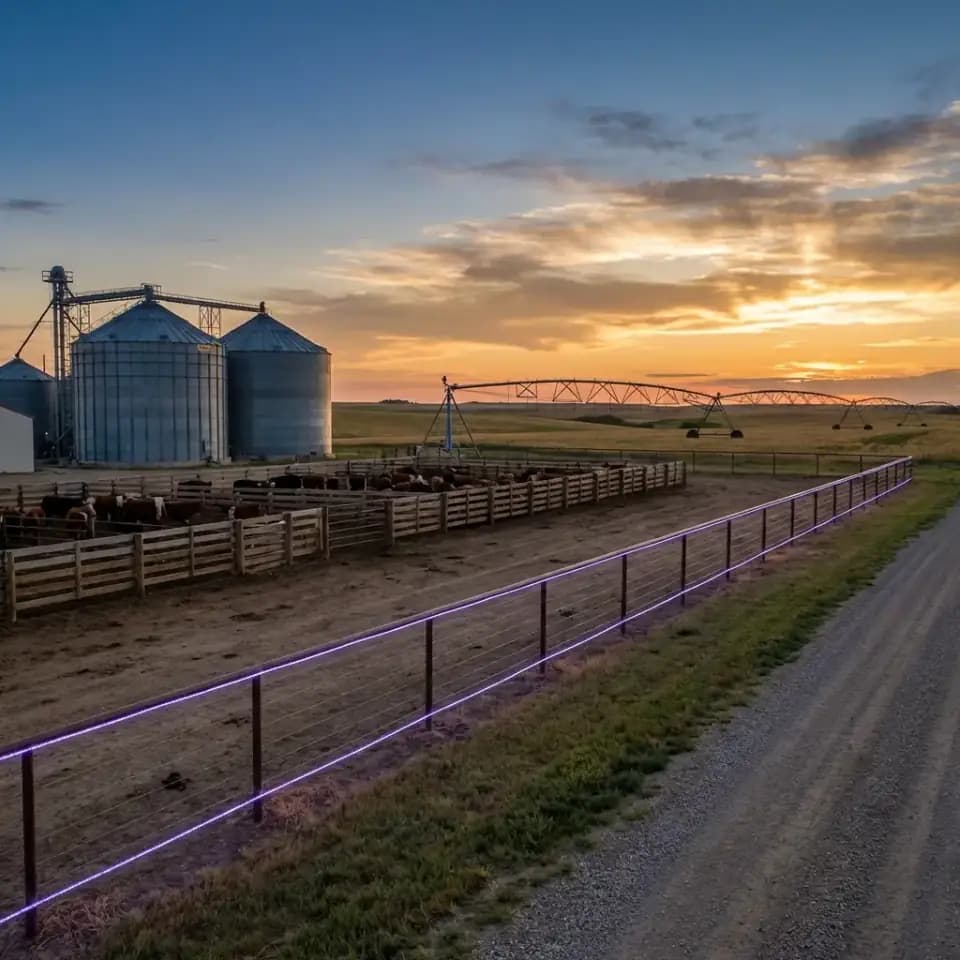
South Dakota's agricultural operations face persistent rural crime challenges across its vast, sparsely populated landscape. Agricultural chemical storage facilities, which contain ammonium nitrate and other potentially dangerous fertilizers, require security monitoring that conventional systems struggle to provide in remote locations. Farm equipment theft, including tractors, combines, and irrigation components, costs South Dakota agricultural producers millions of dollars annually.
The Keystone Pipeline's route through western South Dakota creates pipeline security obligations across hundreds of miles of rangeland and prairie, where unauthorized access and potential sabotage must be detected across terrain with minimal existing infrastructure.
The Smithfield Foods plant highlighted workforce and facility security vulnerabilities during the COVID-19 pandemic, when the plant became one of the largest coronavirus clusters in the nation, drawing attention to the security and access control requirements of large-scale food processing operations. Drug trafficking along the I-90 corridor, which spans the state from Sioux Falls to Rapid City, creates secondary security pressures for industrial and commercial facilities near highway interchanges.
Wind farm component theft and vandalism in the remote areas of eastern and central South Dakota target copper wiring and electronic equipment at installations that may be miles from the nearest occupied structure.
## Why Fiber Optic PIDS in South Dakota
South Dakota's continental-cold climate subjects security infrastructure to some of the most extreme winter conditions in the lower 48 states. Wind chill temperatures routinely reach minus 30 to minus 40 degrees Fahrenheit during winter months, with blizzards and heavy snowfall creating conditions that can disable electronic security sensors through ice accumulation, snow loading, and power system failures. Summer brings severe thunderstorms with large hail and tornadoes, producing rapid environmental transitions that stress conventional perimeter security systems.
Fiber optic sensing cables operate reliably across this extreme temperature range because the glass fiber itself is unaffected by temperature changes that would degrade electronic components.
The vast distances involved in South Dakota's security requirements make fiber optic PIDS particularly valuable. A single fiber optic cable can monitor perimeters extending for many kilometers, allowing remote pipeline corridors, wind farm boundaries, and agricultural storage compound fence lines to be protected without the need for powered sensor stations at regular intervals.
For Ellsworth Air Force Base, which occupies thousands of acres in the open prairie landscape, fiber optic detection provides continuous perimeter coverage that maintains sensitivity even when blizzard conditions reduce visibility to near zero and render camera-based surveillance useless.
## Deployment Context
South Dakota's security landscape spans the strategic bomber operations at Ellsworth AFB, the world-class underground physics research at SURF in Lead, the massive Smithfield Foods processing operation in Sioux Falls, pipeline corridors crossing the western prairie, and agricultural storage facilities dispersed across thousands of square miles of farmland.
Fiber optic PIDS technology delivers the extreme-weather resilience and long-range detection capability required to protect these diverse assets across South Dakota's harsh Great Plains climate, where reliable perimeter intrusion detection must function through blizzards, hail storms, and temperature extremes that exceed the operational limits of conventional electronic security systems.
Professional perimeter protection for distribution centers, manufacturing, and critical infrastructure in South Dakota.
- Livestock & Feed Lot Perimeter
- Irrigation & Cable Theft Detection
- Open-Pit & Quarry Perimeter Security
- Military Air Bases & Defense Installations
Plan a FortSense assessment for this market
Share the perimeter length, fence type, and monitoring workflow. FortSense can help scope zones, integration points, and commissioning requirements for this location.
Services
Livestock & Feed Lot Perimeter
Fiber optic perimeter detection for livestock pens, feedlots, and breeding facilities with animal-immune algorithms calibrated for large herds.
Irrigation & Cable Theft Detection
Protecting irrigation infrastructure, pivot systems, and agricultural power lines from cable theft and equipment vandalism across remote farmland.
Open-Pit & Quarry Perimeter Security
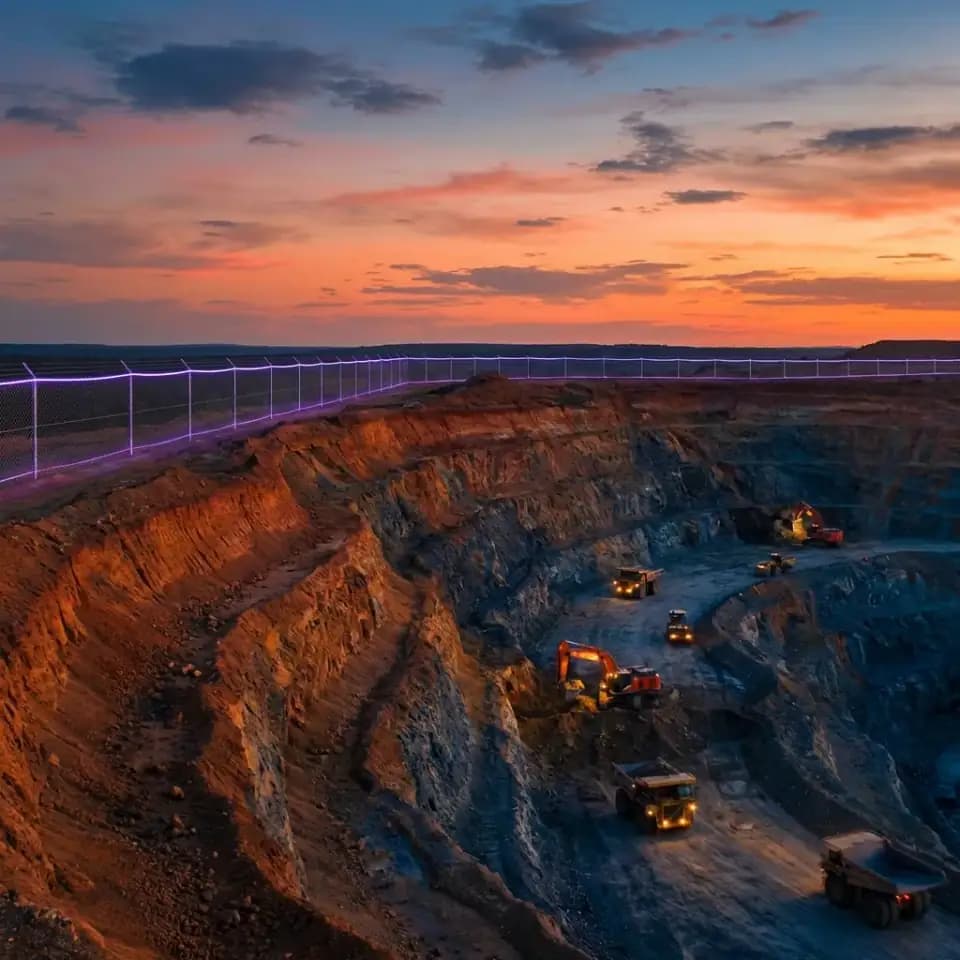
Blast-resistant fiber optic detection for open-pit mine boundaries, haul roads, and restricted blasting zones with vibration filtering for heavy equipment.
Deployment patterns for local sites
How FortSense Works in South Dakota
Fiber optic perimeter security adapted to local conditions and requirements.
- Fiber installed. Passive fiber optic cable mounts on the existing fence or wall with minimal civil work.
- Vibration detected. Any contact creates vibration patterns in the fiber so climbing, cutting, or lifting attempts become visible immediately.
- AI/DSP verification. Algorithms filter out wind, animals, and environmental noise before an operator ever sees an alarm.
- Alarm if intrusion. Only real threats trigger zone-based alarms that can route into the monitoring workflow already used by the site team.
Adapted for South Dakota. Our local partners understand South Dakota's climate, terrain, and security challenges. The fiber optic system is configured to filter local environmental conditions while maintaining maximum sensitivity to real intrusion attempts.
Integration and security software fit
FortSense can feed alarms into the monitoring stack a site already uses, including VMS, PSIM, alarm panels, relay inputs, TCP/IP workflows, and camera verification.
- Zone-based alarms for operators and guard teams
- Camera and VMS workflows for visual verification
- Relay or network outputs for existing security systems
- Software-assisted filtering before dispatch decisions
Industries in this market
Relevant FortSense industry and use-case paths connected to this location.
- Military Air Bases & Defense Installations
- Meatpacking & Food Processing Plants
- Agricultural Storage & Ethanol Facilities
- Distribution Center Perimeter Security
- Solar Farm Perimeter Security
- Perimeter Security for Critical Infrastructure
Why FortSense fits in Perimeter Security in South Dakota
FortSense is designed for perimeter security work where false-alarm reduction, passive fiber sensing, and practical integration matter more than adding another camera-only layer.
- Passive fiber on existing fences, walls, or perimeter structures
- AI/DSP filtering for wind, vibration, and environmental noise
- Zone-level alerts that can match the site's response model
- Support for design, integration, commissioning, and handover
Market notes
Practical details that help this page stay specific to the market instead of drifting into generic copy.
- Military Air Bases & Defense Installations
- Meatpacking & Food Processing Plants
- Agricultural Storage & Ethanol Facilities
- Livestock & Feed Lot Perimeter
Related FortSense paths
Related technical content and commercial guidance linked from this location page.


