Local service overview
Spaceport & Strategic Port Perimeter Security in Florida
FortSense® fiber optic PIDS protecting Florida's space launch infrastructure, seven deepwater seaports, phosphate mining operations, and the nation's densest concentration of military command headquarters.
Florida is home to the most diverse and strategically consequential collection of critical infrastructure of any state in the American Southeast, combining the nation's primary space launch complex, seven deepwater seaports handling hundreds of millions of tons of cargo annually, the headquarters of both U. S. Central Command and U. S. Special Operations Command, two operating nuclear power plants, the nation's largest phosphate mining operation, and an economy that ranks as the fourth-largest in the United States.
This extraordinary infrastructure density is deployed across a 65,000-square-mile peninsula that is simultaneously the most hurricane-exposed major state in the country, creating a perimeter security environment where the combination of asset value, threat diversity, and environmental severity has no direct parallel.
Florida's space launch infrastructure has entered a new era of operational intensity. Kennedy Space Center and the adjacent Cape Canaveral Space Force Station on the Atlantic coast host the launch pads, processing facilities, and range infrastructure supporting SpaceX's Falcon 9 and Falcon Heavy rockets (which now launch at a cadence exceeding once per week), United Launch Alliance's Atlas V and Vulcan Centaur vehicles, Blue Origin's New Glenn rocket, and NASA's Space Launch System. Patrick Space Force Base manages launch range operations and houses the 45th Space Wing.
The combined launch complex encompasses thousands of acres of restricted-access land containing launch pads, propellant storage facilities, spacecraft processing cleanrooms, and telemetry stations, all surrounded by an ecologically sensitive environment (Merritt Island National Wildlife Refuge) where alligators, wild boar, and protected bird species routinely approach perimeter barriers.
Security at the space launch complex must prevent unauthorized access that could delay launches costing hundreds of millions of dollars each, while managing an extreme false alarm environment created by the wildlife refuge setting.
Florida's seven deepwater seaports form the backbone of the state's trade economy and the primary maritime gateway between the United States, Latin America, and the Caribbean. PortMiami processes over 7 million cruise passengers annually and handles more than one million TEUs of containerized cargo, making it one of the busiest dual-purpose ports in the world. Port Everglades in Fort Lauderdale is the state's primary petroleum import terminal and a major cruise port. Port Tampa Bay is the largest port in Florida by tonnage, handling bulk commodities including phosphate, petroleum, and construction materials.
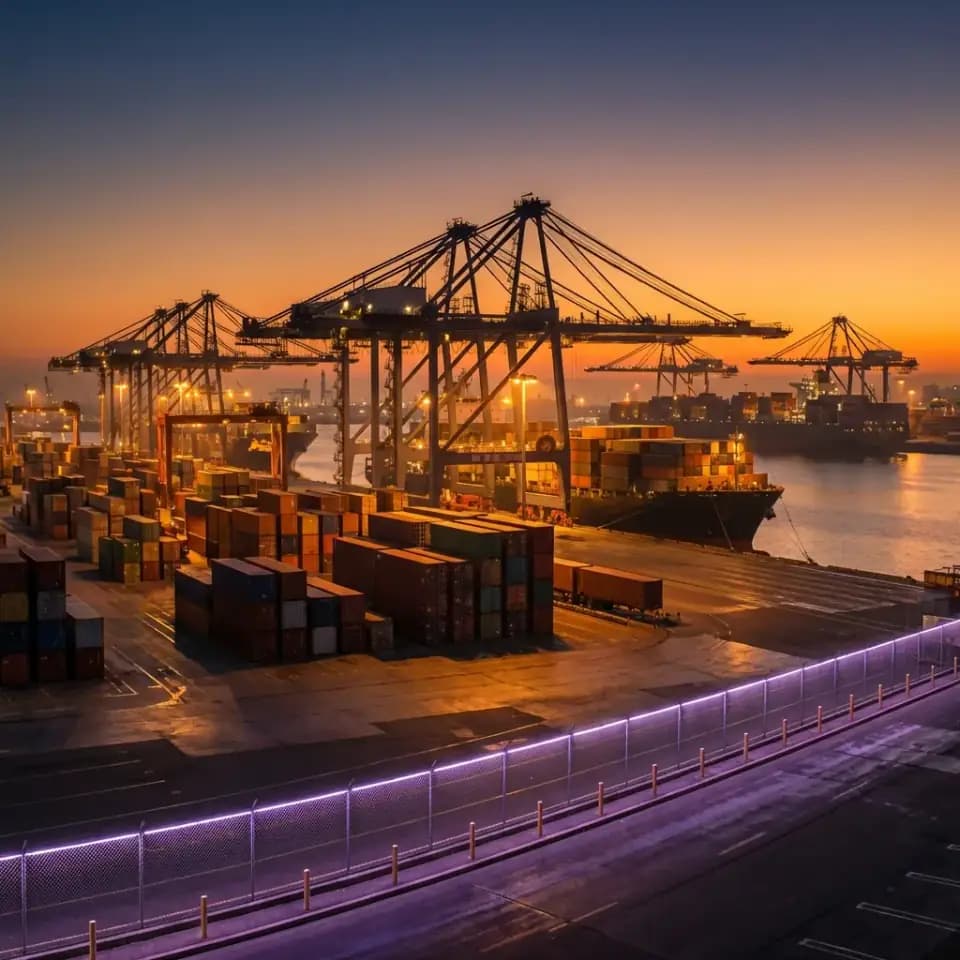
JAXPORT in Jacksonville is the nation's largest vehicle-handling port, processing hundreds of thousands of imported automobiles and heavy equipment annually. Port Canaveral serves both cruise ships and military cargo for the nearby launch complex and Naval facilities. Each of these ports presents a unique security challenge combining waterfront exposure, massive gate complexes processing thousands of trucks daily, intermodal rail connections, and cargo staging areas spanning hundreds of acres.
Military infrastructure in Florida is massive in both scope and strategic importance. MacDill Air Force Base in Tampa hosts the headquarters of U. S. Central Command (CENTCOM), which commands all American military operations across the Middle East and Central Asia, and U. S. Special Operations Command (SOCOM), which directs special operations forces worldwide. These are arguably the two most operationally consequential military headquarters in the post-9/11 era. NAS Jacksonville is the largest naval air station in the Southeast, supporting P-8A Poseidon maritime patrol aircraft and helicopter squadrons.
Naval Air Station Pensacola is the cradle of naval aviation and houses the Naval Education and Training Command. Eglin Air Force Base in the Florida Panhandle is the largest Air Force base by area in the United States, encompassing over 724 square miles of range and testing facilities. Homestead Air Reserve Base south of Miami supports Air Force Reserve operations. This concentration of military command authority, aviation training, weapons testing, and fleet operations creates perimeter security requirements spanning dozens of installations across the entire length of the state.
The phosphate mining industry in central Florida's Bone Valley region, centered in Polk and Hillsborough Counties, produces approximately 80% of the nation's phosphate rock used in fertilizer manufacturing. Mosaic Company, the world's largest phosphate producer, operates massive open-pit mines, chemical processing plants, and gypsum stacks across tens of thousands of acres. US Sugar Corporation and Florida Crystals operate sugar cane processing facilities in the agricultural heartland around Clewiston and Belle Glade in Palm Beach County. Turkey Point Nuclear Generating Station south of Miami and St.
Lucie Nuclear Power Plant on Hutchinson Island provide critical baseload electricity and must meet Nuclear Regulatory Commission physical security requirements in one of the most hurricane-exposed locations of any nuclear plant in the country.
Florida's security challenges are amplified by the state's unique combination of climate, geography, and demographics. The state consistently ranks in the top five for vehicle theft nationally, and cargo theft at distribution centers and port staging areas is a multi-billion-dollar problem driven by the volume of goods flowing through Florida's logistics networks. Drug trafficking through Florida's 1,350 miles of coastline and multiple deepwater ports remains a significant concern that intersects with port and maritime security.
Construction site theft is endemic in one of the fastest-growing states in the country, where billions of dollars in residential and commercial development are underway at any given time. The flat, low-lying terrain across most of the peninsula offers minimal natural barriers to facility approaches, and extensive waterfront exposure at port and coastal installations creates additional access vectors.
Florida's climate is the most challenging in the continental United States for outdoor security equipment. Hurricane exposure affects the entire state, with major hurricanes bringing sustained winds exceeding 150 mph, storm surge flooding of 10-20 feet, and torrential rainfall that can dump 20+ inches in 24 hours. Central Florida is known as "Lightning Alley," with the highest lightning strike density in the United States, destroying or degrading unprotected electronic equipment through direct strikes and induced surges.
Summer heat and humidity lasting four to five months (90°F+ with near-saturation humidity) accelerate corrosion and promote biological growth (mold, algae) on equipment housings. Sea-level rise is already causing chronic flooding in South Florida, threatening low-lying infrastructure at ports, military bases, and industrial facilities.
Fiber optic sensing cable is the only perimeter detection technology that is genuinely immune to every one of these environmental threats: glass fiber cannot be damaged by lightning (it carries light, not current), is unaffected by salt water immersion, does not corrode in humidity, and has no electronic components to be destroyed by storm surge or wind-driven debris.
FortSense fiber optic PIDS deployments in Florida address the state's extraordinary breadth of critical infrastructure. Space launch complex perimeters at Kennedy Space Center and Cape Canaveral require detection systems that cover dozens of miles of restricted-area fence line while rejecting the constant environmental noise generated by wildlife, wind, and ocean surf. Port security at PortMiami, Port Everglades, Port Tampa Bay, and JAXPORT demands waterfront and landside detection that functions in corrosive marine environments while processing the complex signal environment of busy commercial ports.
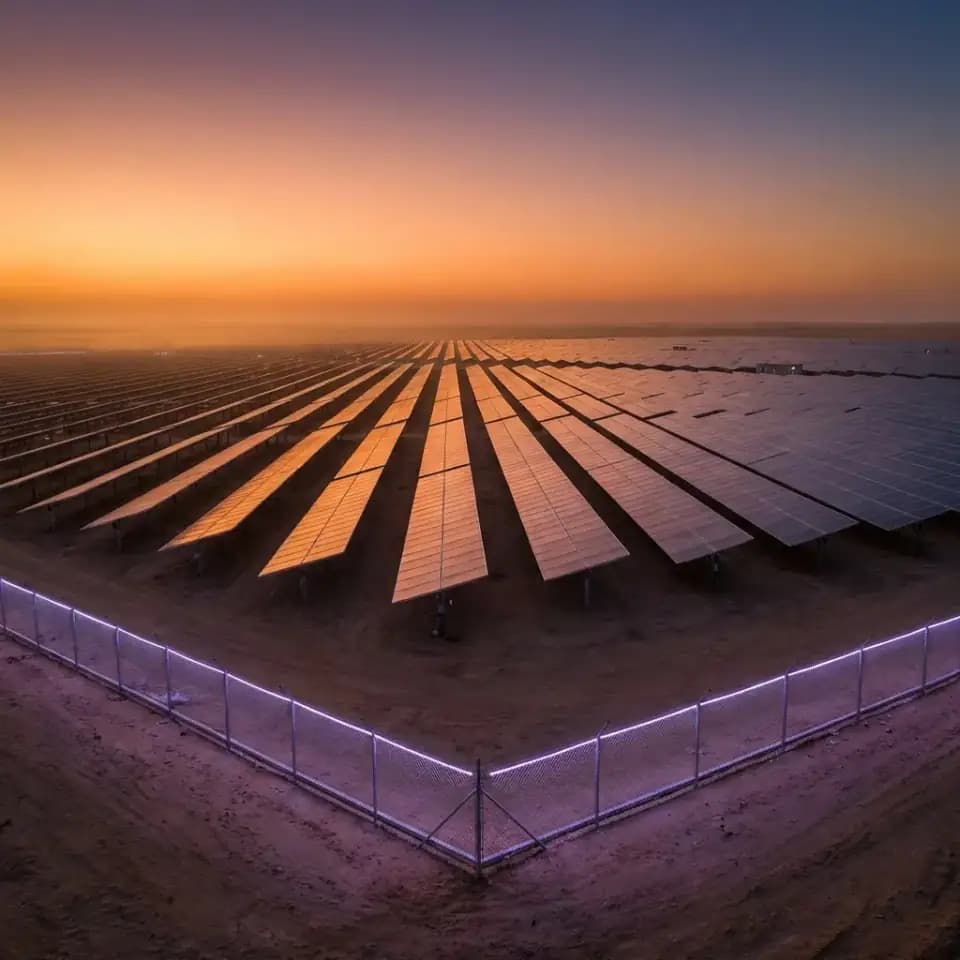
Military installations at MacDill, NAS Jacksonville, Eglin, and Patrick SFB need detection systems meeting DoD physical security standards across perimeters that range from urban waterfront to vast wilderness testing ranges. Nuclear power stations at Turkey Point and St. Lucie require NRC-compliant perimeter detection in hurricane zones. Phosphate mining operations need perimeter monitoring across sprawling open-pit mine complexes.
In every case, FortSense fiber optic sensing delivers the hurricane-grade environmental resilience, multi-kilometer detection range, and classification intelligence that Florida's strategic infrastructure demands.
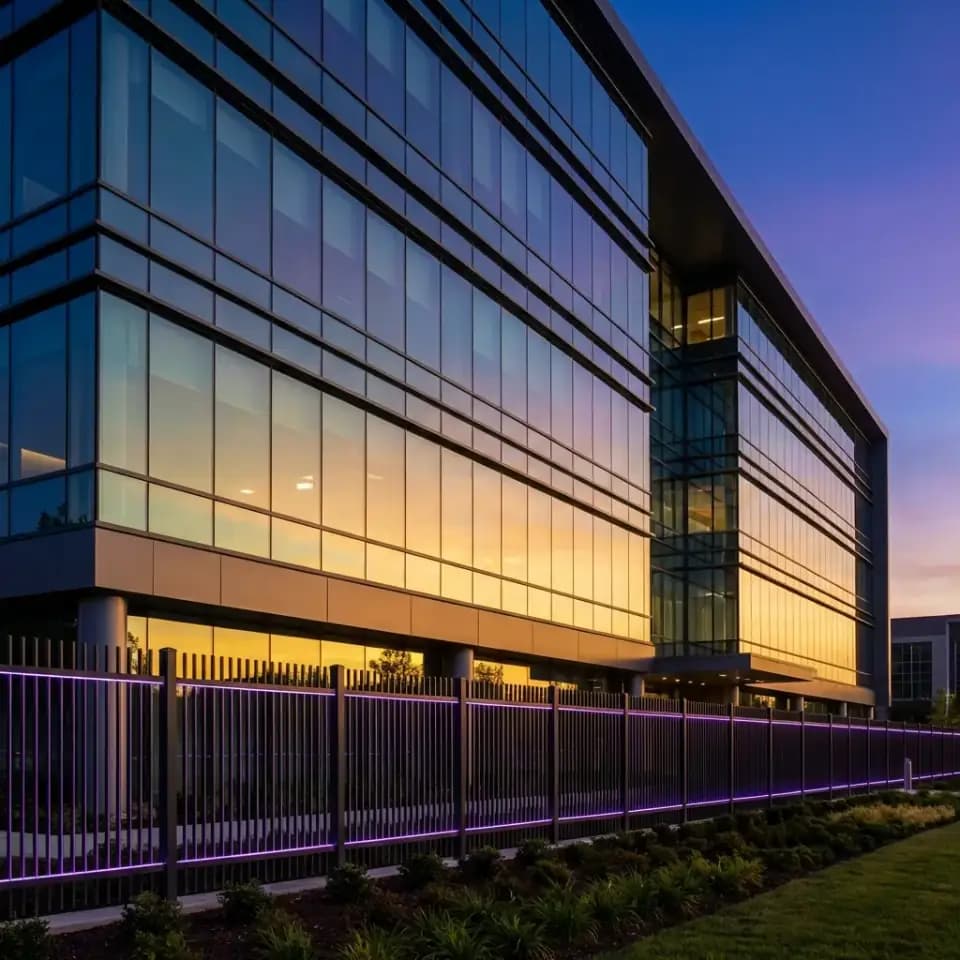
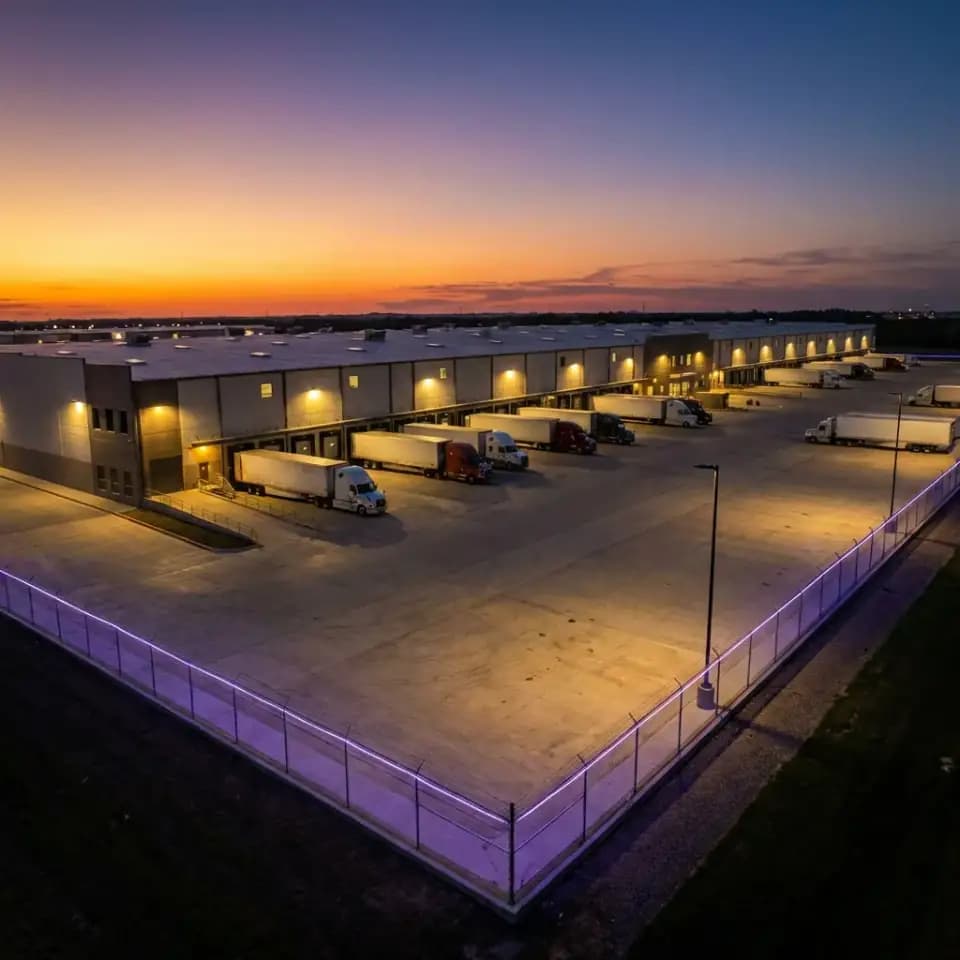
Professional perimeter protection for distribution centers, manufacturing, and critical infrastructure in Florida.
- Quayside & Vessel Berth Security
- ISPS-Compliant Port Perimeter
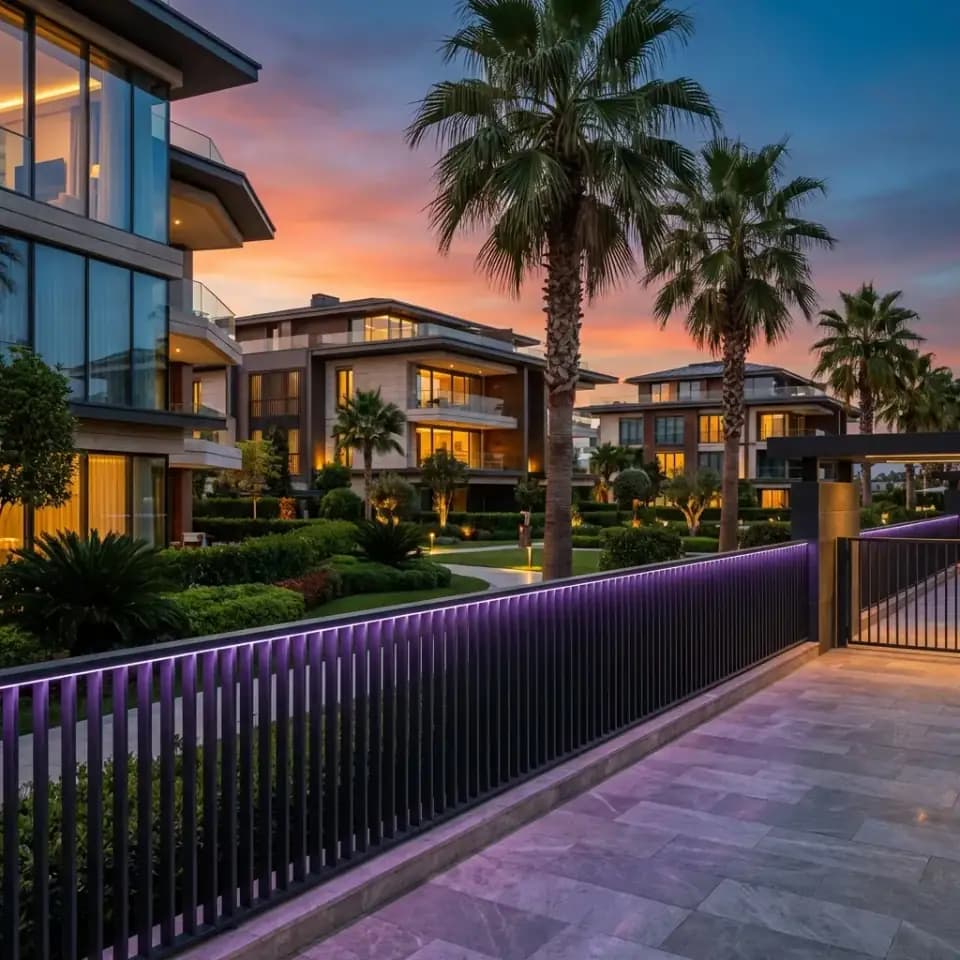
- Estate & Luxury Property Boundary Monitoring
- Space Launch Operations & Spaceport Facilities
Plan a FortSense assessment for this market
Share the perimeter length, fence type, and monitoring workflow. FortSense can help scope zones, integration points, and commissioning requirements for this location.
Services
Quayside & Vessel Berth Security
Waterside perimeter security for quay walls, vessel berths, and dry dock areas with wave-motion filtering and diver detection capability.
ISPS-Compliant Port Perimeter
International Ship and Port Facility Security (ISPS) compliant fiber optic perimeter detection for port boundaries, restricted zones, and maritime access points.
Estate & Luxury Property Boundary Monitoring
Discreet boundary monitoring for luxury estates and high-value residential properties with aesthetic integration and smartphone-based owner alerts.
Deployment patterns for local sites
How FortSense Works in Florida
Fiber optic perimeter security adapted to local conditions and requirements.
- Fiber installed. Passive fiber optic cable mounts on the existing fence or wall with minimal civil work.
- Vibration detected. Any contact creates vibration patterns in the fiber so climbing, cutting, or lifting attempts become visible immediately.
- AI/DSP verification. Algorithms filter out wind, animals, and environmental noise before an operator ever sees an alarm.
- Alarm if intrusion. Only real threats trigger zone-based alarms that can route into the monitoring workflow already used by the site team.
Adapted for Florida. Our local partners understand Florida's climate, terrain, and security challenges. The fiber optic system is configured to filter local environmental conditions while maintaining maximum sensitivity to real intrusion attempts.
Integration and security software fit
FortSense can feed alarms into the monitoring stack a site already uses, including VMS, PSIM, alarm panels, relay inputs, TCP/IP workflows, and camera verification.
- Zone-based alarms for operators and guard teams
- Camera and VMS workflows for visual verification
- Relay or network outputs for existing security systems
- Software-assisted filtering before dispatch decisions
Industries in this market
Relevant FortSense industry and use-case paths connected to this location.
- Space Launch Operations & Spaceport Facilities
- Cargo Port Terminal Operators
- Military Air Bases & Combatant Command Installations
- Distribution Center Perimeter Security
- Solar Farm Perimeter Security
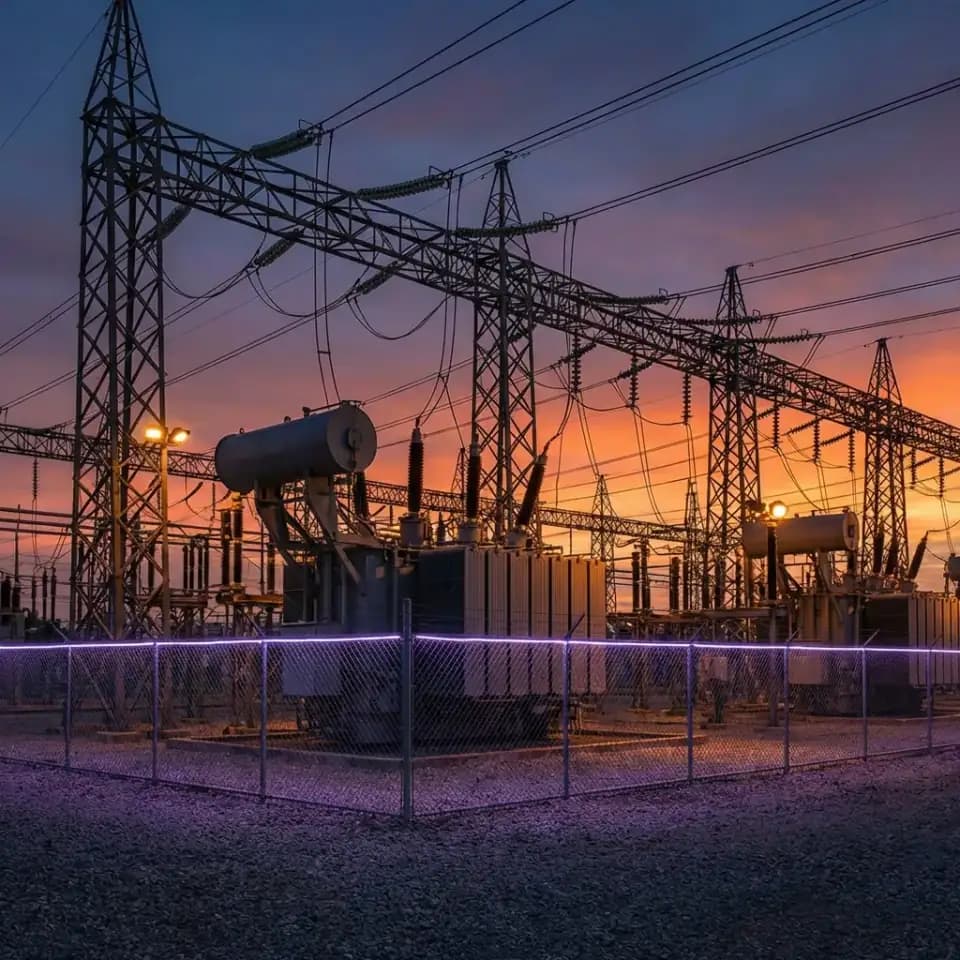
- Perimeter Security for Critical Infrastructure
Why FortSense fits in Perimeter Security in Florida
FortSense is designed for perimeter security work where false-alarm reduction, passive fiber sensing, and practical integration matter more than adding another camera-only layer.
- Passive fiber on existing fences, walls, or perimeter structures
- AI/DSP filtering for wind, vibration, and environmental noise
- Zone-level alerts that can match the site's response model
- Support for design, integration, commissioning, and handover
Market notes
Practical details that help this page stay specific to the market instead of drifting into generic copy.
- Space Launch Operations & Spaceport Facilities
- Cargo Port Terminal Operators
- Military Air Bases & Combatant Command Installations
- Quayside & Vessel Berth Security
Related FortSense paths
Related technical content and commercial guidance linked from this location page.


