
Local service overview
Perimeter Security for Michigan's Automotive & Manufacturing Corridor
FortSense delivers fiber optic perimeter intrusion detection for Michigan's automotive plants, EV battery facilities, and critical US-Canada border crossing infrastructure.
## Economic & Industrial Landscape
Michigan remains the undisputed capital of American automotive manufacturing, home to the global headquarters of General Motors in Detroit, Ford Motor Company in Dearborn, and Stellantis North America in Auburn Hills. The state's automotive ecosystem encompasses more than 1,200 supplier companies, generating roughly 20% of all US vehicle production.
Beyond legacy automaking, Michigan is leading the nation's electric vehicle transition: GM's Factory ZERO in Detroit-Hamtramck is the first major assembly plant dedicated entirely to EV production, while Ford's historic Rouge Complex in Dearborn now builds the F-150 Lightning. Billions of dollars in new EV battery investment are flowing into the state, including the BlueOval Battery Park joint venture between Ford and SK On in Marshall and GM-LG Energy Solution's Ultium Cells facility in Lansing.
The state's economic footprint extends well beyond vehicles. Dow Chemical's global headquarters in Midland anchors a substantial chemical manufacturing sector. Hemlock Semiconductor, also in Midland County, is one of the world's leading producers of polysilicon for solar panels and semiconductor wafers. Medical device giants Stryker (Kalamazoo) and Pfizer's major manufacturing campus contribute to a growing life sciences cluster. Whirlpool Corporation's headquarters in Benton Harbor and Kellogg's (now WK Kellogg Co) Battle Creek operations add consumer manufacturing depth.
Michigan's GDP exceeds $615 billion, supported by a workforce of over 4. 5 million people, and the state consistently ranks among the top five nationally in total manufacturing output.
## Critical Infrastructure — Named Facilities
Michigan's most strategically important infrastructure centers on the US-Canada border crossings. The Ambassador Bridge and the newly opened Gordie Howe International Bridge together handle over 25% of all US-Canada merchandise trade by value — more than $170 billion annually. The Port of Detroit is the largest border crossing between the two nations, processing thousands of commercial trucks daily carrying automotive parts, agricultural products, and manufactured goods. The Blue Water Bridge in Port Huron provides a secondary artery.
Disruption at these crossings, as demonstrated during the February 2022 Freedom Convoy blockade, can halt automotive assembly lines across both countries within 48 hours, underscoring the extreme sensitivity of this trade corridor.
Energy infrastructure is equally critical. The Fermi Nuclear Power Plant operated by DTE Energy in Newport Township generates 1,198 megawatts, while Holtec International has announced plans to restart the Palisades Nuclear Plant in Covert — which would make it the first decommissioned US nuclear plant to resume operations. Consumers Energy and DTE Energy maintain extensive generation and transmission networks across both peninsulas. Camp Grayling in Crawford County is the largest National Guard training facility in the United States, spanning 148,000 acres.
Selfridge Air National Guard Base near Mount Clemens and the Detroit Arsenal in Warren add further military significance. Detroit Metropolitan Wayne County Airport (DTW) handles over 35 million passengers annually and serves as a major Delta Air Lines hub.
## Security Challenges — Local Patterns
Michigan faces a distinctive security threat profile shaped by its industrial density and urban dynamics. Detroit has historically recorded some of the highest property crime rates among major US cities, with auto theft and carjacking remaining persistent challenges — the city reported over 11,000 motor vehicle thefts in recent years. The catalytic converter theft epidemic hits Michigan especially hard given the concentration of pickup trucks and SUVs; catalytic converters containing palladium and rhodium fetch $200–$1,500 on the black market.
Copper wire theft from abandoned industrial buildings, utility substations, and construction sites is endemic, particularly in the Detroit metro's estimated 30,000+ vacant structures. Auto parts theft rings exploit Michigan's proximity to the Canadian border for cross-border fencing operations.
Cargo theft along the I-94 and I-75 corridors represents a significant commercial security concern. Michigan's position as a freight crossroads — with intermodal yards in Detroit, Flint, and Grand Rapids — makes distribution centers and truck staging areas targets for organized theft rings. Cross-border smuggling of narcotics, firearms, and currency through the Detroit-Windsor tunnel and Ambassador Bridge corridor requires constant vigilance. The 2022 bridge blockade exposed vulnerabilities in critical trade infrastructure that had previously been considered low-risk.
Beyond urban challenges, rural Michigan faces agricultural equipment theft, and the Upper Peninsula's extreme remoteness creates security gaps for mining operations and utility infrastructure spanning hundreds of miles.
## Why Fiber Optic PIDS Here
Michigan's combination of high-value manufacturing assets, critical border infrastructure, and extreme weather conditions makes fiber optic perimeter intrusion detection systems particularly well-suited. Traditional security technologies struggle in the Great Lakes climate: lake-effect snowfall in western Michigan and the Upper Peninsula regularly exceeds 200 inches annually, temperatures can plunge to -20°F with polar vortex events driving wind chills below -50°F (as occurred in January 2019), and ice storms frequently damage electronic sensor equipment.
Fiber optic sensing cable is immune to electromagnetic interference from the heavy industrial equipment prevalent in automotive plants, unaffected by the salt spray and de-icing chemicals that corrode metal-based sensors, and operates reliably across Michigan's 100+ degree Fahrenheit annual temperature swing.
The sheer scale of facilities requiring protection drives the need for fiber optic PIDS. The BlueOval Battery Park in Marshall will span over 1,700 acres when complete — a perimeter that would require hundreds of traditional sensors but can be monitored with a single fiber optic cable run. GM's Factory ZERO campus, Ford Rouge Complex, and Stellantis Sterling Heights Assembly Plant each have perimeters measured in miles.
The Gordie Howe International Bridge approach zones, nuclear plant exclusion areas at Fermi and potentially Palisades, and Camp Grayling's 148,000-acre training area all demand detection technology that can cover vast distances without the maintenance burden of distributed electronic sensors exposed to Michigan's punishing winters.
## Deployment Context
Fiber optic PIDS deployments in Michigan must account for continental-cold climate conditions including ground heave from freeze-thaw cycles, heavy snow loading on fence lines, and the potential for ice accumulation on above-ground cable runs.
Installation planning should consider the seasonal construction window (typically May through October for buried cable), coordination with utility locate services given the dense underground infrastructure in industrial corridors, and integration with existing CCTV and access control systems at automotive plants that typically follow the Automotive Industry Action Group (AIAG) security standards.
The state's robust fiber optic backbone — maintained by carriers including AT&T, Comcast, and regional providers — facilitates backhaul connectivity for remote monitoring of distributed perimeter sensors across multi-site manufacturing campuses.
Professional perimeter protection for distribution centers, manufacturing, and critical infrastructure in Michigan.
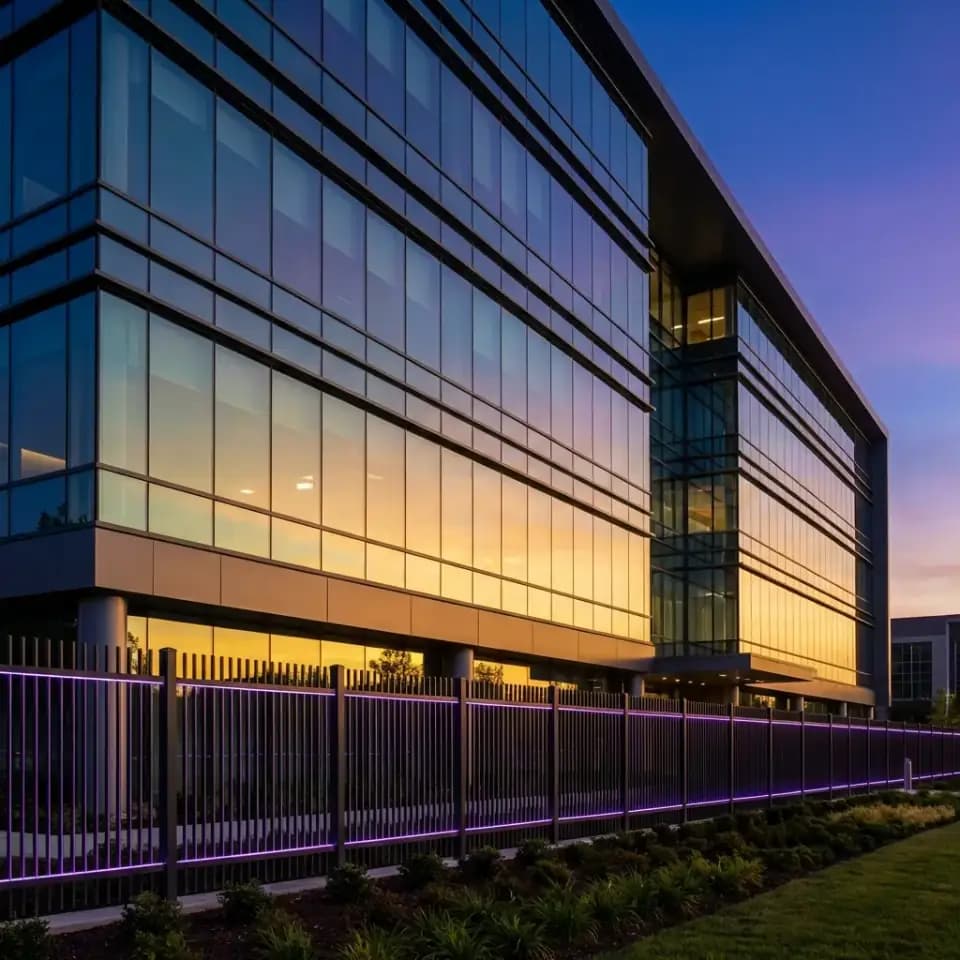
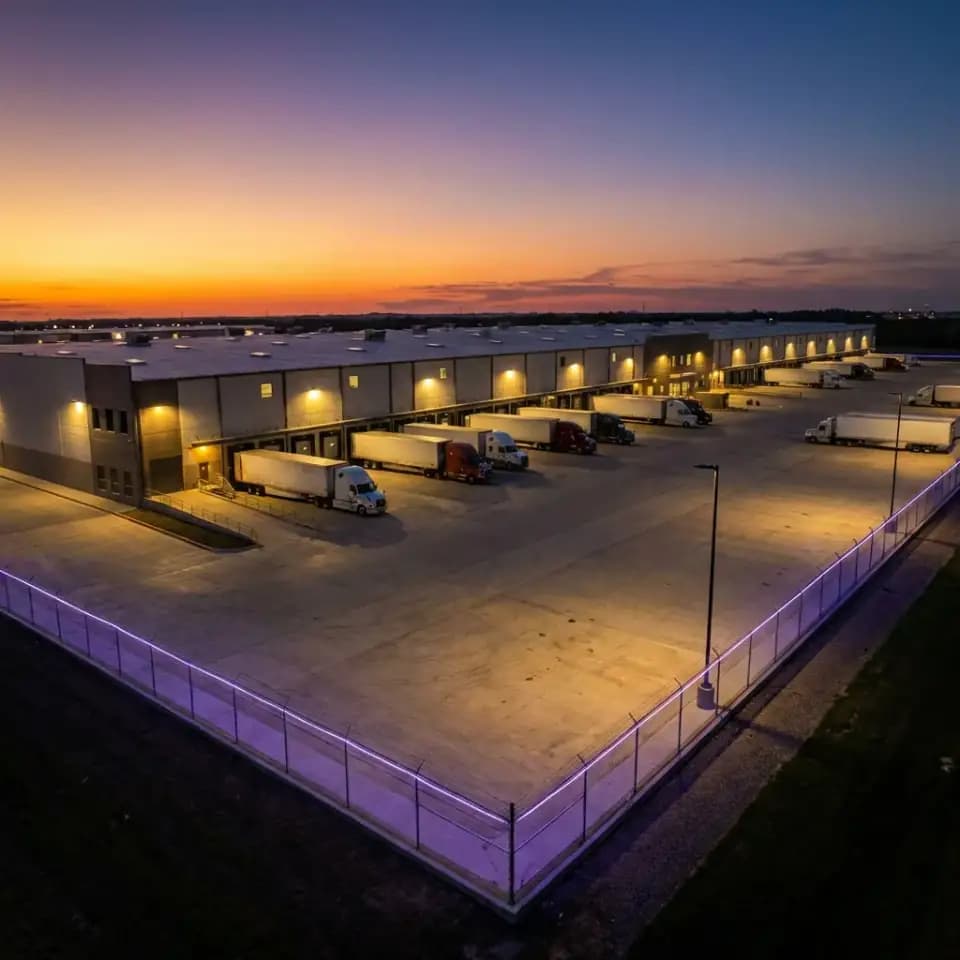
- Warehouse Complex & Distribution Center
- R&D Campus & IP Protection
- Cold Storage & Warehouse Perimeter
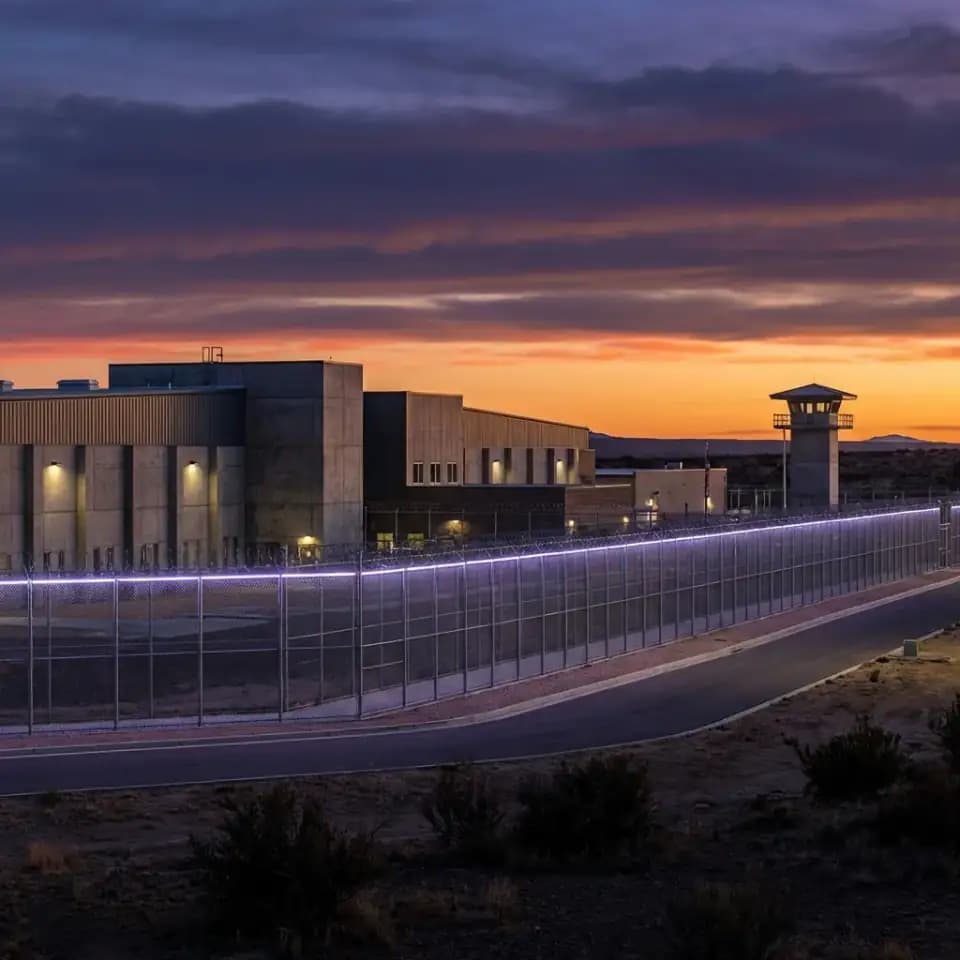
- Automotive & EV Battery Manufacturing
Plan a FortSense assessment for this market
Share the perimeter length, fence type, and monitoring workflow. FortSense can help scope zones, integration points, and commissioning requirements for this location.
Services
Warehouse Complex & Distribution Center
Multi-zone fiber optic fencing for warehouse complexes and distribution centers with integration to inventory management and access control systems.
R&D Campus & IP Protection
High-security perimeter for R&D campuses, pharmaceutical plants, and IP-sensitive manufacturing facilities with tamper-proof fiber and encrypted alarm channels.
Cold Storage & Warehouse Perimeter
All-weather fiber optic fencing for cold storage facilities (-40°C rated), distribution warehouses, and fulfillment centers with zone-based alarm priority.
Deployment patterns for local sites
How FortSense Works in Michigan
Fiber optic perimeter security adapted to local conditions and requirements.
- Fiber installed. Passive fiber optic cable mounts on the existing fence or wall with minimal civil work.
- Vibration detected. Any contact creates vibration patterns in the fiber so climbing, cutting, or lifting attempts become visible immediately.
- AI/DSP verification. Algorithms filter out wind, animals, and environmental noise before an operator ever sees an alarm.
- Alarm if intrusion. Only real threats trigger zone-based alarms that can route into the monitoring workflow already used by the site team.
Adapted for Michigan. Our local partners understand Michigan's climate, terrain, and security challenges. The fiber optic system is configured to filter local environmental conditions while maintaining maximum sensitivity to real intrusion attempts.
Integration and security software fit
FortSense can feed alarms into the monitoring stack a site already uses, including VMS, PSIM, alarm panels, relay inputs, TCP/IP workflows, and camera verification.
- Zone-based alarms for operators and guard teams
- Camera and VMS workflows for visual verification
- Relay or network outputs for existing security systems
- Software-assisted filtering before dispatch decisions
Industries in this market
Relevant FortSense industry and use-case paths connected to this location.
- Automotive & EV Battery Manufacturing
- Cross-Border Trade Infrastructure
- Chemical & Advanced Materials Production
- Distribution Center Perimeter Security
- Solar Farm Perimeter Security
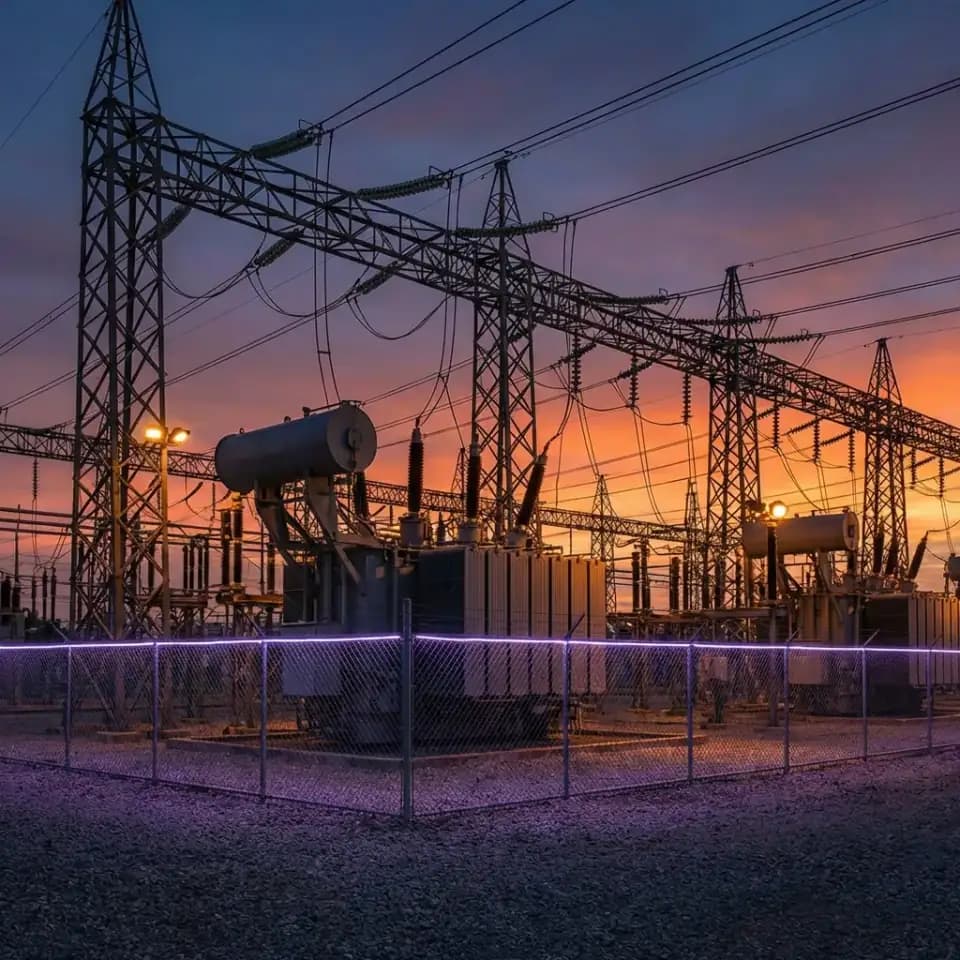
- Perimeter Security for Critical Infrastructure
Why FortSense fits in Perimeter Security in Michigan
FortSense is designed for perimeter security work where false-alarm reduction, passive fiber sensing, and practical integration matter more than adding another camera-only layer.
- Passive fiber on existing fences, walls, or perimeter structures
- AI/DSP filtering for wind, vibration, and environmental noise
- Zone-level alerts that can match the site's response model
- Support for design, integration, commissioning, and handover
Market notes
Practical details that help this page stay specific to the market instead of drifting into generic copy.
- Automotive & EV Battery Manufacturing
- Cross-Border Trade Infrastructure
- Chemical & Advanced Materials Production
- Warehouse Complex & Distribution Center
Related FortSense paths
Related technical content and commercial guidance linked from this location page.


