


Local service overview
Fiber Optic Perimeter Security for Wyoming Energy & Mining Operations
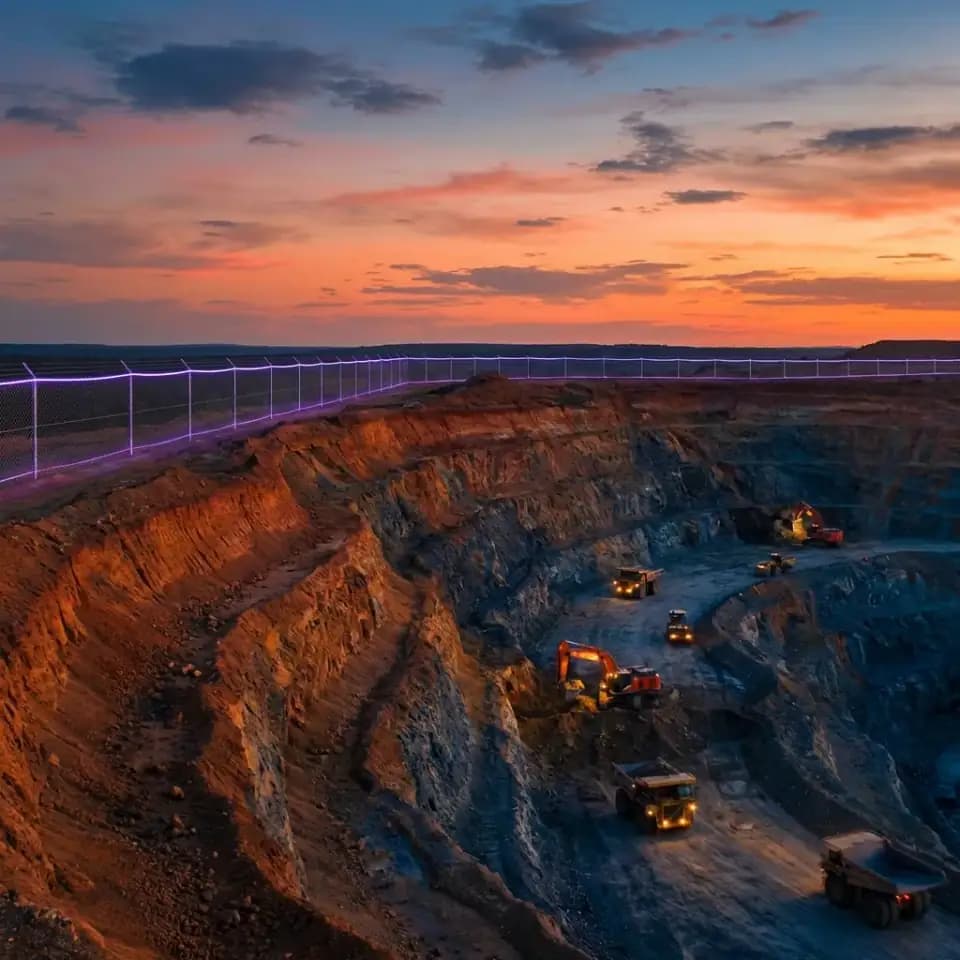
FortSense protects Wyoming's Powder River Basin coal mines, F.E. Warren AFB missile operations, and trona mining complexes with fiber optic perimeter detection engineered for extreme wind.
## Economic & Industrial Landscape
Wyoming generates approximately $42 billion in gross domestic product with the smallest population of any US state at approximately 580,000 residents, yet it punches enormously above its weight in energy and mineral production. The state produces approximately 40 percent of all US coal, primarily from massive surface mines in the Powder River Basin of Campbell County in northeastern Wyoming. Black Thunder Mine, operated by Arch Resources, is the largest coal mine in the United States, and North Antelope Rochelle Mine, operated by Peabody Energy, is the second largest.
These mines ship coal via dedicated BNSF Railway trains to power plants across the nation, with unit trains stretching over a mile in length departing the basin continuously.
The Green River area in southwestern Wyoming holds the world's largest deposits of trona, the mineral from which soda ash (sodium carbonate) is produced. Wyoming supplies approximately 90 percent of US soda ash and is the world's leading producer of this essential industrial chemical used in glass manufacturing, detergents, and chemical processing. Genesis Alkali, Ciner Wyoming, and Tata Chemicals all operate major trona mining and processing facilities near Green River. Oil and gas production is significant, with conventional and unconventional drilling across multiple basins.
Wyoming has no state income tax and no corporate income tax, policies that have attracted data center and cryptocurrency mining operations to Cheyenne, where Microsoft, Green House Data, and EcoPlex operate facilities. The TerraPower Natrium advanced nuclear reactor, backed by Bill Gates, is under construction in Kemmerer, representing a first-of-its-kind next-generation nuclear technology.
## Critical Infrastructure
F. E. Warren Air Force Base in Cheyenne is home to the 90th Missile Wing, which controls 150 Minuteman III intercontinental ballistic missiles deployed across missile silos spread across thousands of square miles of Wyoming, Colorado, and Nebraska. These silos, connected by a network of underground launch control centers and communication cables, represent one of the three legs of the US nuclear triad.
The dispersed nature of the missile field, with individual silos located miles apart in open prairie and ranch land, creates a perimeter security requirement that is unique in both its geographic scale and its national security significance.
The Powder River Basin mining complex is a vast industrial landscape where individual mine permits cover tens of thousands of acres. The mines operate massive draglines, electric shovels, and haul trucks that each cost millions of dollars, moving billions of tons of overburden and coal. The BNSF Railway mainline through the Powder River Basin is one of the most heavily trafficked rail corridors in the world, with coal trains running at frequencies that rival passenger rail schedules. The Sinclair Refinery in Sinclair and the Frontier Refinery in Cheyenne process crude oil into finished fuels.
Wind energy is rapidly expanding, with the proposed Chokecherry and Sierra Madre Wind Energy Project potentially becoming the largest wind farm in the United States, and the TransWest Express transmission line will deliver wind power to the Desert Southwest.
## Security Challenges
Remote oil and gas wellhead security in Wyoming's vast, sparsely populated landscape presents one of the most challenging perimeter protection environments in the United States. Wells and associated equipment, including pump jacks, generators, and chemical storage tanks, are frequently located at the end of miles of unpaved access roads, far from any law enforcement presence. Equipment theft, including copper wire stripping, generator theft, and even the theft of production equipment, costs Wyoming operators millions of dollars annually.
The ICBM missile silo security mission is perhaps the most demanding perimeter requirement of any dispersed infrastructure in the nation: each silo must be protected against intrusion, tampering, and sabotage, with detection systems operating autonomously in one of the most extreme weather environments in the lower 48 states.
Coal mine perimeter security involves protecting not only the mine excavation and equipment areas but also the explosives magazines where ammonium nitrate/fuel oil (ANFO) and other blasting agents are stored. Unauthorized access to these explosives storage areas poses obvious security and safety concerns. Pipeline and rail transport security along the coal and oil shipment corridors requires monitoring across vast distances. Drug trafficking along the I-80 corridor, a transcontinental route, creates security pressures for facilities and communities located near the highway.
Wind farm equipment theft and vandalism in remote areas, where individual turbines may be miles from the nearest occupied structure, add to Wyoming's rural security challenges.
## Why Fiber Optic PIDS in Wyoming
Wyoming is among the windiest states in the nation, with sustained winds of 30 to 40 miles per hour being routine and gusts exceeding 75 miles per hour not uncommon, particularly in the wind corridors of southeastern and south-central Wyoming. These persistent high winds create enormous challenges for conventional perimeter security systems that use microwave beams, infrared sensors, or fence-mounted vibration detectors, all of which generate excessive false alarms in high-wind environments.
Fiber optic PIDS technology can be calibrated to account for constant wind-induced fence movement, maintaining intrusion detection sensitivity while filtering out the baseline wind vibration that would render other technologies unusable in Wyoming conditions.
Winter storms bring extreme cold with wind chill temperatures that can reach minus 40 degrees Fahrenheit, accompanied by ground blizzards on the open plains that reduce visibility to zero while depositing drifting snow against fence lines and security infrastructure. The highland climate produces rapid temperature changes, drought conditions, and flash flooding in the badland areas of the Bighorn Basin and Red Desert.
Fiber optic sensing cables operate without degradation across this full range of environmental extremes, and their passive nature eliminates the need for power supply infrastructure at remote sensing locations, which is critical for missile silo perimeters, oil field wellheads, and wind farm boundaries that may be many miles from the nearest power grid connection.
## Deployment Context
Wyoming's perimeter security requirements are defined by vast distances, extreme weather, and nationally critical assets: the Minuteman III ICBM missile field stretching across thousands of square miles, the Powder River Basin coal mines producing 40 percent of US coal, the world's largest trona mining complex near Green River, remote oil and gas wellheads across multiple producing basins, and the next-generation TerraPower nuclear reactor under construction in Kemmerer.
Fiber optic PIDS technology is the only perimeter detection approach capable of operating reliably across Wyoming's extreme wind, temperature, and distance challenges while delivering the detection performance required for nuclear missile security, critical mineral extraction, and energy infrastructure protection in America's least populated but most resource-rich state.
Professional perimeter protection for distribution centers, manufacturing, and critical infrastructure in Wyoming.
- Wellhead & Pump Station Security
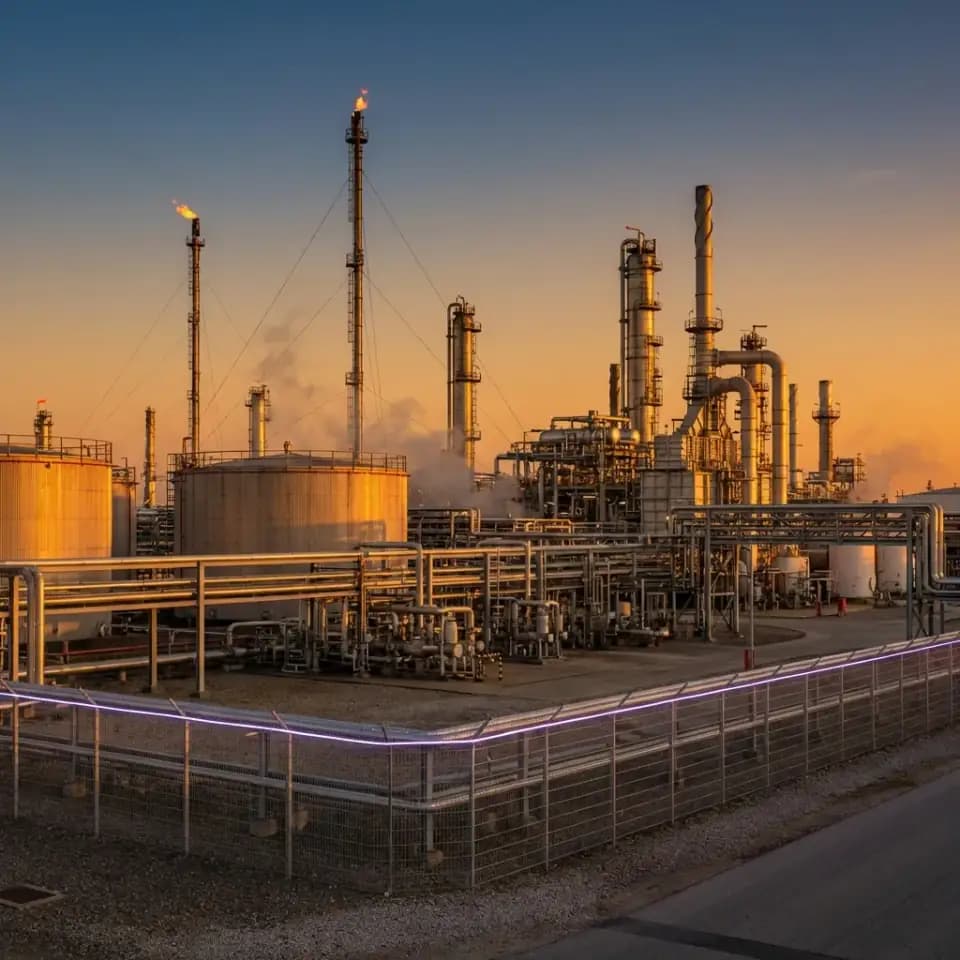
- Pipeline & Refinery Monitoring
- Remote Mining Camp Protection
- Surface Coal Mining & Mineral Extraction
Plan a FortSense assessment for this market
Share the perimeter length, fence type, and monitoring workflow. FortSense can help scope zones, integration points, and commissioning requirements for this location.
Services
Wellhead & Pump Station Security
Remote wellhead perimeter monitoring across dispersed field operations with solar-powered relay nodes and SCADA integration.
Pipeline & Refinery Monitoring
Real-time fiber optic detection along pipelines, tank farms, and refinery perimeters. ATEX/IECEx-compatible for hazardous zones with leak and intrusion discrimination.
Remote Mining Camp Protection
Securing remote worker camps, equipment yards, and explosive storage facilities in isolated locations with satellite-backhaul alarm reporting.
Deployment patterns for local sites
How FortSense Works in Wyoming
Fiber optic perimeter security adapted to local conditions and requirements.
- Fiber installed. Passive fiber optic cable mounts on the existing fence or wall with minimal civil work.
- Vibration detected. Any contact creates vibration patterns in the fiber so climbing, cutting, or lifting attempts become visible immediately.
- AI/DSP verification. Algorithms filter out wind, animals, and environmental noise before an operator ever sees an alarm.
- Alarm if intrusion. Only real threats trigger zone-based alarms that can route into the monitoring workflow already used by the site team.
Adapted for Wyoming. Our local partners understand Wyoming's climate, terrain, and security challenges. The fiber optic system is configured to filter local environmental conditions while maintaining maximum sensitivity to real intrusion attempts.
Integration and security software fit
FortSense can feed alarms into the monitoring stack a site already uses, including VMS, PSIM, alarm panels, relay inputs, TCP/IP workflows, and camera verification.
- Zone-based alarms for operators and guard teams
- Camera and VMS workflows for visual verification
- Relay or network outputs for existing security systems
- Software-assisted filtering before dispatch decisions
Industries in this market
Relevant FortSense industry and use-case paths connected to this location.
- Surface Coal Mining & Mineral Extraction
- ICBM Missile Fields & Military Installations
- Oil & Gas Wellheads and Pipeline Corridors
- Distribution Center Perimeter Security
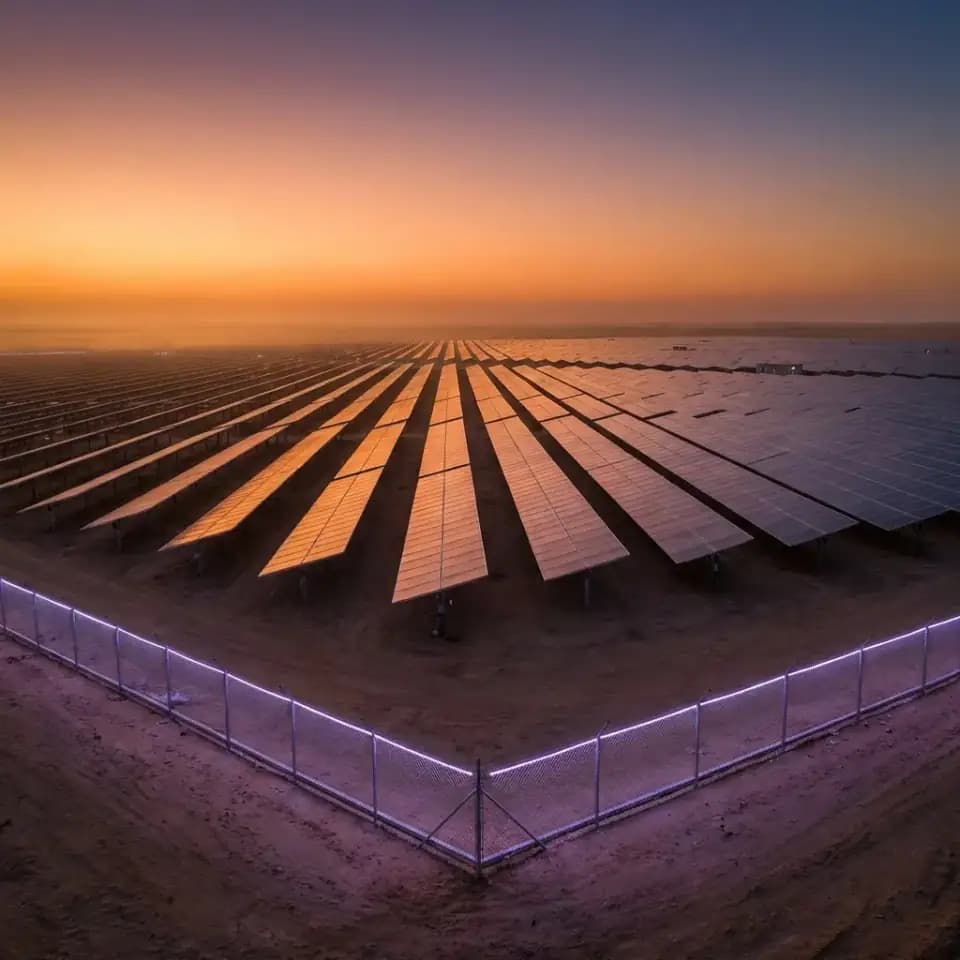
- Solar Farm Perimeter Security
- Perimeter Security for Critical Infrastructure
Why FortSense fits in Perimeter Security in Wyoming
FortSense is designed for perimeter security work where false-alarm reduction, passive fiber sensing, and practical integration matter more than adding another camera-only layer.
- Passive fiber on existing fences, walls, or perimeter structures
- AI/DSP filtering for wind, vibration, and environmental noise
- Zone-level alerts that can match the site's response model
- Support for design, integration, commissioning, and handover
Market notes
Practical details that help this page stay specific to the market instead of drifting into generic copy.
- Surface Coal Mining & Mineral Extraction
- ICBM Missile Fields & Military Installations
- Oil & Gas Wellheads and Pipeline Corridors
- Wellhead & Pump Station Security
Related FortSense paths
Related technical content and commercial guidance linked from this location page.


