Commissioning a perimeter intrusion detection system (PIDS) at a utility substation or industrial campus demands more than functional checks; it requires witnessed verification that the system performs under controlled threats mimicking real adversaries. In retrofits, where existing fencing integrates with new taut-wire, microwave, or fiber-optic sensors, overlooked gaps in acceptance testing can cascade into operational headaches—from nuisance alarms disrupting shift handovers to compliance failures during regulatory audits. The witness process, involving integrators, owners, and sometimes third-party inspectors, establishes a baseline of performance that underpins long-term reliability.
For a typical upgrade at a multi-site energy provider, teams start with factory acceptance testing (FAT) on sensor modules before shipping, then progress to site acceptance testing (SAT) amid site-specific variables like terrain and vegetation. This staged approach catches integration issues early, such as mismatched alarm thresholds between head-end software and field devices. By adhering to structured criteria, projects avoid the common pitfall of 'pencil-whipped' sign-offs, where systems pass superficially but falter in the field.
Integrators familiar with PIDS deployments know that acceptance testing isn't optional—it's the contractual gate to handover. This checklist focuses on procedural steps and observable outcomes, tailored for high-assurance environments where downtime equates to risk exposure.
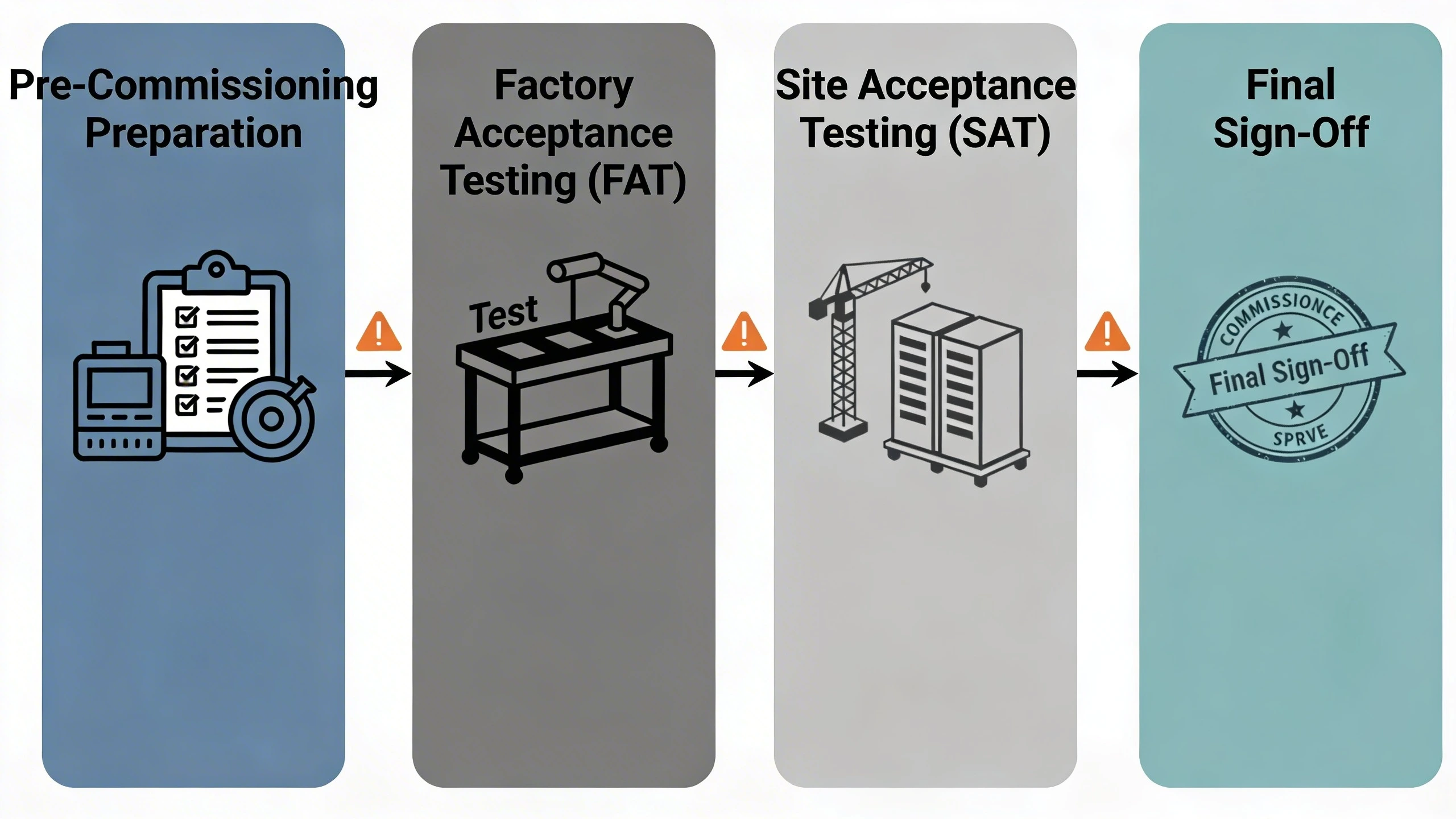
When this checklist should be used
This checklist applies whenever a PIDS nears operational handover, whether for greenfield installations, brownfield retrofits, or expansions adding detection layers to legacy perimeters. Use it at the conclusion of FAT for pre-shipment validation and during SAT to confirm field performance before energizing the full system. In scenarios like upgrading a chain-link fence line at a water treatment facility, invoke it after cable pulls and sensor mounting but before integrating with the physical security information management (PSIM) platform.
Timing matters because premature testing risks inconclusive results from incomplete wiring, while delayed checks invite scope creep or owner impatience. For witness events, schedule when all stakeholders—integrator technicians, facility security managers, and IT overseers—can attend, typically 4-6 weeks post-installation start. Neglecting this phase often surfaces later as elevated false alarm rates, eroding trust in the system and triggering costly revisits.
Common triggers include contract milestones tied to payment gates, insurance prerequisites for coverage, or regulatory nods for critical infrastructure. Always pair it with as-built documentation to baseline future maintenance.
Pre-commissioning preparation
Before any testing commences, verify foundational elements like power stability, grounding integrity, and sensor alignment against the approved design drawings. At a campus perimeter retrofit, this means confirming buried conduit runs match surveyed routes and that vibration sensors on gates tolerate wind loads without spurious triggers. Preparation uncovers cabling faults or environmental interferences that would invalidate later tests, saving weeks of rework.
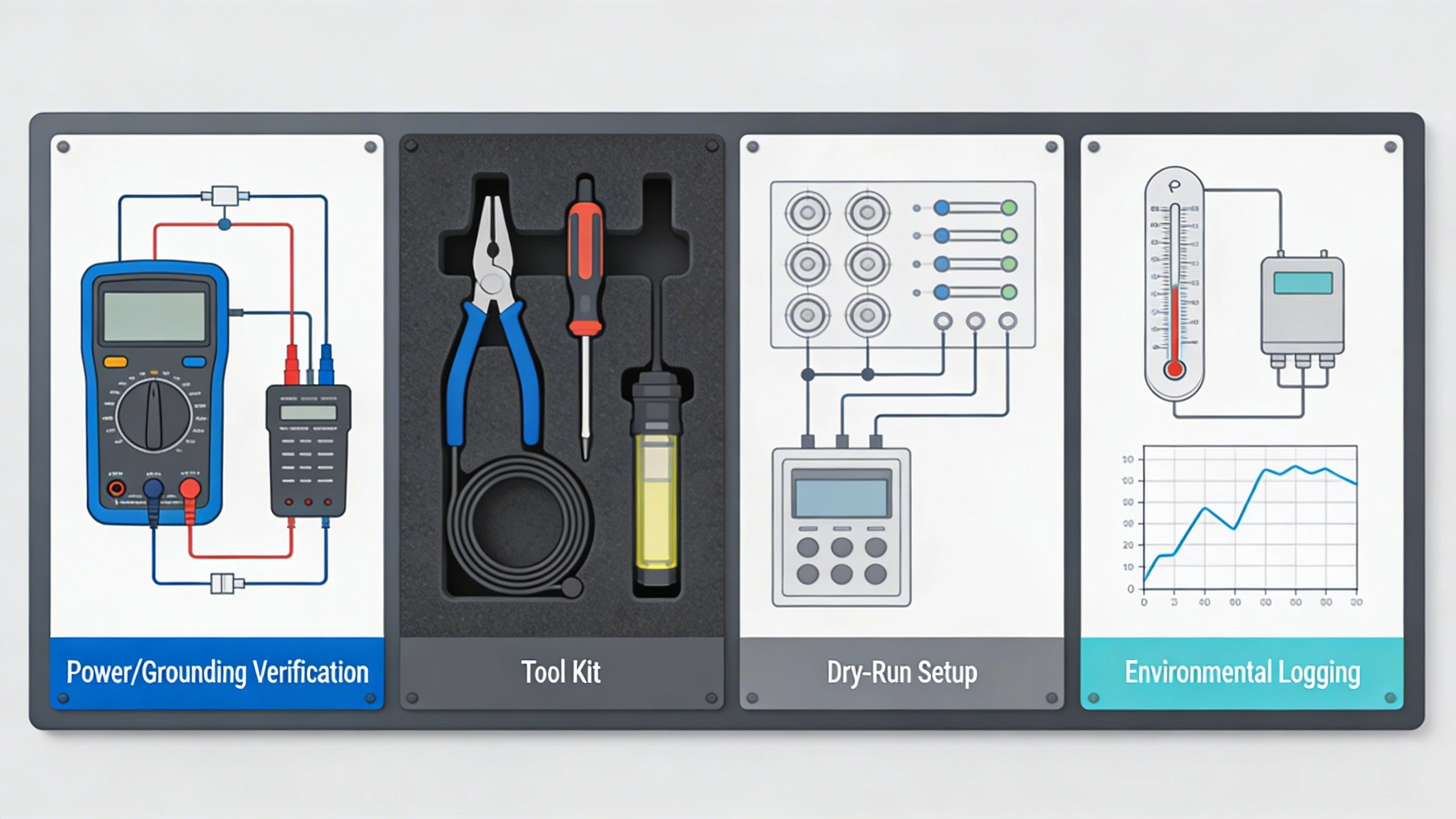
Gather tools such as calibrated multimeters, intrusion simulation kits (e.g., foam rollers for taut-wire, drones for volumetric zones), and data loggers for capturing event metadata. Train witnesses on observation protocols—they must note detection latency, alarm clarity, and nuisance rejection independently. Teams that skimp here frequently encounter 'no-fail' tests masking underlying issues, like unterminated shield drains causing EMI susceptibility.
- Review and sign off on installation checklists, including torque specs for mounts and continuity tests on all runs.
- Conduct dry-run simulations without witnesses to iron out procedural hiccups.
- Prepare environmental baselines: log ambient noise, temperature, and precipitation for test normalization.
Factory acceptance testing workflow
FAT occurs in the integrator's controlled environment, focusing on individual and subsystem performance before site mobilization. For perimeter sensors, this involves bench-testing detection ranges, response times, and integration with mock head-ends. In a taut-wire array destined for an oil depot fence, witnesses observe mechanical stress tests simulating climbs or cuts, ensuring each sensor discriminates threats from foliage sway.
Workflow starts with visual inspections, progresses to stimulated alarms, and ends with health diagnostics. Document every trial with video, timestamps, and metrics like probability of detection (Pd) at specified ranges. Failures here—such as firmware mismatches—halt shipment, preventing expensive field fixes. Without rigorous FAT, site teams inherit unresolved defects, amplifying retrofit risks.
- Power up and baseline all modules; confirm no faults via diagnostic ports.
- Execute 10+ intrusion simulations per zone type, witnessing 100% Pd and <5% false alarm rate (FAR).
- Stress test under simulated extremes: vibration, temperature cycles, EMI exposure.
- Archive logs and generate FAT report with witness signatures.
Site acceptance testing workflow
SAT shifts to real-world validation, accounting for terrain, weather, and adjacent systems. At a utility yard retrofit, teams methodically probe detection zones with human surrogates, vehicles, and tools, confirming coverage overlaps and no dead spots. Witnesses verify alarms propagate cleanly to PSIM consoles, with accurate metadata like zone ID and threat vector.
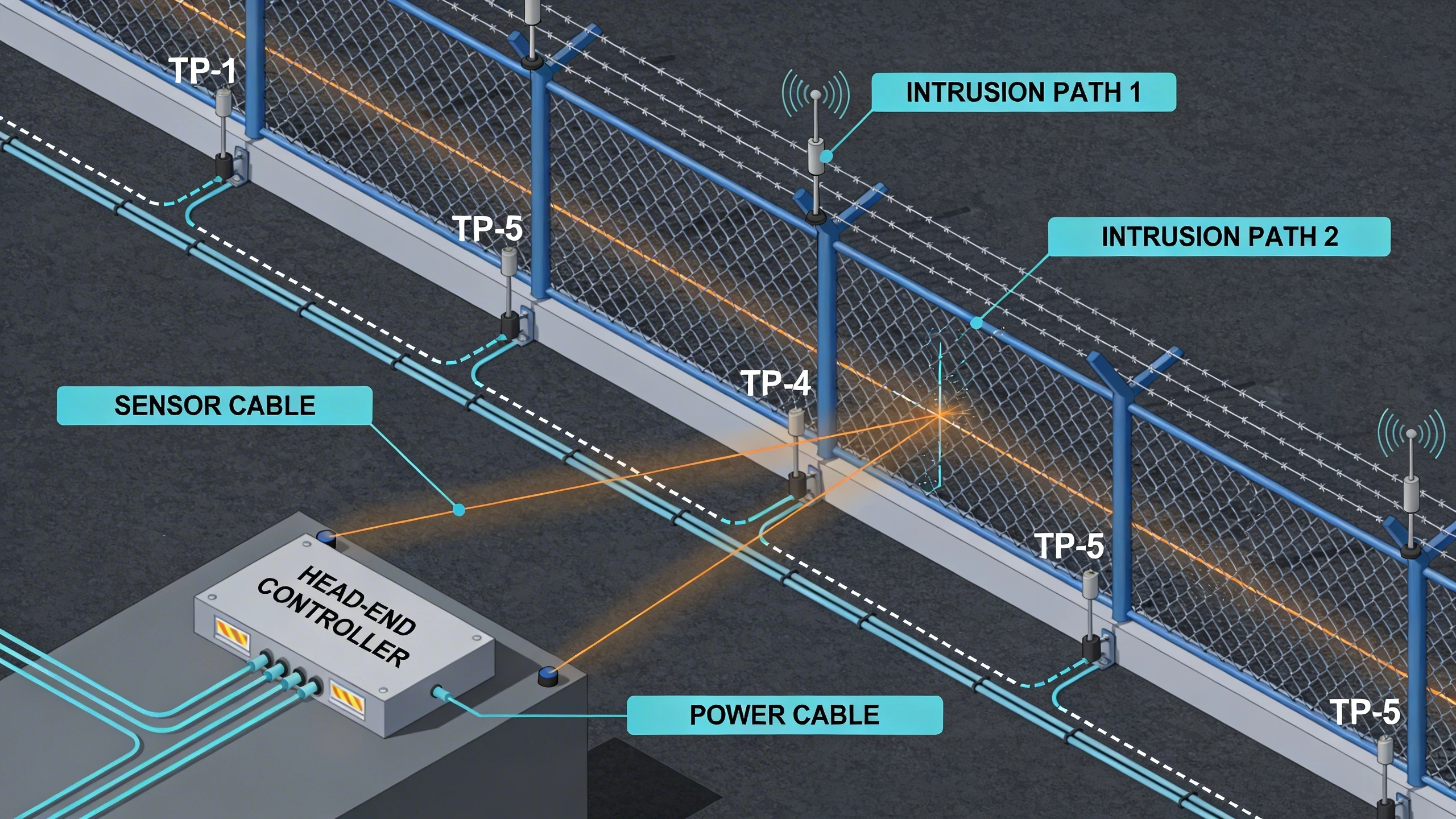
Divide the perimeter into segments for phased testing, starting with low-risk daytime runs before night ops. Include nuisance tests: animals, rain, maintenance activity. Poor execution leads to over-sensitive tuning post-handover, burdening operators. Success metrics emphasize repeatable detection across multiple actors and conditions.
- Map test points per as-builts; aim for 20-50 breaches per kilometer.
- Record latency from intrusion to annunciation; target under 3 seconds.
- Validate assessment aids: PTZ slew-to-alarm, light activation.
- Confirm tamper and health monitoring functions site-wide.
Documentation, sign-off, and common misses
Comprehensive records form the handover's backbone: test logs, photos, videos, and discrepancy resolutions. For a perimeter upgrade, include before/after coverage maps and tuning parameters. Sign-offs from all parties certify compliance, enabling warranty activation. Incomplete docs plague disputes, as owners reference vague memories over hard evidence.
Common misses include unsigned witness sheets, omitted nuisance baselines, or ignoring integration faults with access control. Always close loops on punch-list items before final sign-off. This rigor minimizes post-commissioning call-backs, preserving integrator reputation.
Where to go next
Explore FortSense 4 for advanced PIDS integration in critical sites. For tailored advice on your deployment, request a design review. Review case studies in critical infrastructure security or North America deployments.
For the unannounced operational trial block within site acceptance, use the blind PIDS intrusion testing protocol to freeze roles, randomization, validity rules, ground truth, and retesting.
Where acceptance includes a binary detection claim, use the PIDS probability-of-detection sample-size guide to define confidence, strata, valid counts, and allowed failures before field testing.
For nuclear and high-consequence sites, align acceptance criteria with the nuclear-facility PIDS design guide.