At a mid-sized utility substation surrounded by chain-link fencing, the security team noticed a pattern: intermittent false alarms from buried seismic sensors during heavy rain, coupled with delayed response times due to uncalibrated microwave links. Retrofitting the entire Perimeter Intrusion Detection System (PIDS) wasn't feasible amid budget constraints, so the focus shifted to a structured preventive maintenance regimen. This approach not only stabilized operations but also extended the life of legacy components, allowing integration with modern heads like FortSense 4 for centralized monitoring.
Such decisions are common when managing perimeters at critical infrastructure sites, where downtime equates to vulnerability. Preventive maintenance here means more than checklists; it's about embedding diagnostics into daily operations, anticipating environmental wear, and aligning schedules with site access patterns. Teams that prioritize this see fewer emergency callouts, as routine checks catch drift in vibration thresholds or lens fouling on IR beams before they cascade into outages.
The core shift involves treating maintenance as a design feature from the outset. For instance, selecting sensors with remote self-test capabilities upfront pays dividends during retrofits, enabling technicians to verify zone integrity without breaching secure areas. This proactive stance contrasts sharply with reactive fixes, which often expose underlying integration gaps.
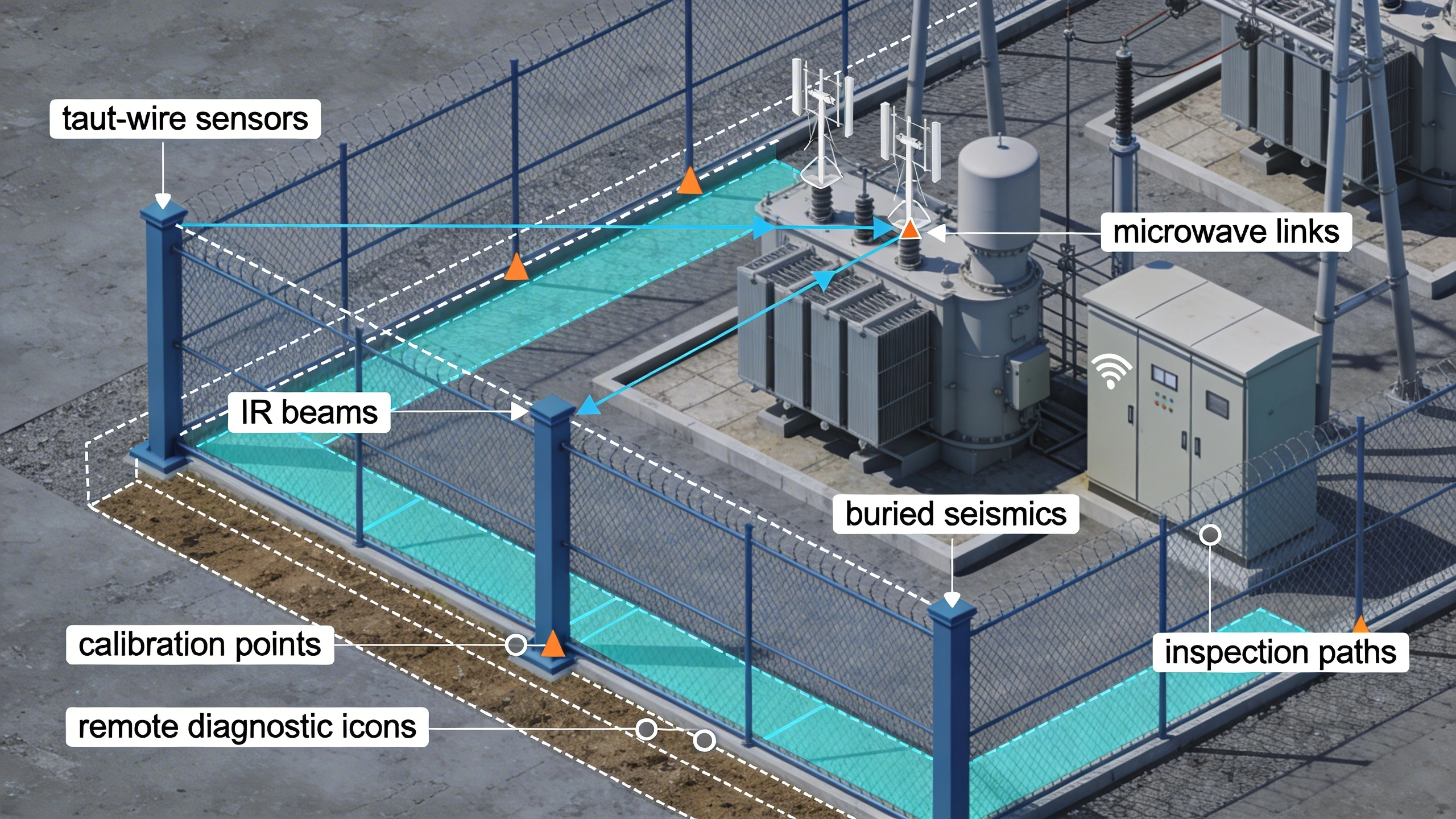
What the design decision looks like in practice
Implementing preventive maintenance for perimeter detection starts with mapping the site's sensor layout against environmental stressors. Consider a campus perimeter with taut-wire sensors along 2 km of fencing: weekly patrols might visually inspect tension clips for corrosion, while monthly cycles include functional tests triggering alerts to confirm signal propagation. Quarterly deep dives then involve recalibrating tension levels using manufacturer gauges, ensuring the system discriminates climbs from wind sway.
In a utility yard retrofit, this expands to hybrid setups—fiber-optic cables alongside IR barriers. Maintenance manifests as bi-weekly log reviews for anomaly spikes, paired with seasonal vegetation clears to prevent beam occlusion. Technicians document findings in a shared platform, flagging trends like gradual signal attenuation that signal cable jacket degradation. Over time, this builds a baseline for predictive adjustments, such as tightening processing algorithms during high-wind seasons.
Real-world execution hinges on phased rollouts. Begin with high-risk zones, like gate approaches, integrating portable diagnostic tools that simulate intrusions without live power-downs. This minimizes disruption while training staff on evolving protocols, turning maintenance into a continuous improvement loop rather than isolated events.
System architecture and integration considerations
Perimeter detection architectures must support maintenance without compromising availability, favoring distributed processors at sensor heads linked to a resilient core network. In practice, this means IP-based heads with onboard diagnostics feeding into platforms like FortSense 4, where unified dashboards aggregate health metrics from disparate vendors. Integration challenges arise when legacy analog sensors meet digital backhauls; converters introduce latency, so design for buffered polling intervals that align with maintenance windows.
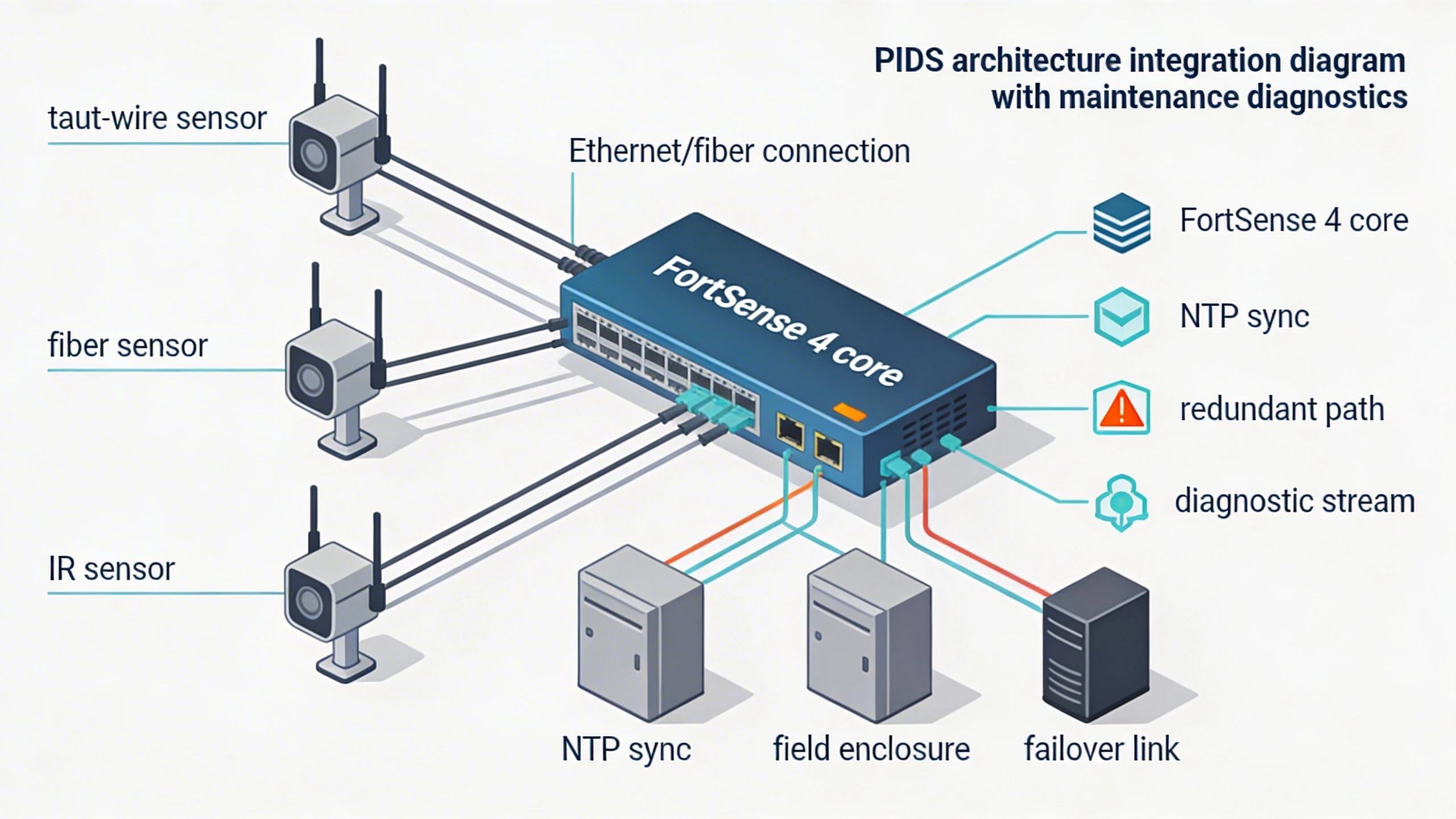
Time synchronization via NTP proves critical for correlating events across zones, especially in zoned perimeters where a single fault might mimic an intrusion pattern. Architects should provision redundant paths—fiber rings or cellular failover—to sustain remote diagnostics during cable checks. Overlooking this leads to siloed troubleshooting, where a field tech resets a head without contextual logs, repeating cycles inefficiently.
Scalability enters the picture for expanding sites. Modular enclosures housing power supplies and processors allow hot-swaps during maintenance, but require upfront cabling standards like shielded twisted-pair to mitigate EMI from nearby high-voltage lines. Testing these integrations pre-deployment simulates full-load scenarios, uncovering bandwidth hogs like unfiltered video overlays that bloat diagnostic streams.
Operational workflows and field constraints
Field workflows for perimeter maintenance balance thoroughness with minimal intrusion, often dictated by 24/7 operations at secured sites. A typical cycle begins with remote pre-checks: dashboards flag heads reporting self-test failures, dispatching techs with predefined kits—multimeters, alignment lasers, and spare fuses. On-site, they follow zoned sequences to avoid blind spots, logging GPS-stamped photos of inspections for audit trails.
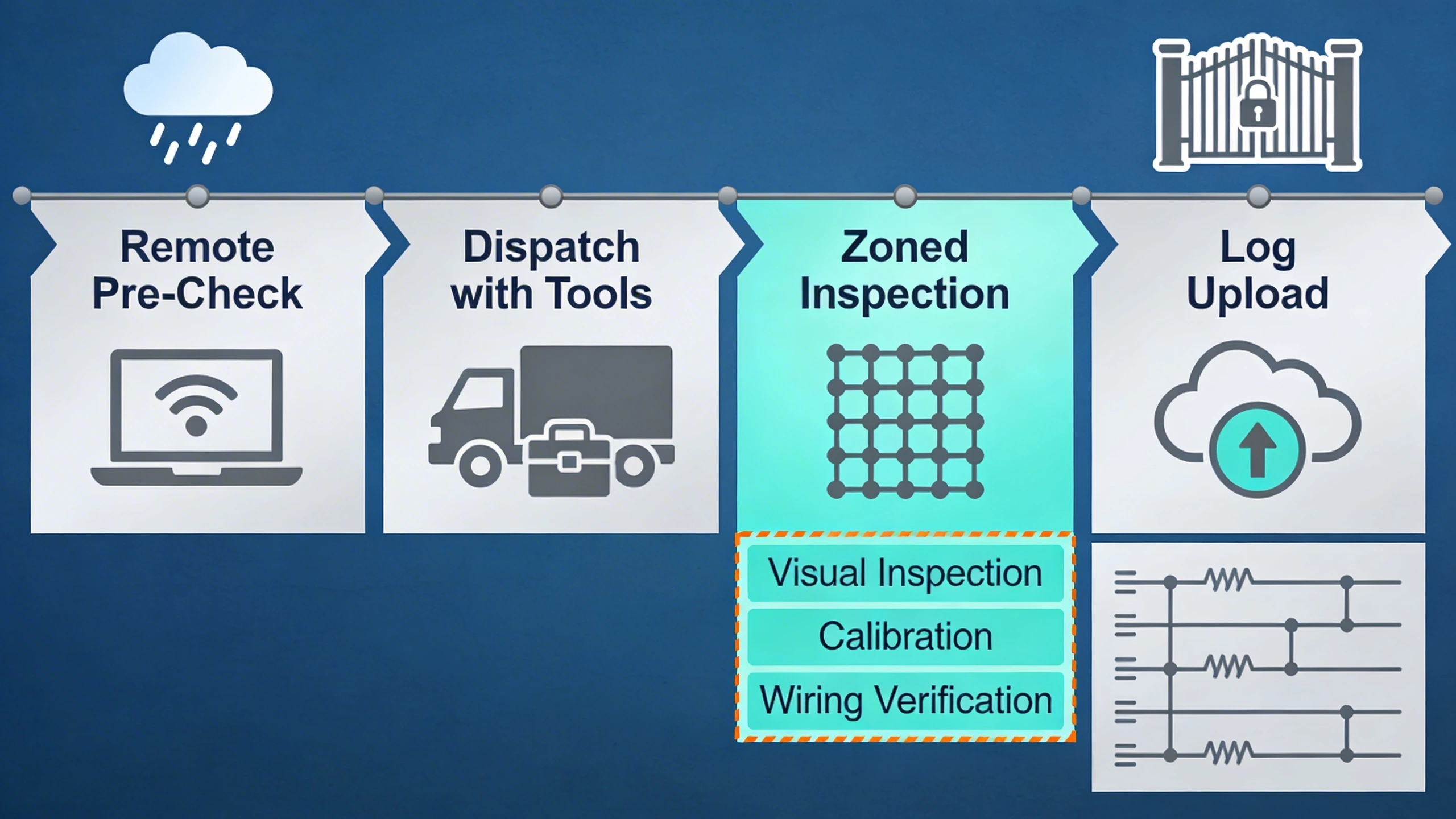
Environmental constraints shape these routines profoundly. Coastal facilities contend with salt spray accelerating connector corrosion, necessitating monthly rinse protocols and sealed junctions. Inland deserts demand dust filters on air-gapped optics, with workflows incorporating pre-dawn slots to beat heat expansion that skews calibrations. Access controls add layers; RFID-gated patrols ensure only cleared personnel handle live zones, integrating with video verification to log entries without halting surveillance.
Shifts in staffing or vendor handoffs disrupt continuity, so workflows embed cross-training modules and digital twins for simulation. This prepares teams for off-hours escalations, where augmented reality overlays guide remote experts through repairs, preserving expertise amid turnover.
Common failure points and design mistakes
Vegetation overgrowth remains a perennial oversight, fouling IR beams or damping seismic signals until false negatives emerge during breaches. Design teams err by omitting automated alerts for growth thresholds, forcing manual clears that miss subtle encroachments. Similarly, unaddressed ground settling shifts buried line positions, desyncing microwave pairs; without periodic surveys, this drifts detection zones outward, eroding coverage.
Power irregularities plague remote heads, where undersized solar arrays falter in prolonged clouds, browning out diagnostics. Mistakes compound when spares aren't staged locally, turning hour-long checks into multi-day ordeals. Documentation lapses—failing to version sensor firmware maps—lead to mismatched calibrations post-updates, amplifying noise floors.
Integration oversights, like neglecting surge protection on Ethernet runs, invite lightning-induced resets that mimic intrusions. Teams that skip end-to-end latency budgets during design watch maintenance windows balloon as troubleshooting chases ghosts across the network.
What to verify before procurement
Before committing to perimeter components, scrutinize maintenance support ecosystems. Probe vendor roadmaps for firmware longevity, ensuring heads remain field-upgradable without full replacements. Request demos of diagnostic APIs, confirming seamless polling from central platforms without proprietary lock-in.
Evaluate environmental ratings against site specifics: IP67 for submerged risks, or IK10 for vandalism-prone fencing. Verify spare parts lead times and regional stocking, especially for North America deployments where logistics vary. Training mandates matter too; insist on hands-on modules covering calibration sequences, as generic videos fall short for hybrid setups.
Finally, audit integration playbooks. Does the system expose health metrics via open protocols? Test failover behaviors under simulated outages to gauge recovery times, avoiding procurements that shift maintenance burdens back to operators.
Where to go next
Strengthen your perimeter security with tailored solutions. Explore FortSense 4 for advanced monitoring, or dive into critical infrastructure security insights. For personalized guidance, request a design review.