At a large utility substation spanning several acres, the security team inherited a perimeter intrusion detection system (PIDS) that promised robust coverage but delivered nightly false alarms from wind-swayed trees and small animals. Response crews, already stretched thin during peak demand, wasted hours chasing shadows instead of addressing genuine threats. This scenario repeats across campuses and industrial sites where legacy PIDS installations clash with evolving environmental demands, forcing integrators to decide between band-aid fixes and systematic redesigns.
Troubleshooting false alarms starts with recognizing that most stem not from sensor failure but from mismatched expectations between design specs and real-world conditions. In retrofit projects, like upgrading a multi-building campus fence line, teams must baseline alarm logs against weather data and patrol footage to isolate patterns. The goal isn't just silencing alerts but tuning the system for discrimination—distinguishing debris from intruders—while maintaining high detection rates. Experienced engineers prioritize layered diagnostics over vendor finger-pointing, ensuring changes align with site-specific constraints.
Early intervention pays off in these high-stakes environments. A mid-sized energy facility cut dispatch calls dramatically after methodically addressing vegetation overgrowth and ground loops, without replacing hardware. This approach frames the troubleshooting process as an iterative design refinement, blending field verification with software adjustments to achieve sustainable performance.
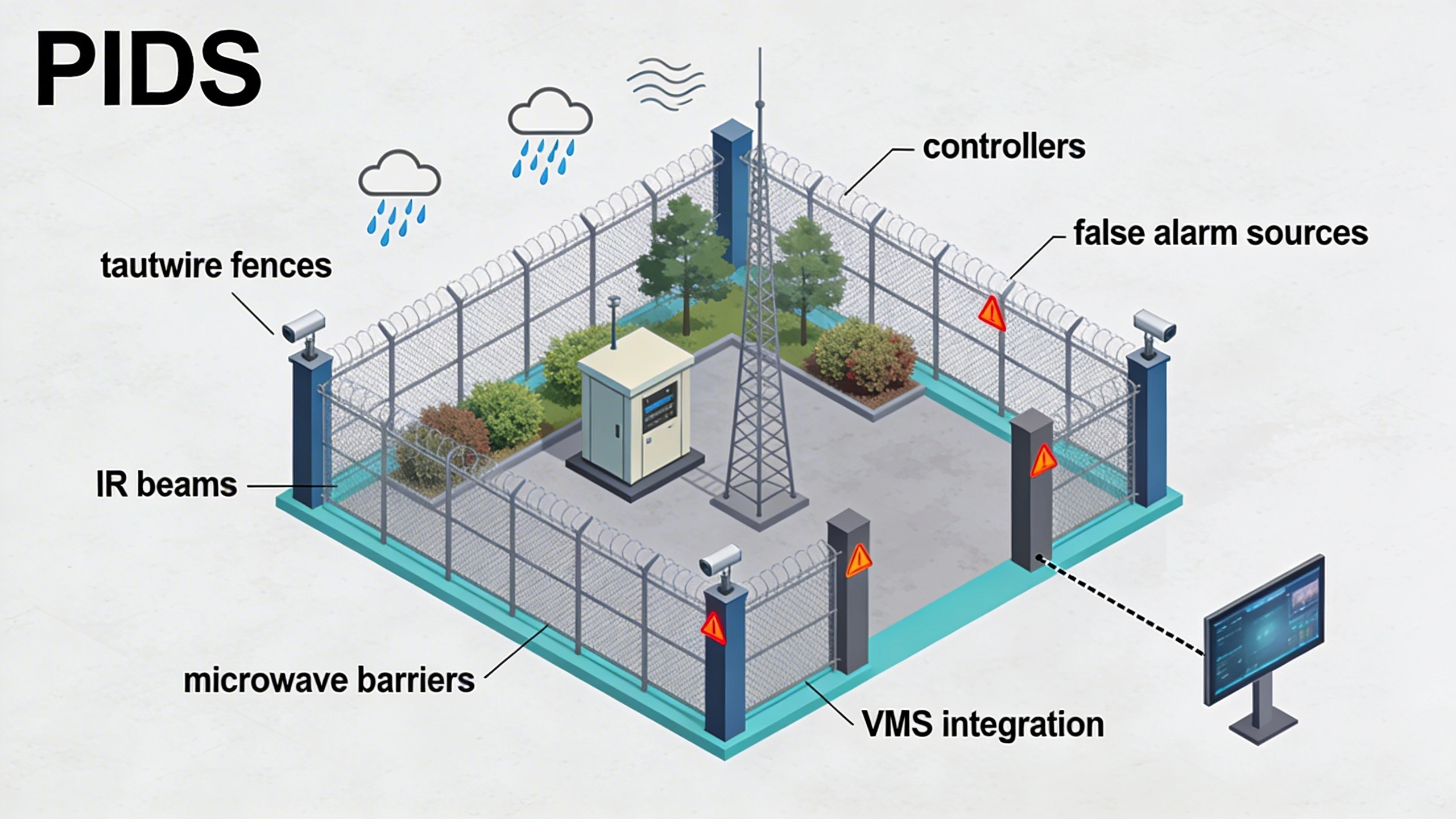
What the design decision looks like in practice
In the field, troubleshooting false alarms in PIDS unfolds as a structured site walkdown combined with data-driven analysis. Integrators arrive equipped with multimeters, thermal cameras, and access to historical logs, beginning at the fence line to inspect tautwire sensors or IR beams for physical obstructions like overgrown brush that triggers intermittent activations. For a campus retrofit, this might involve segmenting the perimeter into zones—say, 500-meter stretches—and correlating alarm timestamps with CCTV overlays to spot recurring culprits, such as birds nesting on microwave links.
Design decisions here pivot on balancing sensitivity thresholds with environmental tolerance. Engineers adjust dual-technology sensors, like combining vibration and IR, to require dual confirmation before alarming, a tactic proven effective in windy coastal deployments. Documentation becomes critical: each adjustment logs baseline nuisance rates pre- and post-change, providing audit trails for security managers justifying the effort. This hands-on process reveals how seemingly minor tweaks, like repositioning fiber-optic cables away from vehicle vibrations, transform erratic systems into reliable sentinels.
Teams often employ temporary test modes during daylight hours, simulating intrusions while monitoring false triggers from rain or shadows. Success looks like a perimeter that alarms only on verified breaches, freeing operators to focus on threat assessment rather than verification runs.
System architecture and integration considerations
PIDS false alarms amplify when architectures overlook upstream and downstream integrations. In a typical setup, sensors feed into a head-end controller that aggregates events before relaying to a video management system (VMS) or security information and event management (SIEM) platform. Misconfigurations, such as mismatched polling intervals between PIDS controllers and network time protocol (NTP)-synced VMS, can duplicate or orphan alarms, flooding dispatch queues. Integrators retrofitting utility sites must map these data flows end-to-end, verifying that Ethernet switches handle multicast traffic without packet loss that mimics sensor dropouts.
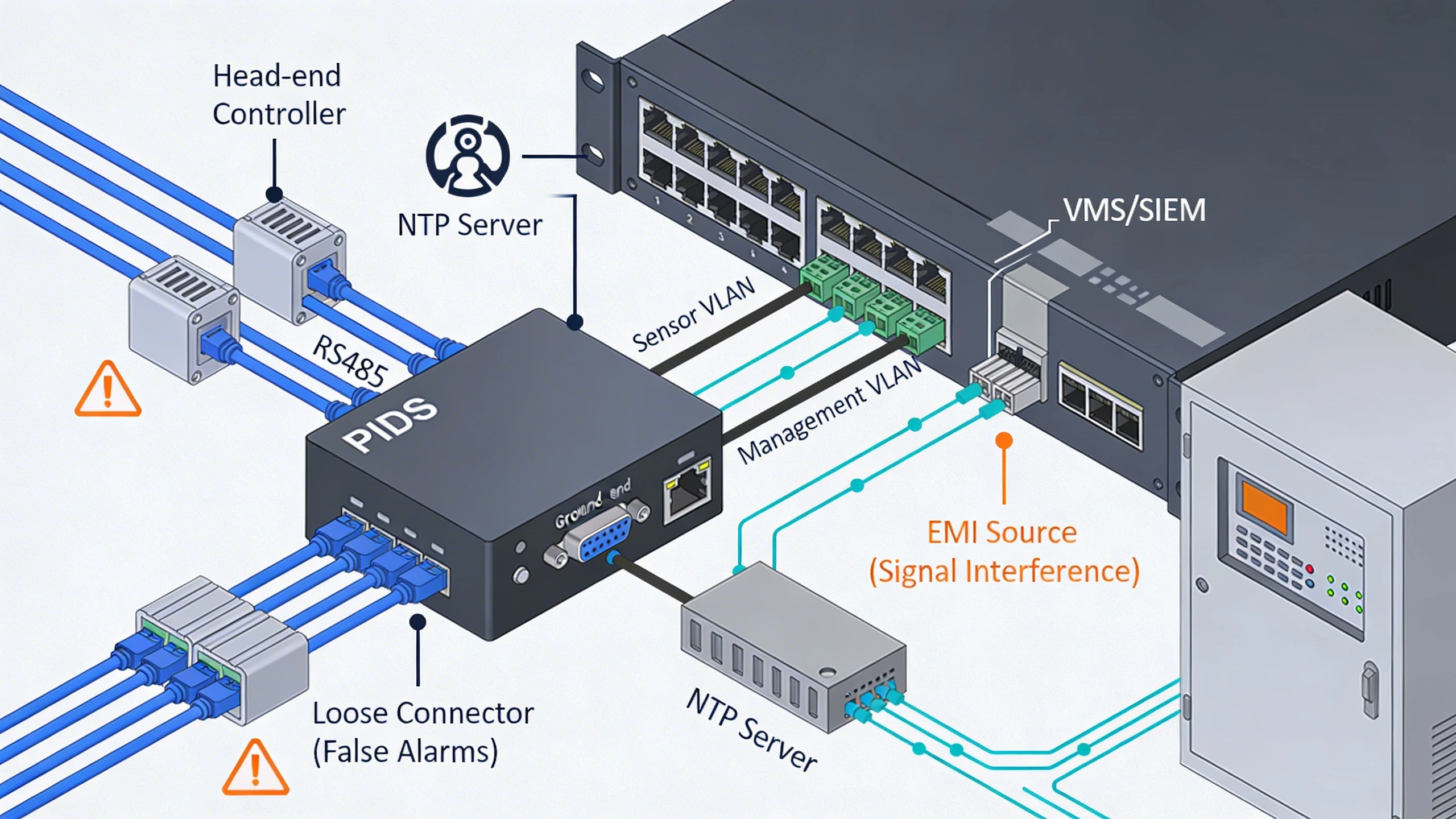
Layered architectures shine here: integrating PIDS with analytics-enabled cameras allows rule-based filtering, where an alarm triggers only if motion analytics confirm human-sized objects. However, IT managers encounter pitfalls when firewalls block necessary ports or VLANs segment sensor traffic improperly, leading to latency-induced false positives. Proper design incorporates redundancy, like dual NICs on controllers, and failover logic to prevent single points of failure from cascading into alarm storms.
For hybrid deployments blending legacy wired PIDS with IP upgrades, gateway devices demand scrutiny. Ensuring protocol translation—say, Modbus to SNMP—preserves timestamp integrity prevents temporal mismatches that security teams misread as systemic faults.
Operational workflows and field constraints
Daily operations at secured sites hinge on workflows that accommodate PIDS maintenance without compromising coverage. Security managers schedule zone isolations during low-risk shifts, using portable barriers or auxiliary patrols to cover troubleshooting windows. In a campus environment, this means coordinating with facilities to trim vegetation quarterly, timed against seasonal wind patterns logged from nearby weather stations. Field constraints like 24/7 uptime force non-disruptive methods, such as remote sensitivity tuning via web interfaces, over physical recalibrations.
Shift handoffs falter without standardized alarm review protocols. Operators pass on active zones with annotated logs—'Zone 3: Pending vegetation check'—to avoid inherited false alarm fatigue. Constraints from harsh environments, like dust at industrial perimeters, necessitate sealed enclosures and routine connector inspections, integrated into preventive maintenance rotations. When workflows ignore these, teams burn out chasing ghosts, eroding trust in the entire security posture.
Training bridges gaps: integrators embed quick-reference cards at guard posts, outlining escalation paths from nuisance alarm to full diagnostic callout, ensuring field personnel contribute meaningfully without overstepping design bounds.
Common failure points and design mistakes
Vegetation encroachment tops the list, where unchecked growth sways into IR beams or plucks tautwires, a mistake born from omitting site surveys in initial designs. Grounding issues follow closely: unbalanced electrical potentials induce noise on coaxial runs, registering as vibrations. In retrofits, overlooking these during cable pulls leads to chronic falsing, especially under lightning-prone skies.
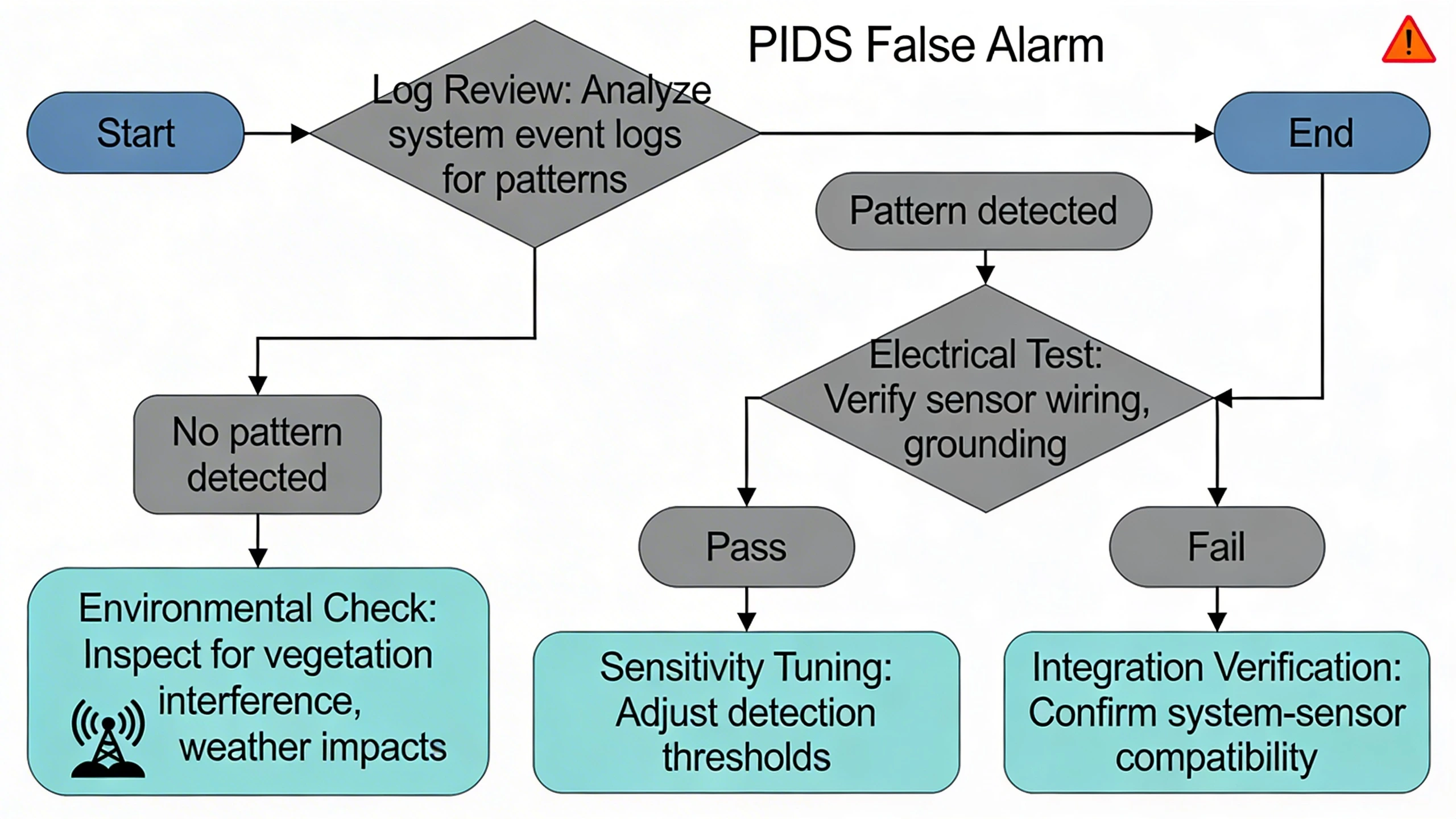
Sensitivity miscalibration plagues algorithmic sensors; default settings optimized for labs falter against site-specific baselines like heavy rain. Design errors compound when integrators skip multi-sensor fusion, relying on single-tech zones vulnerable to exploits like foil-wrapped decoys. Poor documentation exacerbates this—future teams inherit untuned systems without as-built drawings, perpetuating cycles of trial-and-error fixes.
- Verify sensor alignment with laser levels post-installation to counter settling foundations.
- Audit power supplies for voltage sag during peak loads, a stealthy falsing source.
- Test integration endpoints with simulated bursts to expose debounce flaws.
What to verify before procurement
Procurement checklists must probe beyond datasheets to real-world resilience. Request demo units for site-specific trials, exposing candidates to local wind, rain, and fauna via controlled tests. Scrutinize environmental ratings—IP67 for enclosures, -40°C operation—and immunity specs against EMI from nearby power lines. Integrators should demand third-party certifications for false alarm rejection, like those simulating animal crossings.
Architecture compatibility looms large: confirm open protocols for VMS handoff and scalability for zoned expansions. Vendor support for remote diagnostics and firmware updates signals long-term viability, especially for remote utility perimeters. Budget for ancillary needs like mounting hardware suited to uneven terrain, avoiding post-purchase adaptations that void warranties.
Engage references from similar deployments, querying sustained nuisance rates over 12 months to gauge operational maturity.
Where to go next
Explore FortSense 4 for advanced PIDS integration that minimizes false alarms through AI-driven filtering. For tailored advice on your site, request a design review. Dive deeper into critical infrastructure security challenges or review Perimeter Intrusion Detection System glossary terms. Check North America deployments for regional case studies.
Keep nuisance-alarm diagnosis separate from the binary detection claim; plan the latter with the PIDS probability-of-detection sample-size guide.