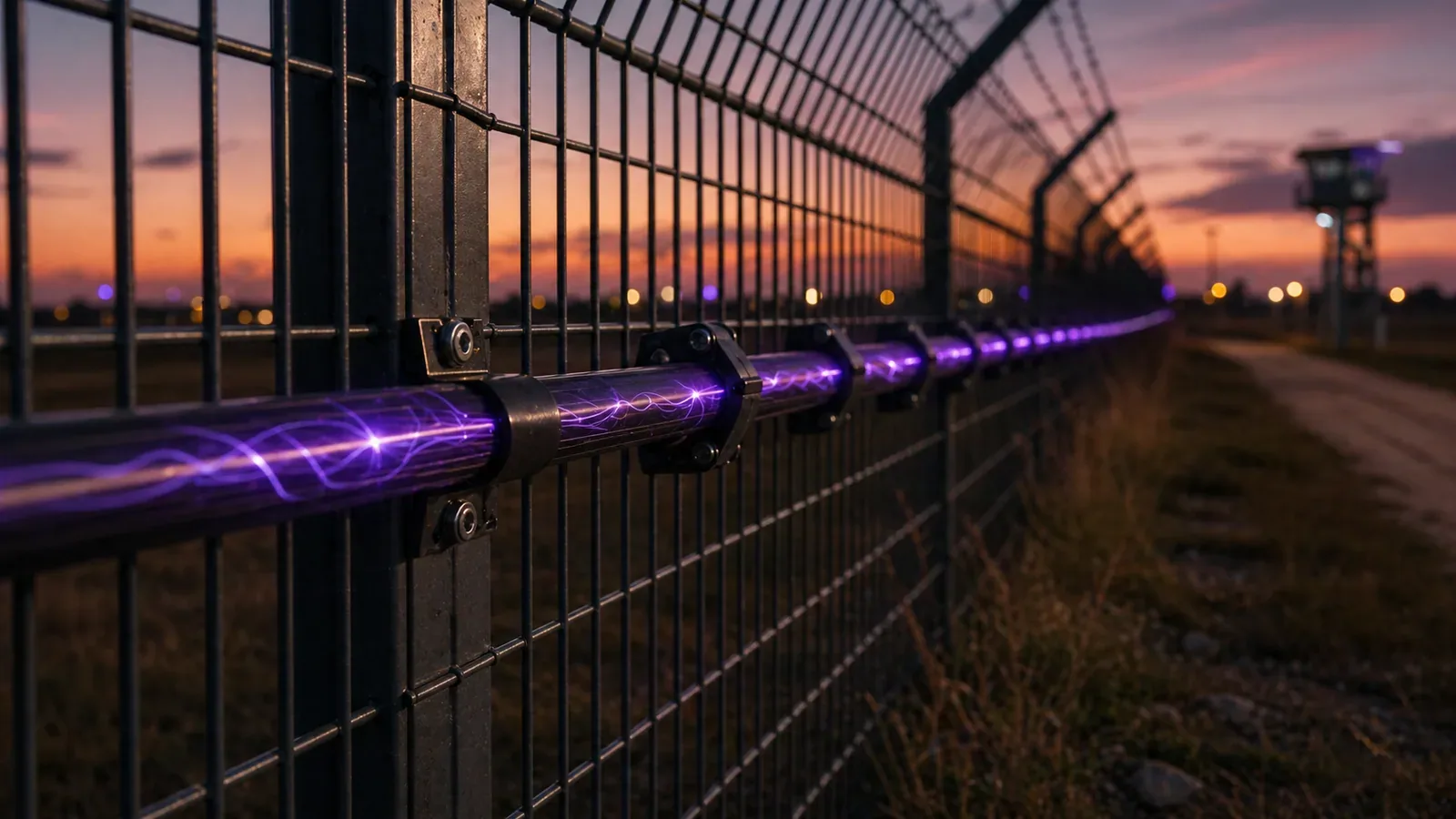
Fiber optic fence sensors turn a perimeter fence into a sensing line that detects climbing, cutting, lifting, and tampering before intruders reach protected assets.
Before procurement, use a site-specific fiber PIDS proof-of-concept plan to test representative threat events, route conditions, unwanted alarms, localization, and integration evidence.
After selecting the sensing approach, build a procurement-ready fiber PIDS bill of materials from the surveyed route, gates, topology, integration, test scope, and handover requirements.
Technology selection should include explicit disqualification criteria; use the DAS no-fit and alternative-selection guide when continuous sensing may not match the site operating model.
For chain-link retrofits, use the fiber PIDS attachment design guide to qualify the host fence, secure-side route, posts, corners, toppings, gates, protection, and commissioning evidence.
FortSense projects commonly start in the qualified perimeter security range. Use this page to decide whether the site is ready for a design review instead of treating the article as a commodity parts list. For immediate evaluation, route the site details to FortSense 4 or contact FortSense.
Fast answer
Buyers should compare detection scenarios, zoning accuracy, nuisance-alarm filtering, cable mounting method, VMS/SOC integration, commissioning tests, and long-term maintenance. FortSense 4 is positioned for projects where the perimeter security budget starts around qualified perimeter security and needs a reliable design rather than commodity sensors.
Selection checklist
Confirm fence condition and mounting method before pricing.
Ask for cut, climb, lift, tamper, wind, rain, and vehicle-vibration tests.
Verify camera mapping and alarm outputs before handover.
Document maintenance responsibilities and spare-cable strategy.
Common design mistake
The common mistake is buying a fiber sensor without validating the fence. Loose panels, poor posts, and unmanaged vegetation can create nuisance alarms even with strong sensing hardware.
If continuous location precision is a selection criterion, use the fiber PIDS localization accuracy comparison method before scoring vendor specifications or accepting a headline distance figure.
For commercial comparison, convert each compliant proposal into the same fiber PIDS lifecycle cost per accepted protected kilometer instead of relying on an advertised cable-length price.
Where installed fiber is available, use the dark-fiber reuse feasibility guide to separate a credible sensing asset from an optically healthy but poorly coupled route.
Internal next steps
Continue with FortSense 4, compare related terms in the FortSense glossary, and request a scoped review when the perimeter, camera, and monitoring assumptions are known.
For projects using rigid welded-wire panels, continue with the welded-mesh fiber PIDS installation guide before approving the field attachment design.